What Is Capital Gains Tax?
Sell an investment for more than you paid, and the IRS wants a cut of the profit. That’s the entire idea behind what is capital gains tax. But the actual rate you pay depends on things most people never check until tax season arrives.
The short answer
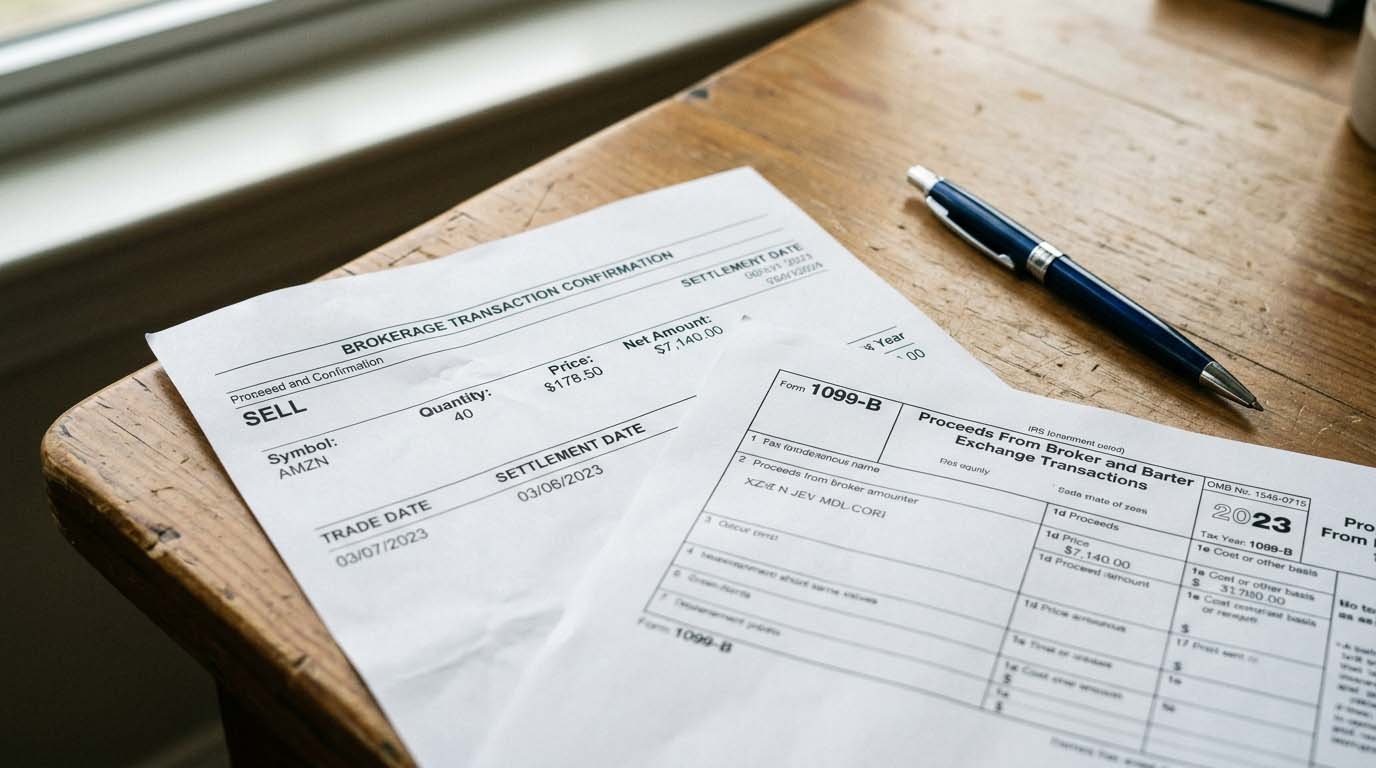
Capital gains tax is the tax on profit from selling an asset for more than you paid for it. Stocks, mutual funds, real estate, even a rare guitar or a piece of art all count. Sell any of them for more than your purchase price, and the difference is a capital gain. The IRS taxes that gain, and depending on the numbers involved, the bill can be substantial.
That profit only becomes taxable once you actually sell. This is a distinction people miss constantly. A stock that’s tripled in value while you still hold it hasn’t triggered any tax at all. Accountants call that an unrealized gain. Sell it, and it becomes realized. Only realized gains show up on your tax return.
Why the holding period changes everything
The single biggest factor in what is capital gains tax owed on a sale is how long you held the asset. Hold it for one year or less, and any profit counts as a short-term capital gain. Short-term gains get taxed as ordinary income, at the same rates as your paycheck. Those rates run from 10% up to 37%, depending on your bracket.
Hold the same asset for more than a year, and the profit qualifies as a long-term capital gain instead. Long-term gains get a much friendlier set of rates: 0%, 15%, or 20%, depending on your income. That gap is enormous. A large gain taxed at 37% versus 15% can mean a difference of tens of thousands of dollars on the exact same sale. Waiting one extra day to cross the one-year mark is sometimes the single most valuable move an investor can make.
The three long-term rates for 2026
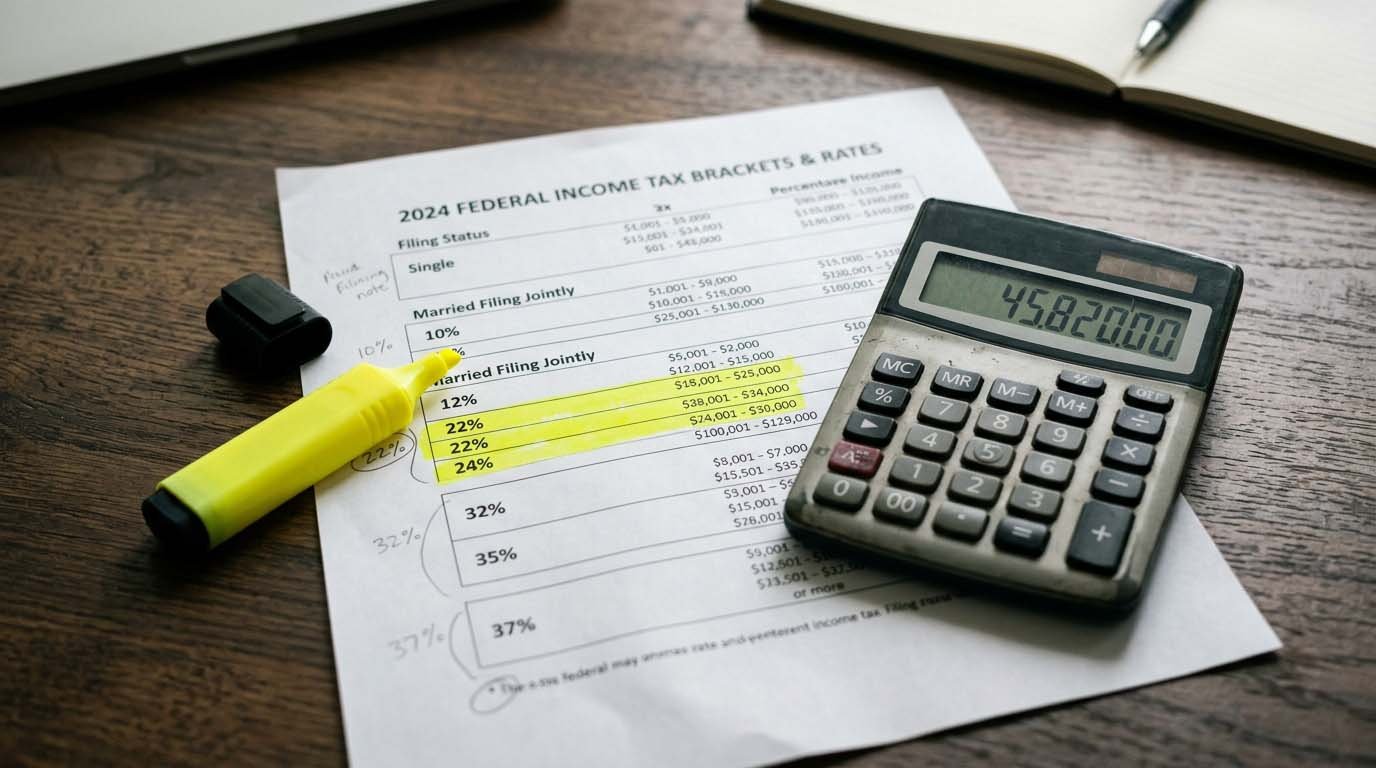
For the 2026 tax year, long-term capital gains fall into three bands. Single filers pay 0% on gains up to $49,450 of taxable income. Married couples filing jointly get that 0% rate up to $98,900. Above that, the 15% rate applies until taxable income crosses $545,500 for single filers, or $613,700 for married couples. Past that threshold, the top rate of 20% kicks in.
These aren’t flat rates applied to your entire gain. They work more like the ordinary income brackets described in our What Is a Tax Bracket? guide. Different slices of your income get taxed at different rates as you move up the scale, and capital gains follow that same layered logic.
How your gain stacks on top of your regular income
Here’s the part that confuses even experienced investors. Your capital gain doesn’t get taxed in isolation. The IRS adds it on top of your other taxable income first. Then it figures out which bracket the gain itself falls into.
Say you’re a single filer with $80,000 in ordinary taxable income. You realize a $50,000 long-term gain. That gain stacks on top of the $80,000. Some of it may land in the 0% band. The rest spills into the 15% band, depending on exactly where the $545,500 ceiling sits relative to your combined total. A retiree with modest income might pay 0% on the same size gain. A high earner in the top bracket could see most of it taxed at 20%, plus an extra tax described below. The dollar amount of the gain matters less than where it lands once stacked on everything else you earned that year.
This stacking effect is also why your filing status and standard deduction matter more than people expect. A larger deduction lowers your taxable income, which can push more of a gain into a lower bracket. Our Standard vs. Itemized Deductions guide covers how that choice affects your overall tax picture, not just the gains portion of it.
The extra tax high earners often forget
There’s a fourth number worth knowing: the Net Investment Income Tax, or NIIT. It adds a 3.8% surtax on investment income, including capital gains. It applies once your modified adjusted gross income crosses $200,000 for single filers, or $250,000 for married couples filing jointly.
Unlike the capital gains brackets, these NIIT thresholds don’t adjust for inflation. They were fixed by statute back in 2013 and haven’t moved since. Stack it on top of the 20% top rate, and a large gain can effectively cost 23.8% once both taxes apply. It’s easy to overlook this tax entirely, since it doesn’t show up as its own line item until you’re filling out Form 8960.
What actually counts, and what doesn’t
Most people think of capital gains tax purely in terms of stocks. But the rules cover a wider range of property. Selling a rental property, a collectible, cryptocurrency, or shares in a mutual fund can all trigger this tax. The trigger is simple: you sold for more than your cost basis, the amount you originally paid plus certain adjustments.
Your primary home gets special treatment. Under Section 121 of the tax code, single filers can exclude up to $250,000 of gain on the sale of a primary residence. Married couples filing jointly can exclude up to $500,000, provided ownership and use tests are met. Losses work differently too. Selling an investment at a loss doesn’t just avoid the tax. It can actively offset gains elsewhere on your return, and even a limited amount of ordinary income if losses exceed gains for the year.
There’s one lesser-known trigger worth flagging: mutual funds can generate a taxable capital gain distribution even if you never sold a single share yourself. When a fund manager sells winning positions inside the fund, the resulting gain gets passed through to every shareholder at year-end, whether or not you personally cashed out. This is one reason index funds, which trade less often than actively managed funds, tend to generate fewer surprise tax bills. Our Index Funds vs. Mutual Funds guide covers that difference in more depth.
Legal ways to reduce what you owe
The cleanest way to avoid capital gains tax entirely is to hold investments inside the right account. Money that grows inside a Roth IRA can be withdrawn tax-free in retirement, capital gains included, as long as you follow the account’s rules. Our Roth vs. Traditional IRA guide breaks down how that trade-off works. A traditional IRA defers tax differently than a Roth does, and the choice between them shapes how gains inside the account eventually get taxed.
Beyond retirement accounts, the holding period itself is a lever you control directly. Selling one day later can shift a gain from short-term to long-term treatment, sometimes cutting the tax rate by more than half. Timing a sale for a lower-income year, spreading gains across multiple tax years, or donating appreciated shares directly to charity instead of selling them first are all legitimate strategies. Each one is worth discussing with a tax professional before you act on it, since the right move depends heavily on your specific situation.
Don’t forget state taxes on top of the federal bill
Everything above covers federal capital gains tax only. Most states add their own layer on top, and the rules vary widely. Some states tax capital gains as ordinary income, at the same rate as wages. A handful of states, including Texas, Florida, and Washington, don’t tax capital gains at all.
That gap can matter more than people expect. A large gain taxed at a combined federal and state rate near 30% in a high-tax state looks very different from the same gain with no state tax added at all. Some investors relocate before a major liquidity event specifically because of this gap, though the tax rules around changing your state of residency are stricter than most people assume. If you’re planning a major sale, or considering a move before you sell, check your specific state’s rules rather than assuming the federal numbers above tell the whole story.
Run your own numbers before you sell

Knowing what is capital gains tax in the abstract only gets you so far. The number that actually matters is what a specific sale will cost you. That depends on your income, your filing status, and how long you’ve held the asset. Before you sell a large position, it’s worth running the math rather than guessing.
Our Investment Calculator can help you see how a gain compounds if you leave it invested instead of cashing out. If you’re comparing the return on an investment you’re considering selling against one you might buy instead, our ROI Calculator puts both numbers side by side, before tax and after.
None of these tools file your taxes for you, and this article isn’t tax advice. But understanding roughly what a sale will cost before you make it is the difference between a plan and a surprise next April.
Common questions about capital gains tax
It’s the tax owed on profit from selling an asset, like stocks, real estate, or crypto, for more than you paid for it. The rate depends on how long you held the asset and how much taxable income you have.
Assets held one year or less generate short-term gains, taxed as ordinary income at rates up to 37%. Assets held more than a year generate long-term gains, taxed at the lower 0%, 15%, or 20% rates instead.
No. Gains only become taxable once you sell, a point called realization. An investment that’s grown in value while you still hold it creates an unrealized gain, and unrealized gains aren’t reported or taxed.
A few more things worth knowing
It’s an additional 3.8% surtax on investment income, including capital gains. It applies once your modified adjusted gross income exceeds $200,000 as a single filer, or $250,000 filing jointly. It stacks on top of your regular capital gains rate.
Yes. Losses from selling investments at a loss can offset capital gains elsewhere on your return. If your losses exceed your gains for the year, you can typically deduct up to $3,000 of the excess against ordinary income, with any remainder carried forward to future years.
Often not, thanks to a special exclusion. Single filers can exclude up to $250,000 of gain on a primary residence. Married couples filing jointly can exclude up to $500,000, as long as ownership and use requirements are met.