Where Should You Keep Your Emergency Fund?
An emergency fund only does its job if it’s there when you need it, and worth roughly what you put in. That rules out more places than you’d think. Here’s how to weigh liquidity, safety, and yield against each other, and where most people actually land once they do.

Three things an emergency fund location needs
Every option for parking an emergency fund gets judged on the same three traits. Liquidity comes first: can you get the money within a day or two, without penalty, when something actually goes wrong. Safety matters just as much: is there any real chance the balance drops right when you need it most. Yield is the third piece: does the money at least keep pace with inflation while it sits there waiting.
No single account maximizes all three at once. A brokerage account might offer better long-term growth, but it fails the safety test. Downturns are exactly the kind of event that can also cost you your job. Keeping cash in a shoebox passes the liquidity test easily. It fails safety in a different way, through theft, fire, or simply losing value to inflation year after year. The right answer for most people balances all three, rather than maximizing any single one of them.
Why checking accounts and cash at home fall short
A checking account is liquid and safe, but it typically pays close to nothing in interest. Money sitting there for years loses purchasing power to inflation the whole time, even though the number on the statement never drops. It’s not a bad place for next month’s bills. It’s a poor place to park six months of expenses for years on end.
Cash kept at home solves the “what if the banking system has a bad day” worry, but it introduces new risks of its own. It can burn, get stolen, or simply get misplaced. It earns nothing at all. Large cash withdrawals or deposits can also trigger reporting requirements at your bank, an inconvenience most people don’t expect the first time it happens. A small amount of physical cash for true worst-case scenarios makes sense for some households. Treating it as your entire emergency fund doesn’t.
High-yield savings accounts: the default answer
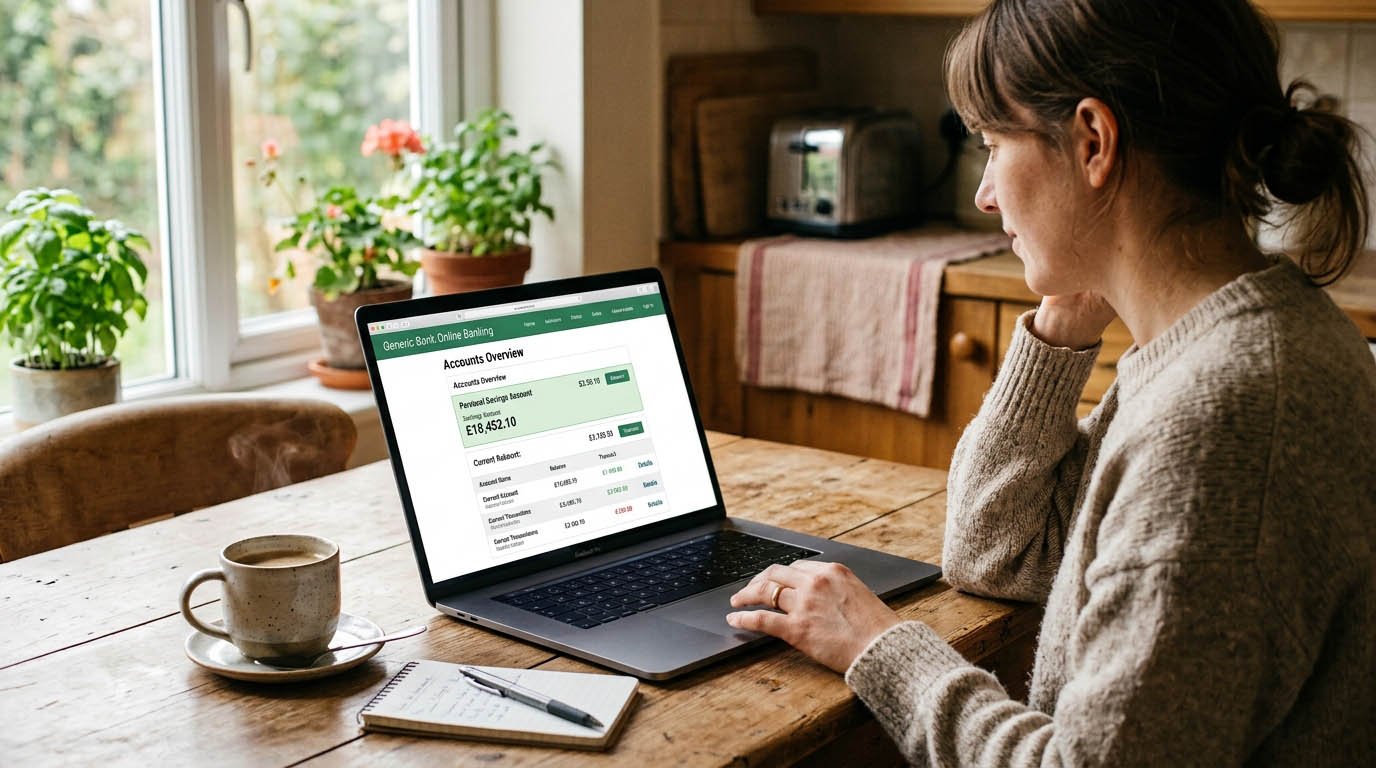
For most people, a high-yield savings account at an online bank is the right home for an emergency fund. Money moves in and out within a day or two. FDIC insurance protects the balance up to $250,000 per depositor, per bank, per ownership category. The interest rate is never guaranteed to stay put, but it has historically run well above what a traditional brick-and-mortar savings account pays.
Our high-yield savings guide covers how these accounts compare to regular savings in more detail. The short version: online banks carry lower overhead than branch-heavy banks. They pass some of that savings to depositors through a better rate. The tradeoff is minor. You don’t get a local branch to walk into, but for money you hope to rarely touch, that tradeoff barely matters.
A quick example: two accounts, one year
Say you keep a $15,000 emergency fund in a traditional bank savings account paying 0.4%. After a year, that grows to about $15,060, a $60 gain. Now say the same $15,000 sits in a high-yield savings account paying 4.5% instead. After a year, that grows to roughly $15,675, a $675 gain.
Balance, safety, and liquidity stay identical between the two accounts. The only difference is which one holds the money, and in this example that difference is worth over $600. That gap compounds further every year the money sits there. It’s exactly why the account choice matters, even though an emergency fund isn’t meant to be an investment.
Money market accounts: a close cousin
A money market account, not to be confused with a money market mutual fund, works almost identically to a high-yield savings account. Both are FDIC-insured deposit accounts. Both pay a variable interest rate. The main practical difference is that money market accounts sometimes come with check-writing privileges or a debit card. Some people find that convenient for larger, planned withdrawals.
Rates between the two account types trade places regularly, depending on the bank and the broader rate environment. Neither one is categorically better than the other. Comparing the actual rate offered, not just the account label, is the only way to know which one wins at any given moment.
Why CDs usually fail the liquidity test
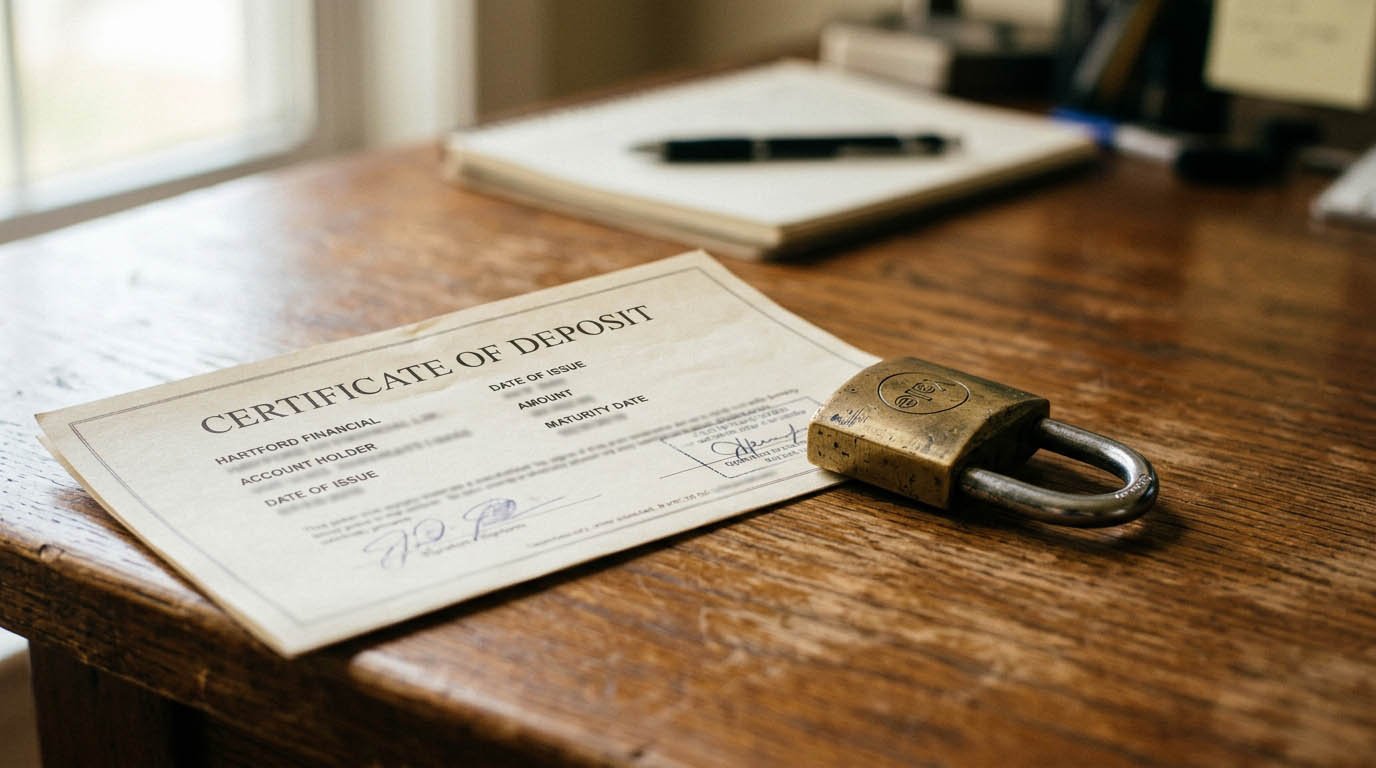
A certificate of deposit often pays a higher rate than a savings account, which makes it tempting. But a true emergency doesn’t wait for a CD to mature. Withdraw early and you’ll typically forfeit some of the interest you’ve earned, sometimes months’ worth, as an early withdrawal penalty.
A CD ladder, several CDs with staggered maturity dates, can work for a portion of a larger emergency fund. That only makes sense once the core, fully liquid piece is already in place. It’s not the right tool for the first dollars you set aside. Those need to be accessible the moment something goes wrong, not on a schedule that happens to line up.
What to avoid entirely
Stocks, bond funds, and other investment accounts don’t belong in an emergency fund, no matter how good recent returns have looked. The entire point of these funds is growth over years or decades, which requires riding out downturns rather than selling at the bottom. Emergencies and market downturns have an uncomfortable habit of showing up at the same time. A recession that costs you your job is often the same recession that drags down a portfolio.
Retirement accounts carry a similar problem, plus an added one. Early withdrawals from a 401(k) or traditional IRA typically trigger both income tax and a 10% penalty before a certain age. Whatever growth those accounts offer isn’t worth the cost of using them as your emergency backstop.
Know your insurance coverage
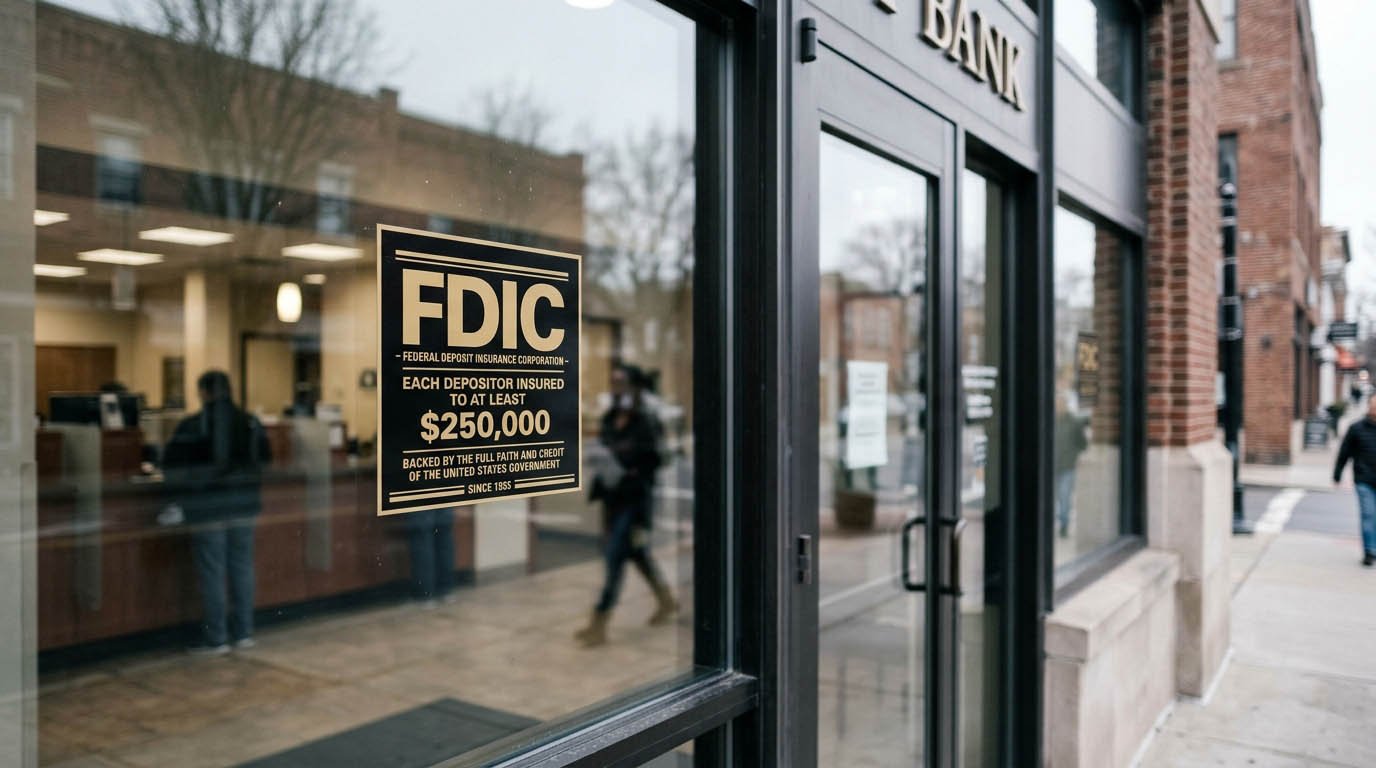
Standard FDIC insurance covers $250,000 per depositor, per insured bank, per account ownership category. Credit unions offer the equivalent through NCUA share insurance, at the same $250,000 standard limit. For the vast majority of emergency funds, this ceiling never comes into play. If your fund is unusually large, spreading it across ownership categories or separate institutions helps. That keeps the entire balance covered, rather than leaving a portion exposed if a bank were to fail.
Coverage applies per depositor, per bank, per ownership category, which opens up a few practical options. A married couple can often shelter $1,000,000 or more at a single bank. They do this by combining individual accounts, a joint account, and separate retirement accounts, each of which gets its own coverage bucket. For most emergency funds, well under the $250,000 threshold, none of this planning is necessary. It’s still worth knowing the ceiling exists before a balance grows anywhere near it.
A tiered approach for larger funds

Once an emergency fund grows past the first month or two of expenses, some households split it into tiers. Instead of keeping it all in one account, they spread it across a few, each suited to a different kind of emergency. One tier stays always liquid, ready for the truly immediate need, a sudden car repair or a broken appliance. Another tier sits in a high-yield savings account for bigger scenarios, job loss chief among them. A CD ladder can hold a slice of a very large fund, comfortably past six months of expenses, for a modest yield boost.
This layered approach isn’t necessary for everyone. A single high-yield savings account covers most situations just fine. The tiered version becomes more useful once the total balance grows large. At that point, a slightly better yield on part of it starts to meaningfully add up. It rarely makes sense before that point, since the added complexity outweighs the small extra yield on a modest balance.
When to revisit where it’s parked
A high-yield savings account isn’t a set-it-and-forget-it choice forever. Rates move with the broader interest rate environment, and some banks offer an introductory rate that quietly drops after a few months. Checking your rate once or twice a year, and comparing it against current offers, is a quick habit that protects the yield side of the equation.
Moving an emergency fund to a new bank takes a bit of effort, a new account, an updated direct deposit or transfer link, a short waiting period while funds move over. That effort is worth it if the rate gap is meaningful and likely to persist. It’s not worth chasing every temporary promotional bump, since the hassle of switching banks every few months usually costs more in time than it earns in extra interest.
Check your own numbers
Our Emergency Fund Calculator helps you figure out how many months of expenses you actually need. It’s based on your own budget and circumstances, rather than a generic three or six month rule. If you’re still building that first cushion, our emergency fund guide walks through the process step by step. Our Savings Calculator shows how quickly a given monthly contribution gets you there.
Common questions about where to keep an emergency fund
For most people, yes, since it balances liquidity, safety, and yield better than the alternatives. Exceptions exist for very large funds. Splitting money across a savings account and a short CD ladder can capture a bit more yield there, without sacrificing access to the core amount.
It’s not required, and there’s an argument for keeping it separate. A different bank, especially an online one with a better rate, adds a small amount of friction. That friction sits between you and spending the money on something that isn’t actually an emergency. It’s still accessible within a day or two when you genuinely need it.
A money market mutual fund, held through a brokerage rather than a bank, is generally not FDIC-insured. It’s often backed by very low-risk holdings and has historically been quite stable. Most people still find the FDIC-insured version simpler and safer for this specific purpose. That means a bank money market account or a high-yield savings account.
A few more things worth knowing
I bonds are backed by the U.S. Treasury and adjust with inflation, but they can’t be redeemed at all in the first 12 months. Redeeming before five years also costs the last three months of interest. That makes them a poor fit for the core emergency fund, though a very large fund’s least-likely-to-be-touched portion is one place they sometimes show up.
Most of it, for most households. A small buffer in checking helps cover the very first hours of an emergency, before a savings account transfer clears. That matters in the rare case where even a one or two day delay is a problem.
As long as the bank is FDIC-insured, and your balance is under the $250,000 coverage limit, you’re covered. Insured deposits have historically been made available within a few business days after a failure. That happens either through an acquiring bank or a direct FDIC payment. No depositor has lost insured funds at an FDIC-insured bank since the agency’s founding.