What Is a Credit Freeze vs Credit Lock
Both a credit freeze and a credit lock stop new lenders from viewing your credit file. But they work through different systems, carry different legal protections, and don’t behave the same way when you need to unfreeze in a hurry.
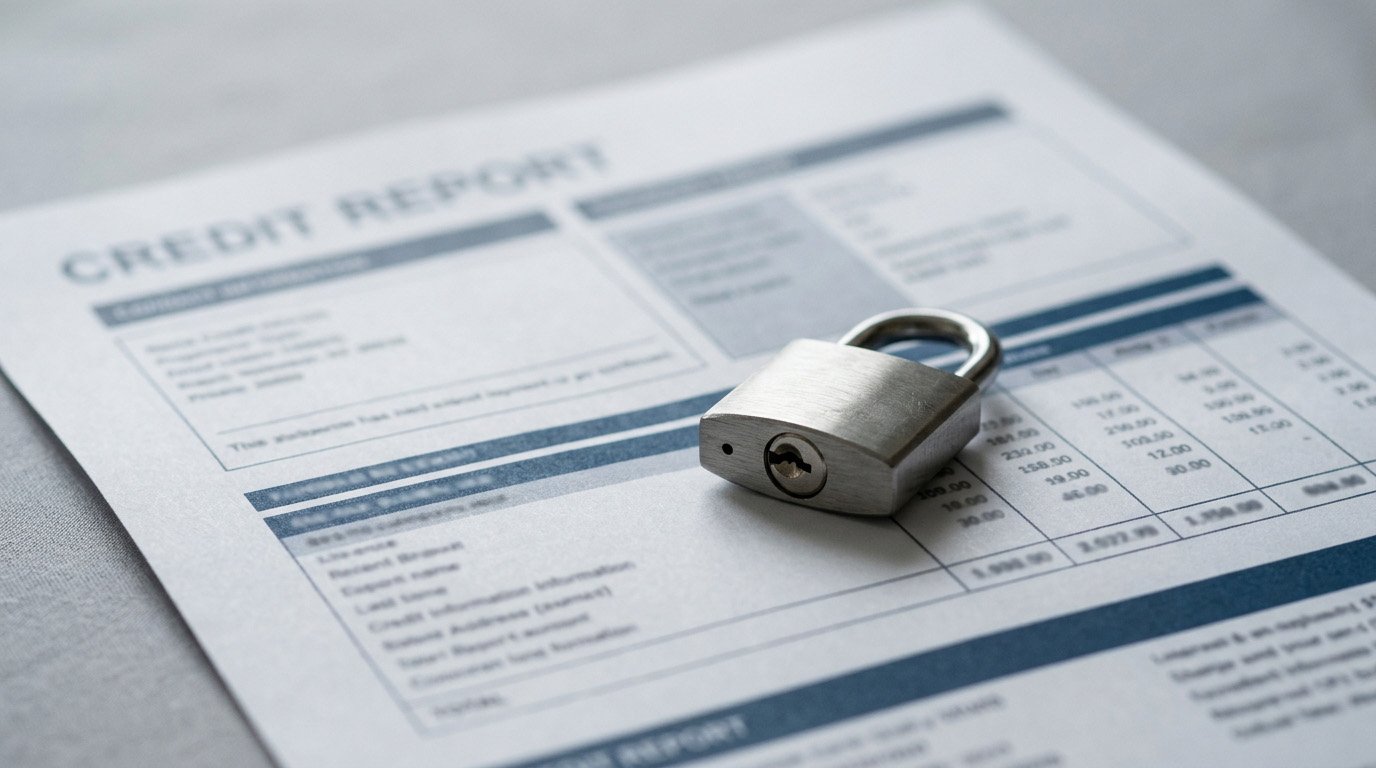
Credit Freeze vs Credit Lock: The Basic Idea
Both tools do the same core job. They block lenders from pulling your credit report. No report means no new account gets opened in your name. That’s the whole point. Someone can have your Social Security number and your full address. They can still get denied at the counter. The lender simply can’t see a file to approve.
The difference sits underneath the surface. A credit freeze is a federal right. It’s backed by law, and it costs nothing at any of the three bureaus. A credit lock is a private product instead. It’s usually bundled into a paid or free app from the same bureaus, and it runs on its own separate system.
How a Credit Freeze Works
A credit freeze locks your file at each bureau, Equifax, Experian, and TransUnion, individually. You request it directly with each one, since there’s no single form that freezes all three at once. Once frozen, the bureau can’t release your report to a new lender without your explicit permission.
Federal law guarantees this right. The Economic Growth, Regulatory Relief, and Consumer Protection Act made credit freezes free for everyone in the United States. That’s been true since 2018. Before that law passed, some states charged a small fee. Now the freeze costs nothing. You can lift it, or freeze again, as many times as you want.
Lifting a freeze usually takes minutes online, though mailed requests can take longer, up to a few business days by law. You can lift it permanently, or set a temporary window, useful if you’re applying for a specific loan and want your file open just long enough for that one lender to pull it.
How a Credit Lock Works

A credit lock runs through an app or website that the bureau builds and controls. You flip a switch, and your file locks almost instantly. Flip it back, and it unlocks just as fast. That speed is the main selling point, and it’s real. Apps generally beat the mailed-request timeline of a formal freeze by a wide margin.
The catch is the legal footing underneath it. A credit lock operates through a private contract between you and the bureau, not through federal freeze law. That contract can include terms a freeze doesn’t have, like arbitration clauses, liability limits, or fees for premium features. Some lock products stay free. Others bundle the lock into a paid credit monitoring subscription.
Because a lock isn’t a federally mandated freeze, the bureau technically has more discretion over how it operates the service. In practice, most locks work reliably. But you’re trusting a company’s app and terms of service, not a specific consumer protection statute.
Speed vs. Legal Protection
This is really the whole trade-off. A credit lock wins on speed and convenience. Toggle it on your phone, and it takes effect right away. A credit freeze wins on legal backing. It’s guaranteed by federal law, free for anyone, and comes with statutory timelines for how fast a bureau must lift it once you ask.
Neither tool touches your credit score. Freezing or locking your file doesn’t lower your score, and it doesn’t affect accounts you already have open. Existing lenders, your current credit card issuer or mortgage servicer, keep full access to your file for account management and fraud monitoring, even while it’s frozen or locked.
Who Should Actually Use One
If you’re not actively applying for new credit, a freeze makes sense as a default state. It’s free, it’s strong, and it doesn’t need a subscription. If you’ve had your identity stolen, or your data exposed in a breach, freezing all three bureaus immediately is one of the most effective things you can do to stop new accounts from opening in your name.
A lock fits better if you shop for credit often and want to toggle access quickly without going through three separate freeze requests. Some people use both. They keep a freeze in place at all times, and unfreeze temporarily through the same bureau process only when they know a lender needs to pull their file.
If you’re actively working on your credit, whether that means building a file from scratch or improving one that’s already established, you’ll need your report open when you apply for new accounts. Our article on building credit from scratch covers which accounts actually help, and our guide on how to improve your credit score fast walks through what moves the needle once you have a file to work with.
A Quick Comparison
- Credit freeze: Free at all three bureaus. Backed by federal law. Requires separate requests per bureau. Statutory lift times apply.
- Credit lock: Often free, sometimes bundled with paid monitoring. Runs on a private contract, not freeze law. Toggles instantly through an app.
A freeze and a lock don’t stack on top of each other in any meaningful way. Freezing your file and locking it at the same bureau just duplicates the same block. Pick one system per bureau, and understand which protections actually apply to the one you choose.
What Neither One Protects Against
A freeze or lock stops new account fraud. It does nothing for accounts you already have open. If someone gets your existing credit card number, they can still make charges on it, freeze or no freeze. Monitoring your existing statements still matters, and so does watching your utilization, which our credit utilization guide covers in detail, since a fraudulent charge on an existing card can spike that number fast.
Neither tool stops tax fraud, medical identity theft, or someone opening a utility account using your name with a company that doesn’t check credit at all. A freeze protects the specific pathway of a new lender pulling your credit file. It’s a strong, narrow tool, not a universal shield.
A Real-World Scenario

Say a retail chain announces a data breach. Your name, address, and Social Security number were part of the leak. You don’t know yet whether anyone will try to open an account in your name. You just know the risk went up overnight.
Freezing your file at all three bureaus that same day blocks the most common outcome of a breach like this: a stranger opening a credit card or loan using your identity. The freeze takes effect almost immediately once each bureau processes your request. It costs nothing, and it stays in place indefinitely, until you choose to lift it.
Compare that to a lock. If you already had a lock app installed before the breach, you’d get the same protection just as fast, maybe faster, with one tap. But if you’re setting up protection for the first time in response to a breach, a freeze is the option guaranteed by law, available at every bureau, with no account setup required beyond identity verification.
Setting One Up
To freeze your credit, visit each bureau’s website directly: Equifax, Experian, and TransUnion. Create an account, or verify your identity, then request the freeze. Keep the PIN or login credentials each bureau gives you. You’ll need them to lift the freeze later, so store them somewhere safe, not just in your inbox.
To lock your credit instead, download the bureau’s dedicated app. Each bureau runs its own, so you’ll need three separate apps for full coverage. Some bundle the lock feature into a broader credit monitoring product. That product may include a monthly fee for extras like score tracking or dark web scans. Read what you’re actually signing up for before assuming the lock itself costs money. Often the lock feature stays free, and only the added extras cost anything.
Whichever route you pick, write down which bureaus you’ve covered. It’s easy to freeze two bureaus and forget the third, leaving one open path a lender could still use.
Common questions about credit freeze vs credit lock
No. Neither one affects your credit score in any way. They only control whether a new lender can view your credit report. Your existing accounts and score stay exactly as they were before you froze or locked your file.
Yes. Federal law requires Equifax, Experian, and TransUnion to offer credit freezes at no cost, and to lift them for free as well. This has been the rule nationwide since 2018.
Not until you lift the freeze at the bureau, or bureaus, that lender uses. You can request a temporary lift, which reopens your file for a set window, or lift it permanently and refreeze afterward.
A few more things worth knowing
Yes, if you want full protection. Lenders can pull from any of the three, and some check only one. Freezing just one bureau leaves the other two open for a new account to slip through.
Yes. Parents and guardians can request a freeze for a minor’s credit file at each bureau, which helps prevent child identity theft, a common target since the fraud often goes unnoticed for years.
Functionally, most locks work just as well day to day. The difference is legal, not practical: a freeze is guaranteed by federal statute, while a lock runs on a private contract that the bureau can modify.