Debt-to-Income Ratio: What It Is and Why Lenders Care
Your debt-to-income ratio is one number, but it can decide whether you get approved for a mortgage, what rate you’re offered on a car loan, or whether a lender turns you down before they even look at your credit score.

The short version
Debt-to-income ratio, usually shortened to DTI, compares how much you owe every month to how much you earn every month. Add up your recurring debt payments. Divide that by your gross monthly income. Multiply by 100. A person earning $6,000 a month with $1,800 going toward debt has a debt-to-income ratio of 30%.
Lenders check this number constantly, sometimes more closely than your credit score. A high credit score shows that you’ve paid people back before. Your debt-to-income ratio shows something different: whether your budget has room for one more payment. Those are two separate questions. A strong answer to one doesn’t guarantee a strong answer to the other.
How to Calculate Your Debt-to-Income Ratio
Start with your gross monthly income, before taxes, not your take-home pay. If you’re not sure what that number looks like once deductions come out, our Take-Home Pay Calculator can show you the gap. For debt-to-income ratio purposes, though, lenders use the gross figure.
Next, list your recurring monthly debt payments. This includes:
- Rent or mortgage payment (including property taxes and insurance if they’re bundled into the payment)
- Car loan payments
- Minimum credit card payments
- Student loan payments
- Personal loan payments
- Any other loan or court-ordered payment, like child support or alimony
What doesn’t count: utilities, groceries, insurance premiums that aren’t tied to a loan, subscriptions, and everyday spending. Debt-to-income ratio measures debt obligations, not your full cost of living. A person with a huge grocery bill and no debt has a DTI of zero, even if their bank account tells a different story.
Add up the debt payments, divide by gross monthly income, multiply by 100. If you’re carrying a car loan and weighing whether a new personal loan would push your ratio too high, our Personal Loan Calculator will show you the exact payment you’d be adding, before a lender does the math for you.
Front-End vs. Back-End: Two Different Ratios

Mortgage lenders split this into two versions. Front-end DTI only counts housing costs: your mortgage payment, property taxes, homeowners insurance, and HOA dues, divided by gross income. Back-end DTI counts everything, housing plus every other debt payment you carry.
Most conventional mortgage guidelines cap front-end DTI around 28% and back-end DTI around 36%. These aren’t hard legal limits, and lenders approve plenty of loans above them depending on the rest of your financial profile. FHA loans tend to allow more room, sometimes stretching back-end DTI toward 50% for borrowers with compensating factors like a large down payment or strong credit history.
If you’re shopping for a home, our Mortgage Calculator will give you a projected monthly payment you can plug straight into your front-end debt-to-income ratio, before you sit down with a loan officer.
Why Lenders Lean on This Number So Heavily
A credit score looks backward. It reflects how you’ve handled debt in the past: whether you’ve paid on time, how long you’ve held accounts open, how much of your available credit you’re using. Debt-to-income ratio looks forward. It answers a more practical question for a lender: if I add this payment to what you already owe, can your income absorb it?
This is also why DTI plays a direct role in mortgage regulation. The Ability-to-Repay rule, which came out of the Dodd-Frank Act, requires lenders to make a reasonable, good-faith effort to verify that a borrower can actually repay a mortgage. Regulators name DTI as one of the specific factors that defines what a “qualified mortgage” looks like. It’s not just a lending preference, it’s baked into federal rule.
That’s why someone can carry an excellent credit score and still get denied, or offered a worse rate, if their debt-to-income ratio runs too high. The score says you’re reliable. The ratio says whether your budget has room left for what you’re asking to borrow.
What Counts as a “Good” Debt-to-Income Ratio
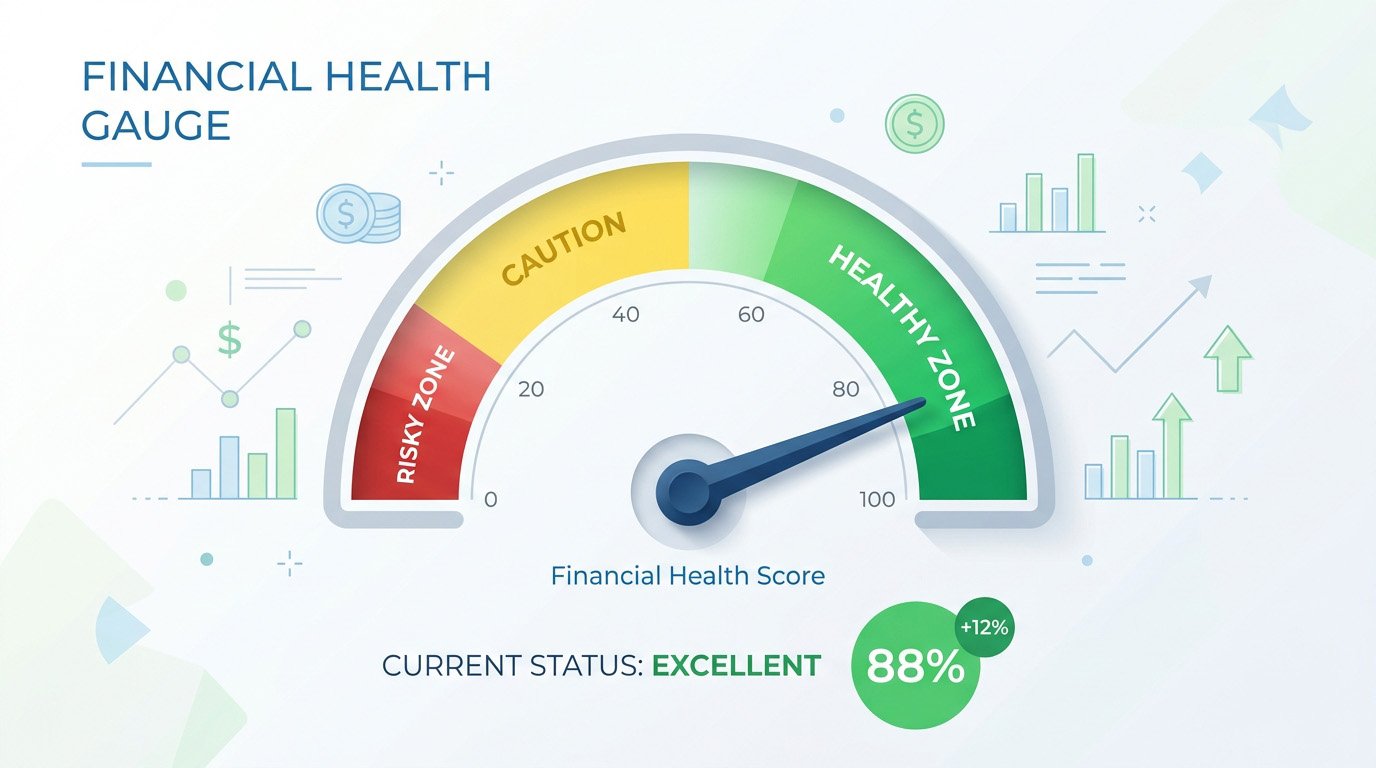
No single number applies everywhere, but general ranges hold up across most lenders:
- 36% or below is typically viewed as healthy, and most lenders treat it comfortably.
- 37% to 43% still gets approved often, but you may see fewer loan options or slightly higher rates.
- Above 43% starts closing doors, particularly for conventional mortgages, though FHA and some other loan types allow more flexibility.
- Above 50% makes approval difficult across most loan types, regardless of credit score.
These ranges shift by loan type. Auto lenders often care less about DTI than mortgage lenders do, partly because a car loan is a smaller, shorter-term commitment. If you’re comparing what a new auto loan would do to your ratio, our Car Loan Calculator can show you the monthly payment before you apply, so you’re not finding out your DTI problem at the dealership.
A Worked Example
Say someone earns $5,500 a month before taxes. Their monthly obligations look like this: a $1,400 rent payment, a $350 car loan, $180 in minimum credit card payments, and a $220 student loan payment. Total monthly debt: $2,150.
Divide $2,150 by $5,500 and you get roughly 39%. That sits in the range where lenders still approve most applicants, but options may narrow, and the offered rate might run a bit higher than it would below 36%. Now pay off that credit card balance entirely and drop the $180 payment. The debt-to-income ratio falls to about 36%, right at the edge most lenders treat as comfortable. One paid-off card moved the number more than you might expect, which is exactly why debt payoff strategy and DTI stay so closely tied together.
How to Actually Lower Your Debt-to-Income Ratio

Only two levers move this number: reduce debt payments, or increase income. Increasing income usually takes longer, so most people work the debt side first.
Paying down credit card balances tends to move DTI faster than other debt types, since minimum payments on cards run disproportionately high relative to the balance. If you’re carrying multiple cards and want to know which order to pay them off in, our Credit Card Payoff Calculator lays out a timeline based on your actual balances and rates. If your debt spreads across several accounts, our Debt Payoff Calculator compares snowball and avalanche strategies to see which brings your monthly obligations down faster. Paying down cards helps in another way too: it lowers your credit utilization, which matters for your credit score alongside your DTI.
Consolidating high-interest debt into a single lower-rate loan can help too, though it depends on the terms. A consolidation loan that lowers your total monthly payment will improve your ratio. One that just spreads the same balance over a longer term without lowering the payment usually won’t move the number much.
DTI Isn’t the Whole Picture, but It’s Rarely Optional
None of this makes debt-to-income ratio the only thing that matters when you apply for credit. Credit score, employment history, down payment size, and loan type all factor into a lender’s decision too. But DTI shows up in nearly every lending conversation, from a car loan to a mortgage to a personal loan, and you can calculate it yourself before a lender ever runs the numbers on you.
Knowing your ratio ahead of time means fewer surprises. It tells you what you can reasonably afford to add to your monthly budget, and it gives you a concrete target if you’re trying to improve your odds of approval before you apply.
Common questions about debt-to-income ratio
No. Credit utilization compares your credit card balances to your credit limits and factors into your credit score. Debt-to-income ratio compares your total monthly debt payments to your income and doesn’t appear on your credit report at all. A lender calculates it separately, usually from pay stubs and a credit report pulled together.
No. Debt-to-income ratio isn’t a credit bureau figure, and it doesn’t affect your credit score directly. A lender calculates it at the time you apply, using the income you report and the debts listed on your credit report.
Your current rent payment typically doesn’t count once you’re buying a home, since the new mortgage payment replaces it. Lenders calculate your projected debt-to-income ratio using the new mortgage payment instead of your existing rent.
A few more things worth knowing
No. Debt-to-income ratio only includes debt obligations, like loans, credit cards, and court-ordered payments. Utilities, insurance premiums not tied to a loan, groceries, and subscriptions don’t factor in, even though they’re real monthly expenses.
It depends on the loan type and lender. FHA loans generally allow a higher debt-to-income ratio than conventional mortgages, and some lenders approve higher ratios if you have strong credit, a large down payment, or significant cash reserves. Above 50%, approval gets difficult almost everywhere.
Gross income, before taxes and other deductions. Lenders use this figure as the standard, even though it can make your ratio look better than your day-to-day budget feels, since your take-home pay runs lower than your gross income.