Dollar-Cost Averaging vs Lump Sum Investing
You just got a windfall. A bonus, an inheritance, or savings finally big enough to invest. Dollar-cost averaging vs lump sum is the exact question you now face. The math points one direction more often than most people assume.

Dollar-Cost Averaging vs Lump Sum: The Two Approaches
Lump sum investing means putting all your money into the market at once. Get $30,000, and you invest the full $30,000 today. Dollar-cost averaging works differently. You spread that same amount across several smaller purchases over time. You might invest $2,500 a month for a year instead.
Both strategies end at the same destination: fully invested. They just take different roads to get there. That difference in timing turns out to matter more than most people expect, and not in the direction most people guess.
What the Data Actually Shows
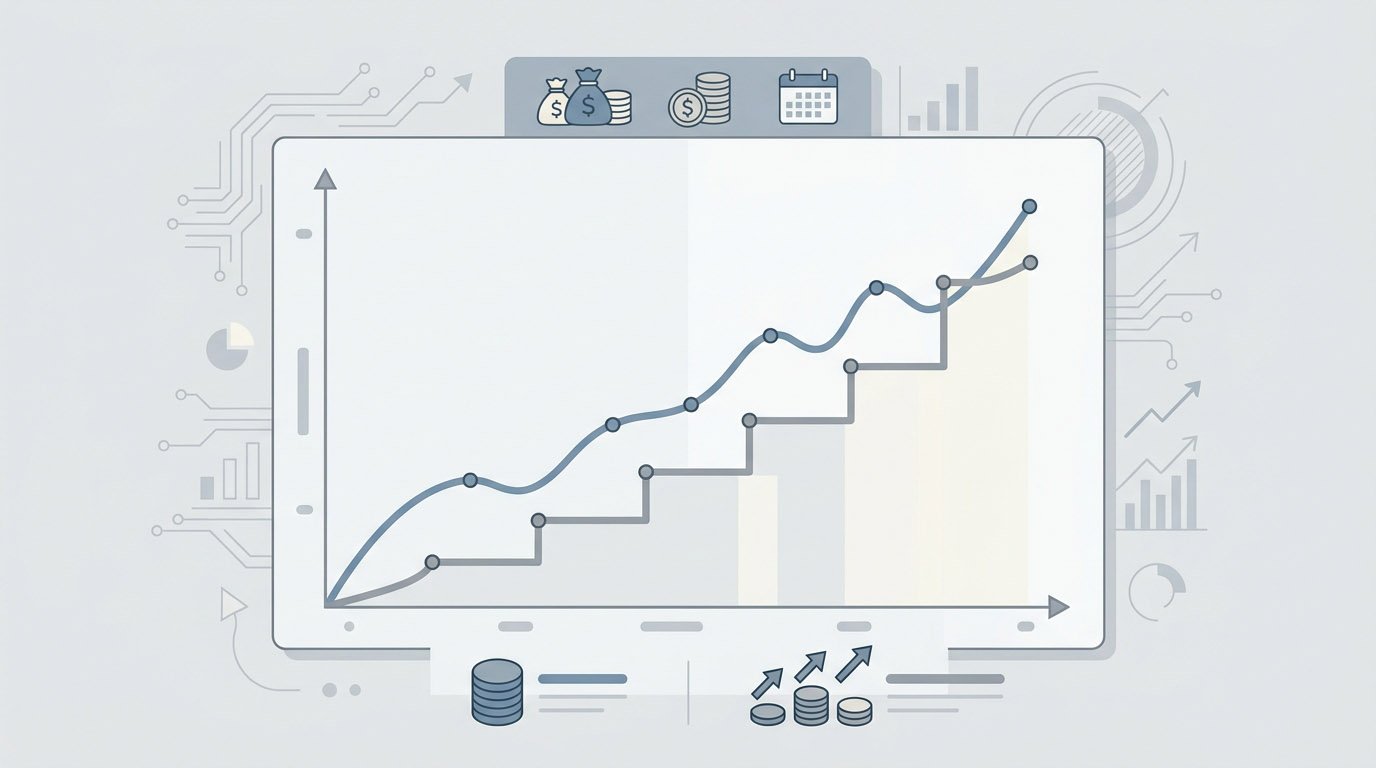
Multiple long-term studies have compared these two approaches, including well-known research from Vanguard. Lump sum investing outperformed dollar-cost averaging roughly two-thirds of the time. This held across most rolling time periods studied, in both U.S. and international markets.
The reason comes down to a simple fact about markets. They rise more often than they fall. Since markets trend upward over most stretches of history, money invested sooner tends to spend more time compounding than money invested later. Dollar-cost averaging delays a portion of your investment by definition. That delay costs you upside more often than it saves you from a downturn.
So Why Does Anyone Choose Dollar-Cost Averaging?
The math favors lump sum on average. But averages don’t capture everything that matters to a real investor. Dollar-cost averaging reduces regret risk. Invest a lump sum right before a market drop, and watching the value fall immediately can feel genuinely terrible, even if the math still works out fine over the long run.
Spreading the investment out smooths that emotional experience. If the market drops after your first installment, your remaining purchases buy in at a lower price. That cushions the psychological blow, even though it doesn’t necessarily improve your expected return. For some investors, avoiding a decision they might panic-reverse is worth more than squeezing out the last bit of statistical advantage.
A Concrete Example
Say you have $24,000 to invest. Lump sum means all $24,000 goes into the market this month. Dollar-cost averaging means $2,000 a month for twelve months instead.
If the market rises steadily over that year, the lump sum wins clearly. The full amount was already growing while the dollar-cost averaging plan was still feeding money in gradually. If the market drops sharply in month two and recovers by month twelve, dollar-cost averaging can come out ahead instead. Several of those monthly purchases would have happened at the lower, discounted price. Historically, the first scenario, markets rising over time, has been far more common than the second.
Risk Tolerance Changes the Calculation

This decision isn’t purely mathematical. Your own risk tolerance and time horizon matter too. Losing sleep over a poorly timed lump sum investment could genuinely affect your daily life. In that case, the statistically inferior choice might still be the right choice for you personally. A strategy you can actually stick with usually beats a theoretically optimal one you abandon halfway through out of fear.
Age and time horizon matter here too. A 30-year-old investing for retirement has decades to ride out any short-term dip. Someone retiring next year, moving a large severance payout into the market, has far less runway to recover from bad timing. That difference can make a gradual approach more reasonable, regardless of what the long-run averages suggest.
A Middle Ground Worth Considering
You don’t have to pick one extreme. Some investors split the difference. Invest half the amount as a lump sum immediately, then dollar-cost average the remaining half over three to six months. This captures most of the statistical advantage of investing early. It still smooths out some of the emotional risk of bad timing on the full amount.
There’s no single formula that fits everyone here. The right split depends on how much the money matters to you, how soon you’ll need it, and how you’d genuinely react if the market dropped 15% the week after you invested.
How This Fits Into Dollar-Cost Averaging vs Lump Sum for Retirement Accounts
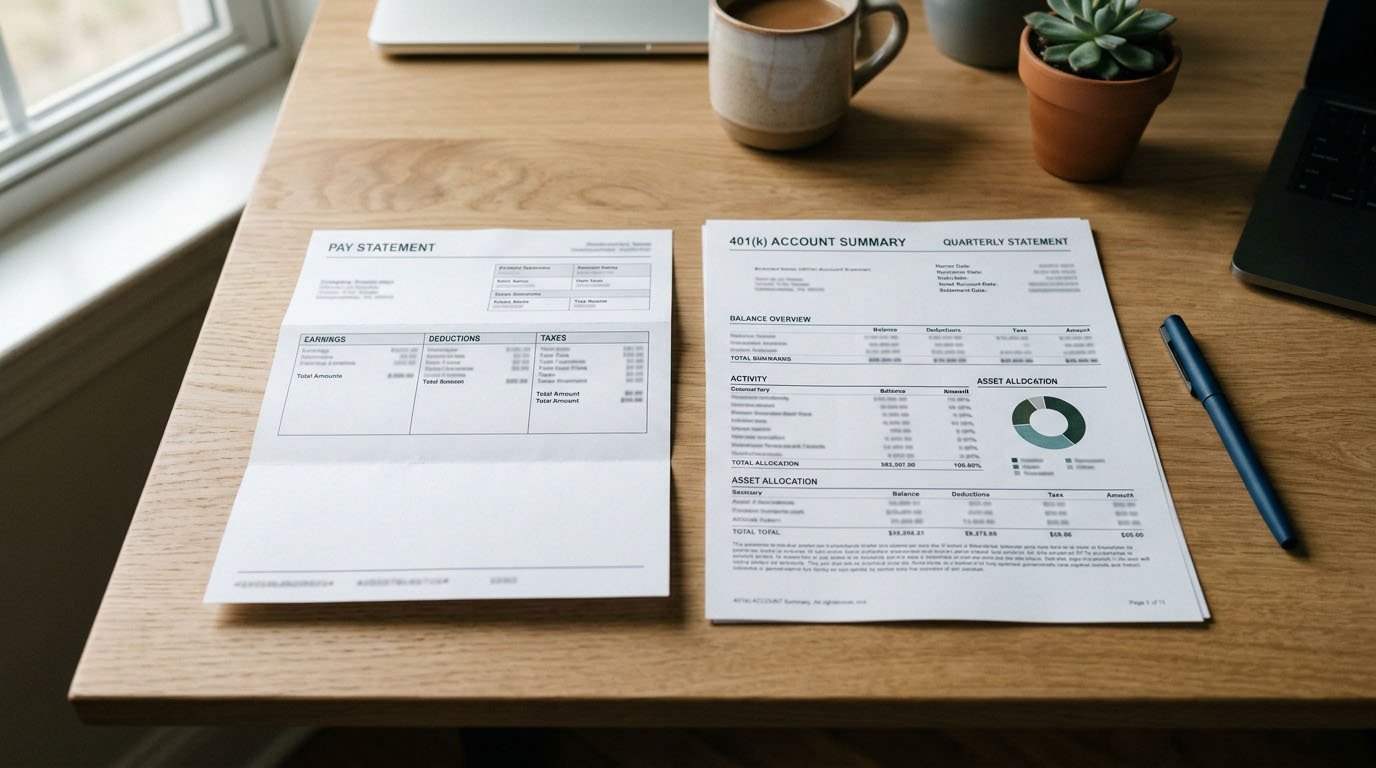
It’s worth separating this decision from a related but different one. If you’re investing a portion of every paycheck into a 401(k) or brokerage account, you’re not really choosing between dollar-cost averaging and lump sum the way this comparison describes. You simply don’t have a lump sum sitting around to invest all at once. Our broader guide on dollar-cost averaging explained for beginners covers that regular, ongoing investing approach in more depth.
The dollar-cost averaging vs lump sum question specifically applies when you have a real choice: a pile of cash sitting in a bank account, and a decision about how quickly to move it into the market.
Running Your Own Numbers
If you want to compare how a lump sum investment might grow against a series of smaller monthly contributions, our Investment Calculator lets you model both scenarios using your own amount, timeline, and assumed rate of return. And if you’re evaluating a specific past investment to see how it actually performed, our ROI Calculator can help you calculate the real return on what you put in.
Common questions about dollar-cost averaging vs lump sum
Historically, it has outperformed dollar-cost averaging more often than not, since markets tend to rise over time. It isn’t guaranteed to win in any specific year, and personal factors like risk tolerance can make a gradual approach the more practical choice for some investors.
Common periods range from three to twelve months. There’s no universal rule, but spreading beyond a year starts to erode most of the statistical advantage of investing sooner rather than later.
It reduces the risk of investing everything right before a sharp downturn, but it doesn’t eliminate market risk entirely. Your money is still exposed to the market once invested, regardless of how gradually it got there.
A few more things worth knowing
Not retroactively. Once a lump sum is invested, the decision is made. Dollar-cost averaging only applies going forward, to money you haven’t invested yet.
Not usually. Regular payroll contributions to a 401(k) already function like dollar-cost averaging by default, since you’re investing a fixed amount each pay period. This comparison mainly applies to a lump sum of cash you’re deciding how to deploy.
All-time highs happen regularly in a healthy, growing market, and historically, investing at a new high hasn’t meaningfully hurt long-term returns compared to waiting for a dip. Trying to time an entry point around headlines is difficult to do consistently well.