How Interest Rates Affect the Economy (and Your Wallet)
Understanding how interest rates affect the economy starts with one number, set by a committee that meets eight times a year. That single rate quietly shapes your mortgage payment and your credit card bill. It also shapes your savings account and your 401(k) balance, all at once.
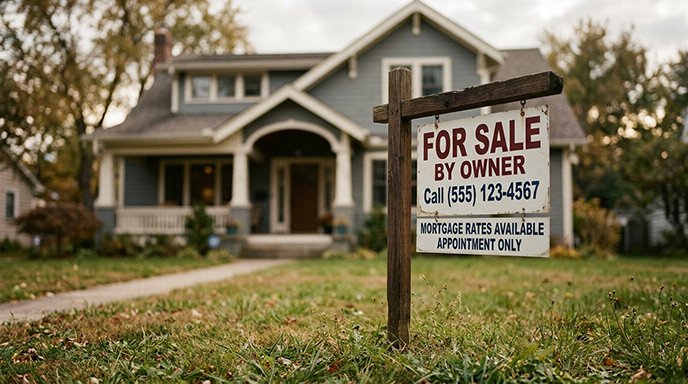
How interest rates affect the economy, one rate at a time
When people talk about “the Fed raising rates” or “cutting rates,” they’re really talking about the federal funds rate. That’s the rate banks charge each other for overnight loans. It’s the number behind how interest rates affect the economy overall. The Federal Reserve doesn’t set this number by decree. Instead, it buys and sells government securities to nudge the rate toward its target. In practice, the Fed’s target functions as the base rate for the entire U.S. financial system.
Almost every other rate you deal with gets priced relative to that base rate. Think mortgages, auto loans, credit card APRs, savings account yields. When the Fed moves, those other rates tend to follow within weeks. Savings accounts and credit cards often adjust within days.
Why the Fed raises or cuts rates in the first place
The Federal Reserve operates under a dual mandate: keep prices stable and support maximum sustainable employment. Those two goals sometimes pull in opposite directions. That tension is what makes the Fed’s job genuinely difficult.
Raising rates is the Fed’s main tool for cooling inflation. Higher rates make borrowing more expensive. That discourages spending on big-ticket items like homes and cars. It also slows business investment and takes some heat out of an overheated economy. Cutting rates does the opposite: it makes borrowing cheaper and encourages spending and investment. That can help pull an economy out of a slowdown. But it also risks reigniting inflation if the Fed moves too aggressively or too soon.
What higher rates mean for borrowing
This is the part most people notice directly. When rates rise, mortgage rates rise too, sometimes dramatically. Take a $400,000 home loan. A jump from 3% to 7% adds well over a thousand dollars to the monthly payment. That prices some buyers out of the market entirely and cools down home sales.
Credit card APRs are often pegged directly to the prime rate, which is itself tied to the federal funds rate. So they rise almost immediately when the Fed hikes. Carrying a balance gets more expensive fast, since credit card rates were already high to begin with. Auto loans and other consumer credit follow the same pattern, usually with a bit more lag.
What higher rates mean for savers
There’s an upside to higher rates if you’re a saver rather than a borrower. Savings accounts, money market accounts, and CDs all tend to pay more when the Fed’s target rate is higher. Banks compete for deposits in an environment where they can lend that money out at higher rates too. During periods of near-zero Fed rates, like much of the 2010s, savings accounts often paid next to nothing. When rates rose sharply in 2022 and 2023, some high-yield savings accounts started paying above 4%. That was a meaningful shift for anyone keeping cash reserves or an emergency fund.
How interest rates affect the economy through the stock market
Higher interest rates tend to weigh on stock prices for two main reasons. First, when bonds and savings accounts pay more, they become more attractive relative to stocks. That pulls some investment money away from the market. Second, higher borrowing costs squeeze corporate profits. Many companies rely on debt to fund growth, buy back shares, or manage day-to-day operations. More expensive debt eats into the bottom line.
There’s also a valuation effect worth knowing. Investors often value stock prices based on a company’s future profits, discounted back to today’s dollars. Higher interest rates apply a heavier discount to those future profits. That mathematically lowers what a stock is “worth” today, even if nothing about the underlying business changed. This is a big reason why growth stocks tend to fall harder when rates rise quickly. These are companies valued heavily on profits expected years in the future.
The lag, and why it matters

One of the trickiest parts of interest rate policy is that it doesn’t act instantly. Economists generally estimate that a rate change takes twelve to eighteen months to work its way fully through the economy. That lag is why the Fed sometimes appears to react late, or to overcorrect. It’s making decisions today based on where it expects the economy to be over a year from now. That’s different from where it stands right this moment.
This lag also explains something else. A series of rate hikes can keep affecting the economy well after the Fed stops raising rates. Say the Fed raises rates aggressively for a year, then pauses. The earlier hikes often keep working their way through mortgages, business loans, and consumer spending for months afterward.
What this means for your own decisions
If you’re shopping for a mortgage, a personal loan, or a car loan, the rate environment matters. It can meaningfully change your total cost over the life of the loan. Compare the actual APR you’re offered, not just the advertised rate, since fees can push the real cost higher. Our APR Calculator and Mortgage Calculator can help you see the real numbers before you commit to anything.
Common questions about interest rates
The Federal Open Market Committee meets eight times a year to review economic conditions. It decides whether to raise, lower, or hold interest rates steady. In a genuine emergency, the Fed can also act between scheduled meetings, as it did with emergency rate cuts in March 2020.
The Federal Reserve publishes its current target range on its official website after every FOMC meeting. It also posts a statement explaining the decision. Since this rate changes periodically, it’s worth checking the Fed’s own site. A figure you find elsewhere may already be outdated.
Higher interest rates tend to weigh on stock prices. They make borrowing more expensive for companies. They also pull some investment money toward bonds and savings accounts instead. And they mathematically lower the present value of a company’s expected future profits. Lower rates generally work in the opposite direction.
This depends on factors specific to your situation. That includes how confident you are predicting rate movements (which nobody can do with certainty), and whether you could refinance later if rates fall. Many buyers choose to lock in a rate that fits their budget today. That beats trying to time a market even professional economists struggle to predict.
Yes, savings account rates generally move in the same direction as the Fed’s target rate. Banks aren’t required to match it exactly, though. High-yield online savings accounts tend to adjust more quickly than traditional banks.
The neutral interest rate is the theoretical rate at which monetary policy neither stimulates nor restricts economic growth. It isn’t directly observable, economists estimate it based on broader economic conditions.