How Social Security Fits Into Retirement Planning
Most retirement math treats Social Security as an afterthought. It’s the nice bonus check that shows up after the real planning is done. That’s backwards. For most retirees, Social Security covers a meaningful chunk of annual spending. Ignore it, and you’ll inflate your savings target by more than you’d expect.
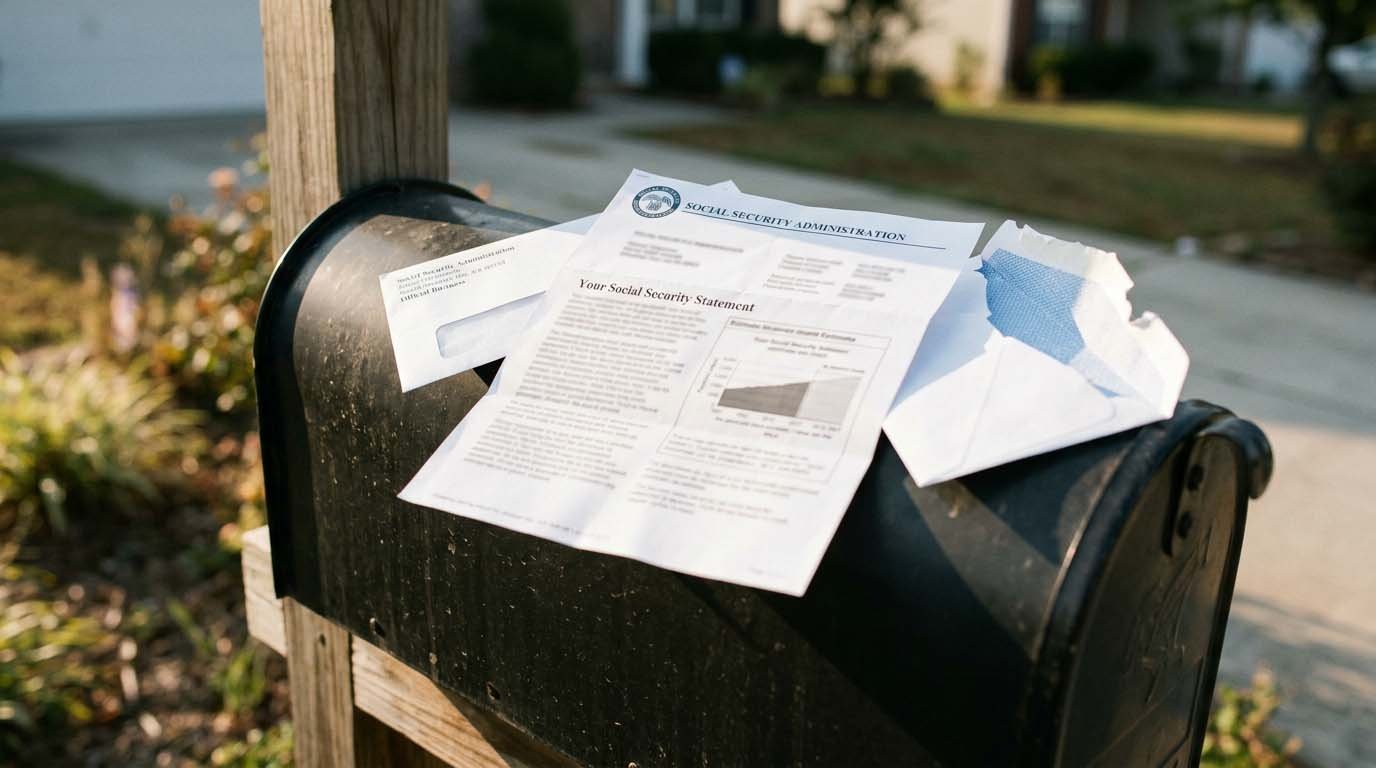
Why this number changes your entire savings target
Our guide on how much money you actually need to retire covers the 25x rule. Multiply your expected annual spending by 25, and you get your target portfolio. That calculation only works if you subtract other guaranteed income first. For most Americans, Social Security is the biggest piece of that subtraction.
Say you expect to spend $60,000 a year in retirement. Skip the Social Security step, and the 25x rule points to $1.5 million. Now factor in $24,000 a year from Social Security. Your portfolio only needs to cover $36,000. That drops your target to $900,000, a $600,000 difference. Getting this one step right or wrong reshapes your entire savings plan.
How your benefit actually gets calculated
The Social Security Administration bases your benefit on your 35 highest-earning years, adjusted for wage growth over time. It averages those years into a monthly figure. Then it applies a formula that weights lower earnings more heavily than higher ones. This produces your primary insurance amount, the benefit you’d receive at your full retirement age.
Full retirement age depends on your birth year. For most people retiring in the coming decades, it lands between 66 and 67. Work fewer than 35 years, and the SSA fills the missing years with zeros. That drags your average down. This is one reason career breaks, whether from raising children, caregiving, or a gap between jobs, can meaningfully reduce your eventual benefit.
Claiming age changes your monthly check dramatically

You can claim Social Security as early as 62 or as late as 70. Each choice changes your monthly benefit permanently. Claim at 62, and you’ll typically lock in a benefit reduced by about 25% to 30% compared to your full retirement age amount. Wait until 70 instead, and you’ll typically lock in a benefit increased by about 24% to 32% above that same baseline. Delayed retirement credits accrue for each year you wait past full retirement age, and that’s where the increase comes from.
This isn’t a small decision. Someone with a $2,000 full retirement age benefit might receive around $1,400 to $1,500 a month at 62. That same person might receive around $2,480 to $2,640 a month at 70. Over a long retirement, that gap adds up to hundreds of thousands of dollars in lifetime benefits. How much it adds up to depends on how long you live to collect them.
The break-even math behind claiming decisions
Claiming earlier gives you more total checks but a smaller amount each. Claiming later gives you fewer total checks but a larger amount each. Somewhere in between sits a break-even age. That’s the point where total lifetime benefits from waiting catch up to, then exceed, total lifetime benefits from claiming early. For most people, that break-even age falls somewhere in the late 70s to early 80s.
This means your own life expectancy matters. So does your family health history, and your need for income earlier versus later. Someone with a shorter life expectancy or an urgent need for income might reasonably claim early. Someone in good health with other income sources to bridge the gap often comes out ahead by waiting.
Spousal and survivor benefits add another layer
Social Security isn’t purely an individual calculation for married couples. A spouse can claim a benefit based on their own work record. Or they can claim up to 50% of their spouse’s full retirement age benefit, whichever is higher. Survivor benefits work differently still. A widow or widower can generally step up to the higher of the two spouses’ benefits after one spouse passes away.
This creates real strategy opportunities for couples. In many cases, the higher earner benefits from delaying their claim as long as possible. That decision sets the survivor benefit the remaining spouse will eventually receive, potentially for decades. The lower earner sometimes claims earlier instead, bringing in income sooner while the household’s long-term security rests on the higher earner’s delayed claim.
Yes, your benefits can be taxed
Many retirees assume Social Security arrives tax-free. It often doesn’t. The IRS taxes up to 85% of your benefit once your combined income crosses certain thresholds. Combined income here means your adjusted gross income, plus nontaxable interest, plus half your Social Security benefit. Those thresholds haven’t been adjusted for inflation in decades. That means more retirees cross them every year as benefit amounts rise with cost-of-living adjustments.
This matters for your spending math. Say you expect $24,000 a year from Social Security. If a portion of that gets taxed, your usable income from that source drops below the headline number. Build this into your retirement budget rather than assuming the full check lands in your pocket untouched.
Medicare premiums quietly reduce your check too

Once you’re enrolled in Medicare, the standard Part B premium typically gets deducted directly from your Social Security check before it ever reaches your bank account. Higher earners pay more through an income-related adjustment, sometimes substantially more. This deduction happens automatically, and it’s easy to overlook when you’re estimating your usable retirement income from Social Security alone.
Add this to the tax question above, and the gap between your headline Social Security benefit and what actually lands in your account can be wider than most people plan for. A realistic retirement budget accounts for both deductions up front, rather than discovering the difference after the first check arrives.
Cost-of-living adjustments protect your check, but not perfectly
Social Security benefits increase most years through a cost-of-living adjustment, or COLA, tied to a measure of consumer prices. This is a real advantage over a fixed pension or a portfolio withdrawal that doesn’t automatically adjust for inflation. It means your Social Security check tends to keep pace with rising prices over a long retirement, at least in broad terms.
The adjustment isn’t perfect, though. It’s based on a general price index, not the specific mix of goods and services retirees actually buy, and healthcare costs in particular have often outpaced the broader index used for the calculation. Some years bring a large COLA increase. Other years bring little or none at all, depending on how prices moved the previous year. Treat the COLA as helpful protection against inflation, not a guarantee that your purchasing power stays exactly flat forever.
Where Social Security fits next to other guaranteed income
Some retirees have more than just Social Security backing up their spending plan. A pension, rental income, or an annuity all work the same way in the math: they reduce how much your portfolio needs to cover on its own. Add up every guaranteed income source you expect, subtract that total from your annual spending, and apply the 25x rule to what’s left.
This step matters more the more guaranteed income you have. A retiree with Social Security plus a modest pension might find their portfolio only needs to cover a small fraction of total spending, which changes both how large a nest egg they actually need and how aggressively they can invest what they do have, since less of their spending depends on market performance in any given year.
A worked example
Say you’re planning to spend $70,000 a year in retirement. You expect a $2,200 monthly benefit at your full retirement age of 67. That comes to $26,400 a year. Subtract that from your spending target, and your portfolio needs to cover $43,600 a year. Under the 25x rule, that puts your savings target at $1.09 million. Compare that to the $1.75 million you’d get by running the calculation against your full spending, without factoring in Social Security at all.
Now say you decide to claim at 62 instead. That cuts your monthly benefit to roughly $1,540, or $18,480 a year. Your portfolio then needs to cover $51,520 a year, pushing your target up to about $1.29 million. The five-year difference in claiming age moves your required savings by roughly $200,000. That’s exactly why this decision deserves real thought, not a default choice made the month you turn 62.
Run your own numbers
The Social Security Administration’s own online calculators give you a personalized benefit estimate. You’ll find them through your my Social Security account, and they’re far more accurate than any generic formula, since they use your actual earnings record. Once you have that number, plug the gap between your spending and your benefit into our Retirement Calculator to see how it changes your savings trajectory.
If you’re weighing how Social Security interacts with a broader withdrawal strategy, our 4% Rule guide and our piece on how long retirement savings actually last cover the portfolio side of the equation. And if you’re pursuing an early retirement that starts well before Social Security eligibility, our FIRE overview covers how to bridge that gap.
Common questions about Social Security and retirement planning
There’s no single right answer. It depends on your health, life expectancy, other income sources, and whether you’re married. Waiting until 70 maximizes your monthly benefit. For many people, it also maximizes lifetime benefits if they live into their 80s or beyond. Claiming earlier makes sense if you need the income sooner or have reason to expect a shorter retirement.
It varies by earnings history. Social Security generally replaces a larger share of income for lower earners than for higher earners, since the benefit formula weights early earnings more heavily. For most retirees, it covers a meaningful but partial share of total spending, rarely the whole amount on its own.
The program’s trust funds face a projected shortfall in the coming years, according to the Social Security Administration’s own trustees reports. This doesn’t mean benefits disappear entirely. Even under current projections, incoming payroll taxes would still cover a large majority of scheduled benefits. Congress has adjusted the program before and will likely do so again, though the exact changes remain uncertain.
A few more things worth knowing
The SSA calculates your benefit using your 35 highest-earning years. Work fewer than 35 years, and it fills the remaining years with zeros. That lowers your average and your eventual benefit. Working additional years, especially higher-earning ones, can replace low or zero-earning years and raise your benefit.
Yes, but claim before your full retirement age and keep working, and the SSA temporarily withholds part of your benefit once your earnings exceed a certain annual limit. That withheld amount isn’t lost. It gets factored back into a higher benefit later. Once you reach full retirement age, this earnings limit no longer applies.
Yes. Most financial planners recommend subtracting your expected Social Security benefit from your annual spending before applying the 25x rule or any other savings target formula. Skip this step, and you’ll inflate your required savings by whatever amount Social Security would otherwise cover.