Minimum Payment vs Full Payment: What’s the Real Cost?
Your statement always shows two numbers: the full balance and the minimum due. Paying the minimum feels manageable. It also turns a $2,000 purchase into a multi-year debt that costs far more than $2,000. Here’s what the gap between those two numbers actually costs, in real dollars and real time.
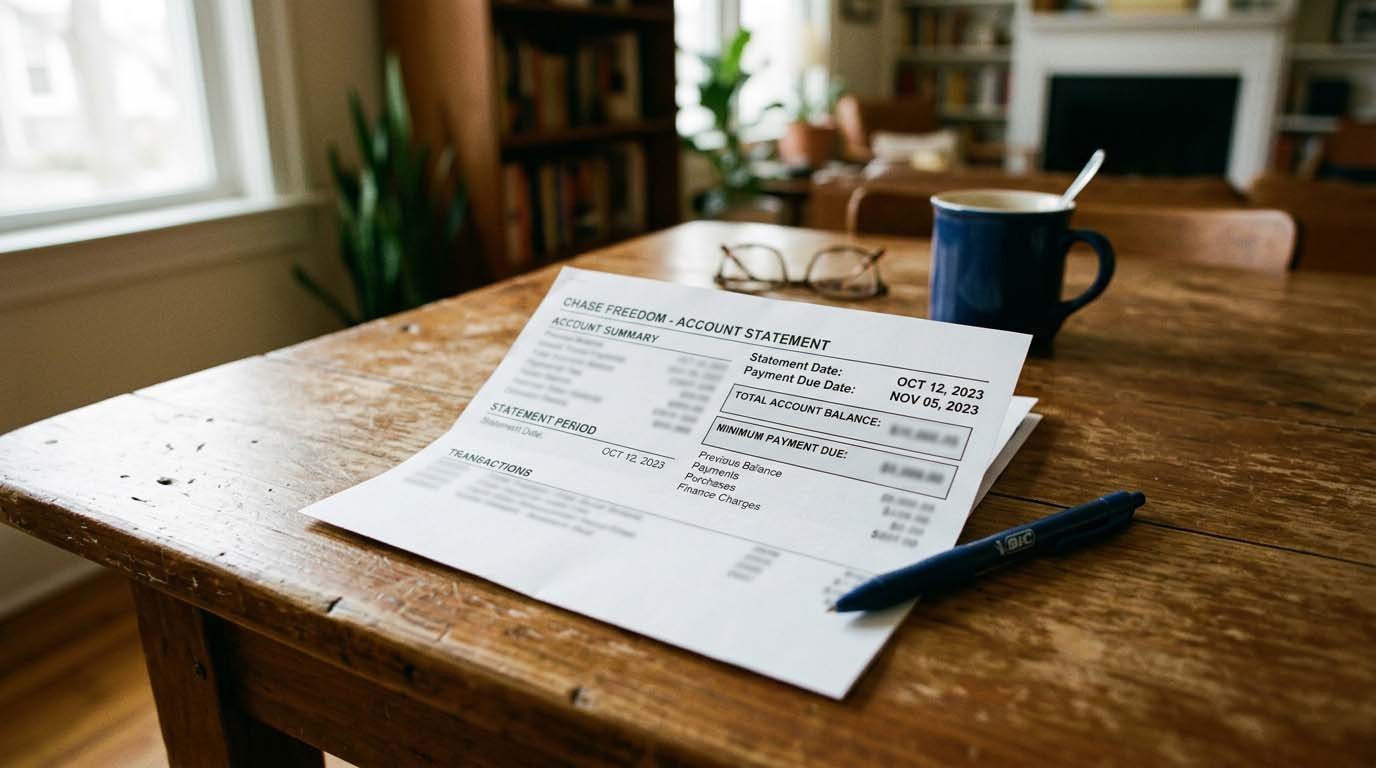
The minimum payment is a floor, not a plan
Card issuers set a minimum payment for one reason: to keep your account in good standing. It’s not designed to pay off your balance in any reasonable amount of time. Most issuers set it around 2% of your balance, or a flat amount like $25 or $35, whichever is higher. That number exists to protect the bank’s ability to collect, not to protect your wallet.
Treat the minimum as a plan, rather than a floor, and you can end up paying interest for years on a purchase you made once. Our How Is Credit Card Interest Calculated? guide breaks down the daily math behind that interest. This article focuses on what happens when you only pay the minimum, versus what happens when you pay the statement in full.
What “minimum payment” means on your statement
Your statement lists a required minimum payment and a due date. Pay that minimum, and your account stays current. You avoid a late fee and you avoid damage to your payment history. But your balance barely moves, since most of that minimum payment covers interest first, and only a small piece chips away at what you actually owe.
Full payment means clearing the entire statement balance by the due date. Do that every month, and you owe no interest at all on those purchases, thanks to your card’s grace period. Our How Do Credit Cards Work? article covers grace periods and billing cycles in more detail if you want the full picture.
A side-by-side cost comparison

Take a $3,000 balance on a card with a 22% APR. Pay only the minimum, roughly 2% of the balance each month, and it takes over 12 years to reach zero. Total interest paid over that stretch runs well above $3,000, meaning you pay more in interest than you originally borrowed.
Now pay the full $3,000 by the due date instead. Total interest cost: $0. Same purchase, same card, same starting balance. The only variable that changed is how much you paid each month, and that one variable is the entire difference between a debt that lingers for over a decade and one that disappears in a single billing cycle.
Our Credit Card Payoff Calculator lets you run this comparison on your own balance and APR, rather than relying on a generic example.
Most people land somewhere between these two extremes, and that middle ground still makes a real difference. Pay $100 a month on that same $3,000 balance at 22% APR, instead of the shrinking minimum, and the payoff timeline drops from over 12 years to roughly three years. Total interest falls from well above $3,000 down to around $960. You still pay something in interest, but a fixed payment above the minimum cuts both the timeline and the total cost dramatically, without requiring you to clear the whole balance in one shot.
Why the math gets worse the longer you wait

Minimum payments usually shrink as your balance shrinks, since most issuers calculate them as a percentage. That sounds harmless, but it means your payment gets smaller right when your balance needs a bigger push to actually go away. Interest keeps accruing on whatever remains, and a shrinking payment against a slow-shrinking balance stretches repayment out even further than a flat payment would.
This is also why an unpaid balance tends to snowball if new charges get added on top of it. Every new purchase joins the balance that’s already accruing interest, and the minimum payment formula doesn’t scale up fast enough to keep pace. Our How to Pay Off Credit Card Debt Faster guide covers specific strategies for breaking out of this pattern.
What full payment actually costs you
Full payment isn’t free in every sense. It requires having the cash on hand each month, and that can strain a budget if your spending outpaces your income. The real cost of paying in full is opportunity cost: money that goes toward your card balance can’t sit in savings or cover something else that month.
But that opportunity cost is almost always smaller than the interest cost of not paying in full. A dollar spent clearing a 22% APR balance effectively earns you a 22% return, since that’s the rate you’d otherwise keep paying. Very few investments or savings accounts match that return, which is why paying off high-interest credit card debt usually ranks above most other financial goals.
When paying less than the full balance actually makes sense
Full payment isn’t always realistic, and that’s fine as long as you go in with a plan rather than defaulting to whatever the minimum happens to be. A 0% introductory APR period changes the math, since a fixed payment plan that clears the balance before the promo rate ends can cost nothing in interest, even without paying the statement in full every month.
If you’re carrying balances on multiple cards, prioritizing the one with the highest APR, while paying at least the minimum on the rest, usually saves more in total interest than spreading payments evenly. Our Debt Payoff Calculator can help you compare payoff strategies across more than one balance at a time. If a balance transfer to a lower-rate card fits your situation, our Balance Transfer Cards guide walks through when that move pays for itself.
What if you can’t cover even the minimum?
Sometimes neither option is realistic in a given month. If cash is genuinely too tight to make the minimum payment, contact your card issuer before the due date rather than after. Some issuers offer hardship programs that temporarily lower your interest rate or waive a late fee for customers who reach out proactively. Missing a payment without any contact almost always costs more, through late fees, a potential penalty APR, and a mark on your credit report once the payment stays unpaid for 30 days or more.
If the shortfall is a recurring problem rather than a one-time gap, it’s worth stepping back and looking at your overall debt picture rather than treating each card in isolation. Our Debt Payoff Calculator can help you see how multiple balances interact, and whether a payoff strategy like the debt snowball or debt avalanche method fits your situation better than paying the minimum on everything at once.
Why your statement now shows a payoff timeline
Since 2010, federal law has required credit card statements to include a minimum payment warning box. That box shows roughly how many years it would take to pay off your current balance at the minimum payment, and how much total interest that would cost. It also shows a comparison: the payment amount that would clear the balance in three years instead, and the interest that plan would cost. The rule exists precisely because the gap between minimum and full payment surprises so many people once they see the real numbers in front of them.
If your card doesn’t clearly show this box, or if you want to test other payment amounts beyond the two the statement offers, our Credit Card Payoff Calculator lets you compare as many scenarios as you want, using your actual balance and APR.
Does this affect your credit score?
Paying the minimum instead of the full balance doesn’t directly hurt your credit score, as long as the payment arrives on time. Payment history doesn’t distinguish between a minimum payment and a full one. But a high balance relative to your limit does hurt your utilization, and that’s a separate score factor entirely. Carrying a large balance because you’re only paying the minimum keeps your utilization elevated, which can quietly drag your score down even while your payment history stays clean. Our Credit Utilization Explained article covers that distinction, and What Is a Credit Score? lays out how the different factors weigh against each other.
Check your own numbers before deciding

The minimum-versus-full decision looks different depending on your balance, your APR, and what else is competing for your cash each month. Run your actual numbers through our Credit Card Payoff Calculator before deciding on a payment strategy. Seeing the real payoff timeline in months and years, rather than guessing, tends to make the decision a lot easier to commit to.
Whatever number you land on, treat it as a decision rather than a default. The minimum payment will always be there on your statement, ready to be the path of least resistance. Paying more than that, even by a modest amount each month, is usually the single biggest lever you control over how much a balance ultimately costs you.
Common questions about minimum vs full payments
Not directly, as long as the payment arrives on time. Payment history treats an on-time minimum payment the same as an on-time full payment. A high balance from carrying debt month to month can still hurt your score through utilization, a separate factor.
Often very little. On a high-interest balance, most of the minimum payment covers that month’s interest charge first. Only the remainder goes toward principal, which is why balances paid at the minimum can take a decade or more to clear.
Yes, in specific cases. A 0% introductory APR period, a higher-priority debt with a steeper interest rate, or a genuine cash flow gap can all justify paying less than the full balance for a stretch. The key is having a deliberate plan, rather than defaulting to the minimum indefinitely.
A few more things worth knowing
Usually, yes. Most issuers calculate it as a percentage of your current balance, so it shrinks as your balance shrinks. This means your required payment drops right as your balance needs a stronger push to actually disappear.
You’ll typically face a late fee, and the missed payment can appear on your credit report if it stays unpaid for 30 days or more. Some cards also apply a penalty APR after a missed payment, which raises your interest rate going forward, sometimes permanently.
Generally, yes. Any amount above the minimum goes directly toward reducing your principal faster, which lowers the interest that accrues in future months. Even a modest extra payment each month can shave months or years off a long payoff timeline.