Roth 401(k) vs Traditional 401(k)
Roth vs traditional 401k comes down to one question most people never actually answer before choosing. Will your tax rate in retirement be higher or lower than it is right now? Everything else follows from that one guess.
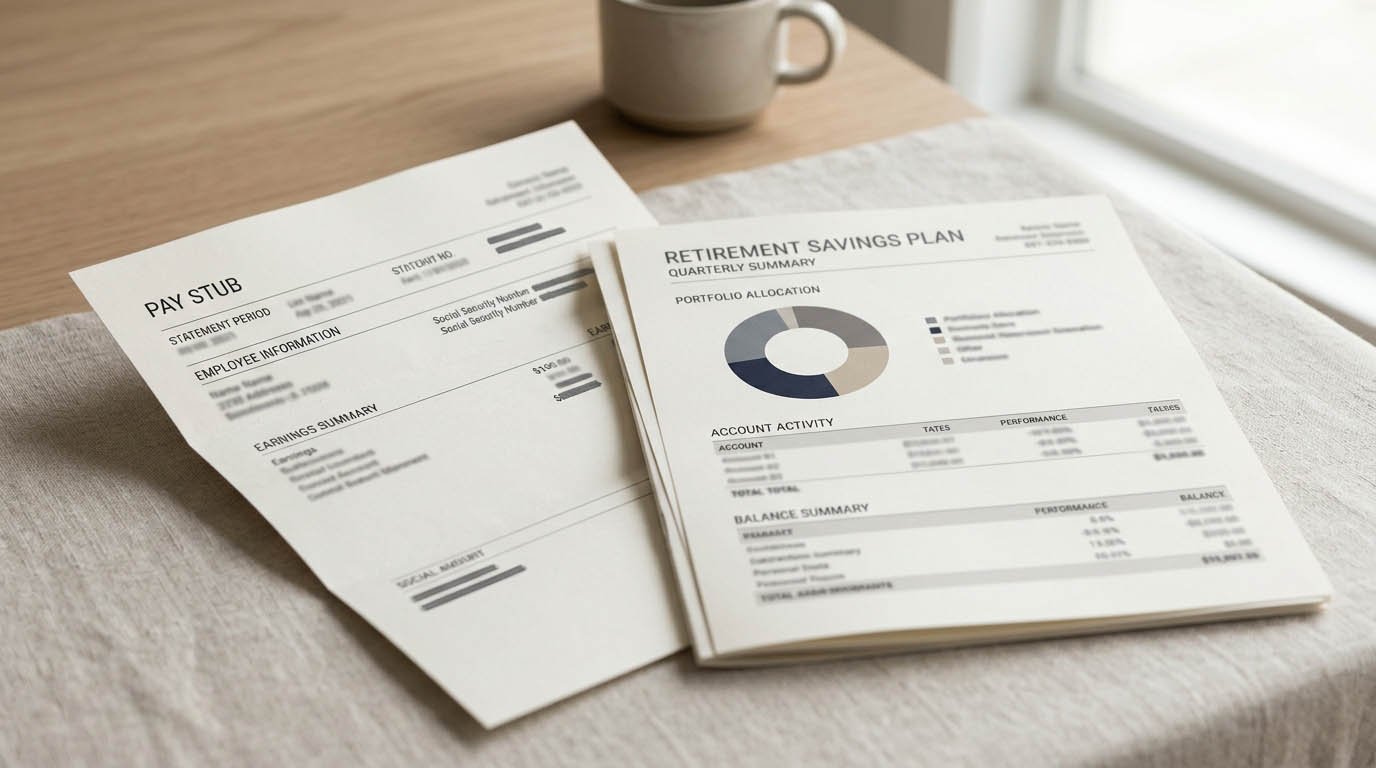
Roth vs Traditional 401k: Where the Tax Break Actually Happens
A traditional 401(k) gives you the tax break now. Contributions come out of your paycheck before taxes, lowering your taxable income for the year you contribute. You pay taxes later, when you withdraw the money in retirement.
A Roth 401(k) flips that order. Contributions come out of your paycheck after taxes, so there’s no upfront deduction. But qualified withdrawals in retirement come out completely tax-free, including all the growth your investments generated over the years.
Both accounts share the same contribution limits, the same investment options in most plans, and the same general rules around vesting and employer eligibility. The only real difference between them is when the government collects its share.
Same Contribution, Two Different Tax Timelines
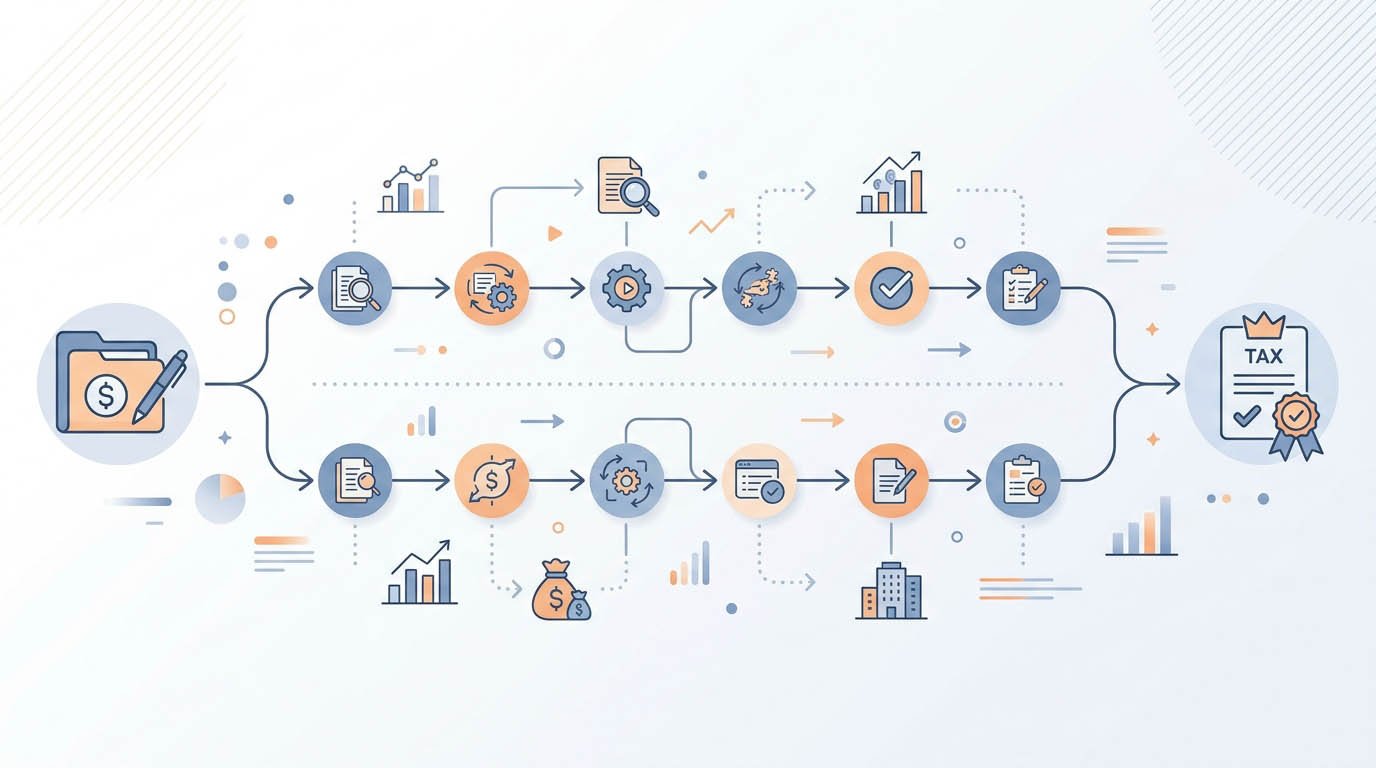
Say you contribute $10,000 a year to either account, and you’re in a 22% tax bracket today. With a traditional 401(k), that $10,000 goes in untouched, and you save $2,200 on this year’s tax bill. A Roth 401(k) works differently. You’d need to earn roughly $12,800 to end up with the same $10,000 after taxes, since you’re paying that 22% upfront instead of later.
Here’s the part that trips people up. If your tax rate stays exactly the same in retirement as it is today, both accounts leave you with the identical amount of spendable money after taxes. The math only tilts one way once your tax rate actually changes between now and retirement. That’s exactly why the decision hinges so heavily on a prediction nobody can make with real confidence.
Why Your Future Tax Rate Is the Whole Decision
If you expect to be in a lower tax bracket in retirement, a traditional 401(k) usually wins. You get the deduction now while your rate is high, and pay taxes later when your rate is lower. This describes a lot of people, since retirement income often runs lower than peak working-years income once a paycheck stops arriving.
If you expect to be in a higher tax bracket in retirement, a Roth 401(k) usually wins instead. You pay taxes now while your rate is comparatively low, and skip taxes entirely later when your rate would have been higher. Younger workers early in their careers often fit this pattern. So do people expecting a significant income jump, or anyone who believes tax rates in general will rise before they retire.
There’s a third group worth mentioning too: people who simply don’t know which direction their income will move. For them, the decision often comes down less to certainty and more to managing risk across two different possible futures.
Nobody Actually Knows Their Future Tax Rate
This is the honest complication behind the whole decision. Your future tax bracket depends on your future income, and that’s something you can’t predict with certainty decades in advance. It also depends on what Congress does with tax rates between now and then, which is even harder to forecast than your own career trajectory.
Because of this uncertainty, many financial planners suggest splitting contributions between both account types, rather than betting everything on one prediction. This hedges against being wrong in either direction. You end up with some tax-free money and some tax-deferred money to draw from once you’re actually retired. A single bad guess doesn’t leave your whole retirement plan exposed to one tax scenario.
Required Minimum Distributions Work Differently Now
Traditional 401(k)s require you to start taking required minimum distributions at a certain age. This forces withdrawals whether you need the money or not. This used to be a real advantage for Roth accounts, which historically didn’t carry this requirement during the original owner’s lifetime.
Recent legislation changed this. Roth 401(k)s no longer require minimum distributions during the original account owner’s lifetime, bringing them in line with Roth IRAs on this specific point. That change removed one of the few structural differences favoring Roth accounts beyond the tax timing itself. The tax-rate question is now close to the only variable left.
Employer Matching Always Goes in Pre-Tax

Regardless of which type you choose for your own contributions, your employer’s matching contribution goes into a traditional, pre-tax account. This happens by default, even if you’ve elected to contribute to a Roth 401(k) yourself.
The practical result is that most people end up with a mix of both account types anyway, purely from the employer match. This happens even if they picked only one option for their own contributions. Your account statement will typically show both a Roth balance and a traditional balance if your employer offers matching. The split conversation often matters less in practice than it seems on paper.
Roth vs Traditional 401k for Different Career Stages
Early in your career, income tends to sit lower, and tax brackets tend to sit lower along with it. This is often cited as the classic case for leaning Roth, since you’re paying tax at a comparatively cheap rate while you’re young. As income rises through your career, the traditional option starts to look more appealing, since the deduction becomes more valuable at a higher marginal tax rate.
Some people intentionally shift their contribution split over time. They lean more Roth early on and more traditional once their income climbs into a higher bracket. This isn’t required. It reflects the same underlying logic, though: contribute to whichever account offers the better tax rate at that specific point in your career.
A Worked Example Across a Career
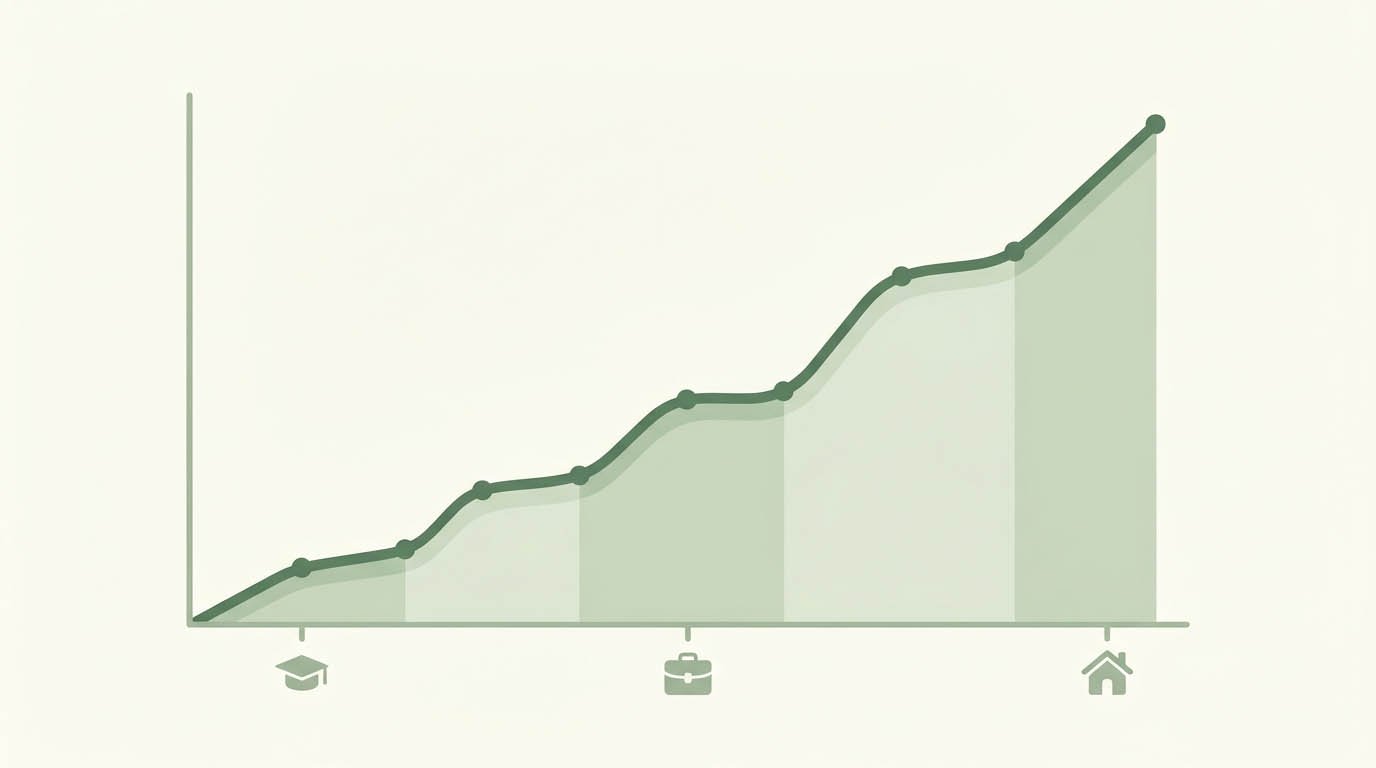
Picture someone starting their first job at 24, earning $45,000 a year, comfortably in a lower bracket. Contributing to a Roth 401(k) at this stage costs relatively little in taxes given up, and locks in tax-free growth for the next 40 years.
By 40, this same person earns $110,000 a year, now sitting in a meaningfully higher bracket. Shifting new contributions toward the traditional side at this point captures a larger deduction while their rate is elevated. Meanwhile, the earlier Roth contributions keep growing tax-free, untouched. Neither choice needs to be permanent. The two account types can coexist inside the same overall retirement strategy without conflict.
Running Your Own Numbers
Our article on what is a 401(k) covers the broader mechanics of how these accounts work, including contribution limits and vesting schedules. If you want the fuller picture beyond the Roth versus traditional decision, that’s the place to start. If you’re weighing the same tax-timing question for an IRA instead of a workplace 401(k), our piece on Roth vs. traditional IRA covers that closely related decision.
To see how your specific contribution amount could grow over time, our Retirement Calculator can project your balance at different contribution levels and timelines. This works regardless of which account type you choose.
Common questions about Roth vs traditional 401k
Yes, if your employer’s plan offers both options. Your combined contributions across both accounts still count toward the same annual IRS contribution limit, so splitting doesn’t let you contribute more overall.
No. Roth 401(k)s have no income limits, unlike Roth IRAs, which phase out eligibility above certain income levels. This makes a Roth 401(k) a useful option for higher earners who can’t contribute directly to a Roth IRA.
Yes. You can typically roll a Roth 401(k) balance into a Roth IRA, and a traditional 401(k) balance into a traditional IRA, keeping the tax treatment of each portion intact during the rollover.
A few more things worth knowing
No. You can change your contribution election going forward at any time, though existing contributions generally keep whatever tax treatment they were originally made under. You’re not stuck with your original choice for future paycheck contributions.
No. Employer matching contributions don’t count against your personal annual contribution limit, though there is a separate, higher combined limit covering your contributions plus your employer’s match together.
Splitting contributions between both account types is a common way to hedge against this uncertainty, rather than betting entirely on one prediction about future tax rates.