What Is Inflation and Why Does It Matter to You?
What is inflation? A movie ticket cost about a dollar in 1970. Today it’s closer to twelve. That gap is inflation, and it touches nearly every financial decision you make, whether you notice it or not.
What Is Inflation? The Short Version
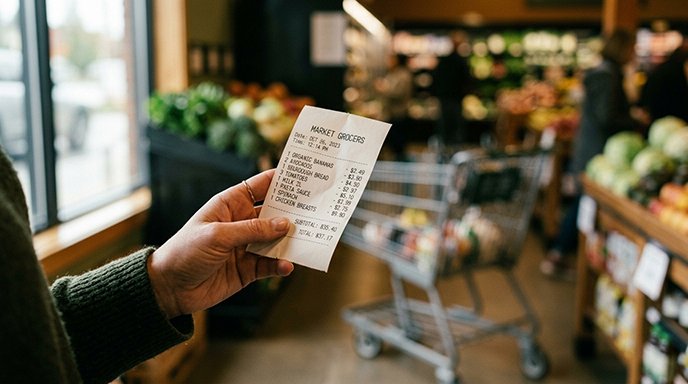
What is inflation, in plain terms? It’s the rate at which prices rise across the economy over time. When people talk about “3% inflation,” they mean that, on average, the same basket of goods and services costs 3% more than it did a year earlier. It’s not that any single thing always goes up by exactly that amount. Gas might jump 15% one year while furniture barely moves. Inflation is the blended average across thousands of prices.
The flip side of rising prices is falling purchasing power. If your salary stays flat while prices climb, you can buy less with the same paycheck. This is the part people feel, even if they’ve never looked at a government inflation report.
What Is Inflation, and How Is It Actually Measured
In the United States, the most commonly cited inflation number comes from the Consumer Price Index, or CPI, which the Bureau of Labor Statistics publishes monthly. Researchers track the prices of a fixed basket of goods and services (things like rent, groceries, gasoline, medical care, and clothing) and compare that basket’s total cost from one period to the next.
The CPI isn’t perfect. It can’t fully capture the fact that people change their habits when prices rise (buying chicken instead of beef, say). And different households experience very different inflation, depending on what they spend money on. A retiree on a fixed income who spends heavily on healthcare experiences inflation differently than a college student whose biggest expense is rent. Still, CPI is the standard reference point, and it’s what the Federal Reserve watches when deciding on interest rate policy.
What Actually Causes Prices to Rise
There are a few different engines behind inflation, and they often overlap.
Demand-pull inflation happens when people have more money to spend than there are goods available to buy. Prices rise because everyone’s competing for the same limited supply. This is roughly what happened in 2021, when stimulus payments, pent-up savings from lockdowns, and low interest rates all pushed spending up. Supply chains, at the same time, hadn’t recovered yet.
Cost-push inflation works from the other direction. When the cost of producing goods rises, whether from higher wages, pricier raw materials, or supply shortages, businesses pass that cost on to customers. Oil price shocks are a classic example: when crude oil gets more expensive, it raises the cost of everything that ships, which is nearly everything.
There’s also the simple matter of money supply. If a central bank prints or creates a lot of new money without a matching increase in goods and services, each unit of currency becomes worth a little less. This is the mechanism behind the extreme inflation seen in countries like Zimbabwe in the late 2000s, or Venezuela in the 2010s. At their worst, prices doubled in a matter of days.
Who Wins and Who Loses
Inflation doesn’t affect everyone the same way. Borrowers tend to benefit from moderate inflation, since they’re paying back loans with money that’s worth less than what they borrowed. If you locked in a 30-year mortgage at a fixed rate before a period of high inflation, your payment stays the same in dollar terms. Your income, ideally, rises with inflation, making that fixed payment easier to handle over time.
Savers and lenders tend to lose out, especially if their money is sitting in an account earning less interest than the inflation rate. A savings account paying 1% during a year of 5% inflation means your money is losing real value even though the account balance is technically growing.
People on fixed incomes, retirees living off a pension that doesn’t adjust for inflation for example, often feel the hardest hit, since their income doesn’t grow to keep pace with rising costs.
The 1970s and the 2021-2023 Comparison
The United States saw a rough stretch of inflation in the 1970s, driven partly by oil embargoes that quadrupled crude oil prices almost overnight. Inflation reached roughly 13 to 14% by 1980. To break it, the Federal Reserve under chairman Paul Volcker raised the federal funds rate to nearly 20%, a move that triggered a painful recession but eventually brought inflation back down.
More recently, U.S. inflation peaked around 9.1% in June 2022, the highest reading in about four decades. It was driven by a mix of pandemic-related supply chain problems, strong consumer demand, and a sharp jump in energy prices following Russia’s invasion of Ukraine. The Fed responded by raising interest rates aggressively through 2022 and 2023, pushing the federal funds rate from near zero to above 5%. It’s the same basic playbook Volcker used decades earlier: make borrowing more expensive to cool off spending and bring prices back under control.
What This Means for Your Own Money
You can’t control inflation, but you can plan around it. Cash sitting idle loses value every year inflation runs above zero, so keeping a large amount of money in a checking account earning nothing is quietly expensive. A high-yield savings account or short-term investments can at least partially offset that erosion.
For longer-term goals, historically stocks and other growth investments have tended to outpace inflation over long stretches, even though they come with more short-term ups and downs than a savings account. This is part of why financial advisors often talk about the risk of being too conservative with money you won’t need for a decade or more. Playing it “safe” in cash can be the riskier move, once you factor in inflation.
If you want to see exactly how a specific inflation rate would affect a specific amount of money over time, our Inflation Calculator runs the math for you, showing both the future cost of goods and the shrinking value of cash left sitting still.
Common questions about inflation
The Federal Reserve targets an average annual inflation rate of around 2%, measured using the Personal Consumption Expenditures (PCE) price index. A rate near that target generally counts as healthy, since it’s low enough to preserve purchasing power but high enough to avoid the economic problems associated with deflation.
The Bureau of Labor Statistics tracks the prices of a fixed basket of goods and services, including housing, food, transportation, and medical care, across thousands of retail outlets each month. It then compares the total cost of that basket to a base period to calculate the percentage change, which becomes the CPI figure widely reported in the news.
Yes. If a savings account’s interest rate is lower than the current inflation rate, the money in that account loses purchasing power even as the balance grows. Prices are simply rising faster than the interest the account earns. This is why comparing your savings rate to the inflation rate matters more than looking at the interest rate alone.
Headline inflation includes every category in the CPI basket, including volatile items like food and energy prices. Core inflation strips out food and energy specifically because their prices swing sharply for reasons unrelated to broader economic trends, giving economists and the Federal Reserve a clearer read on underlying price pressure.
Inflation typically rises from a combination of factors: too much money chasing too few goods (demand-pull), rising production costs that businesses pass to consumers (cost-push), or supply chain disruptions that reduce the availability of goods relative to demand.
3% is somewhat above the Federal Reserve’s 2% target but not considered extreme by historical standards. It’s higher than the target rate but well below the double-digit inflation seen during periods like the 1970s.
Inflation doesn’t directly change your paycheck amount, but it reduces what that paycheck can buy if your wages don’t rise at the same pace. This gap between wage growth and inflation is often called “real wage” growth or decline.
Hyperinflation refers to extremely rapid, often uncontrolled price increases; economists typically define it as exceeding 50% per month. A government usually causes it by printing large amounts of money to cover spending, as seen historically in Zimbabwe and Venezuela.
Borrowers with fixed-rate debt tend to benefit, since they repay loans with money that’s worth less than what they borrowed. Asset owners, particularly those holding real estate or stocks that appreciate faster than inflation, can also come out ahead.