401(k) vs IRA: Which Should You Max First
401k vs IRA isn’t really a competition between two equally good options. It’s a sequencing question. Once you know the order that actually makes sense, the decision stops being confusing and starts being mechanical.

401k vs IRA: The Basic Structural Difference
A 401(k) is an employer-sponsored account. You can only access one if your workplace offers it. The specific investment options inside it get chosen by your employer’s plan administrator, not by you. Contributions come straight out of your paycheck before you ever see the money.
An IRA, short for individual retirement account, works differently. Anyone with earned income can open one directly through a brokerage, completely independent of an employer. You choose the brokerage, and you choose from a much wider menu of investments than a typical 401(k) plan offers.
Both accounts come in Roth and traditional versions, and both offer real tax advantages. The question of which to prioritize isn’t about which account is inherently better. It’s about which one gives you more value for the next dollar you’re able to save. That answer changes as you move through different levels of contribution.
Step One: Always Capture the Employer Match First
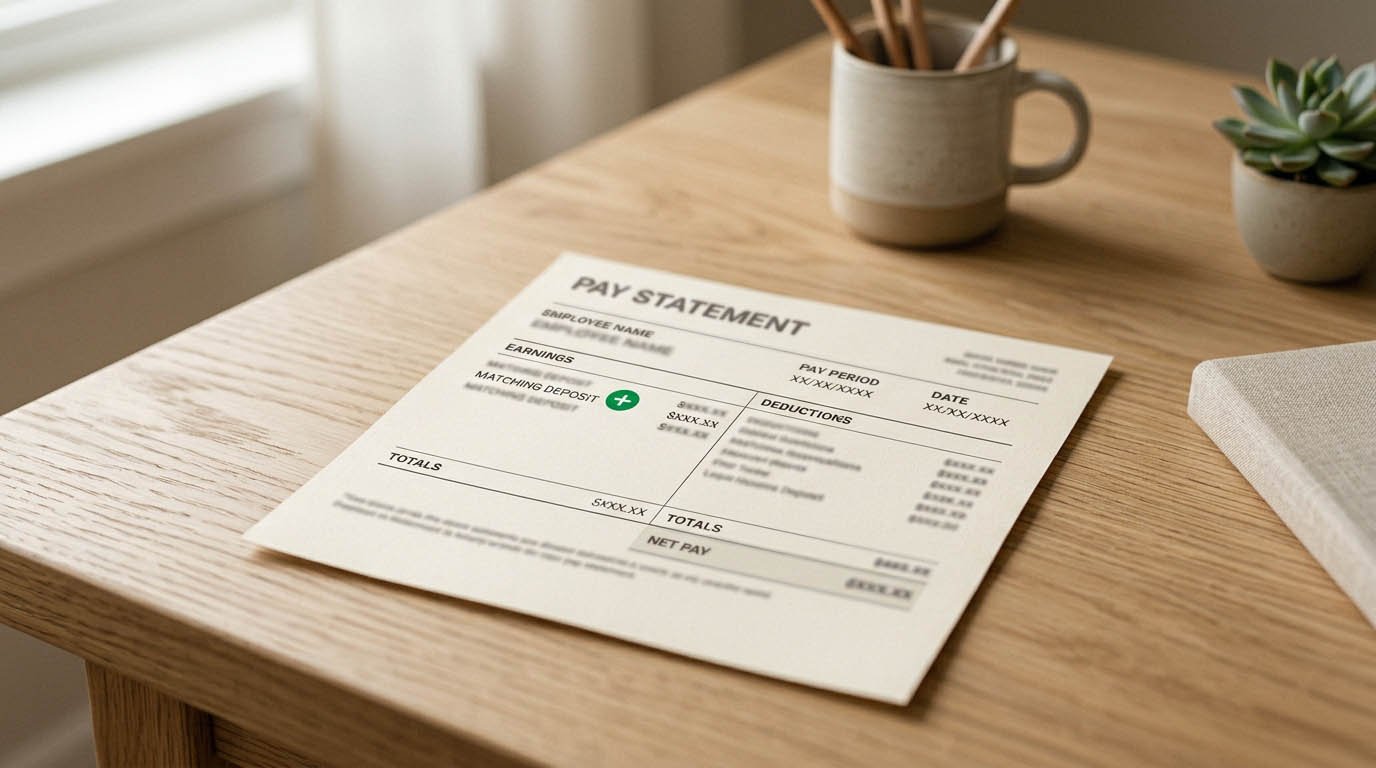
If your employer offers any kind of 401(k) match, this is where every dollar should go first. This comes before an IRA even enters the conversation. A common match structure is 50% of your contribution up to 6% of your salary. On a $60,000 salary, contributing that 6%, or $3,600, gets you an extra $1,800 from your employer, completely free.
No IRA, no investment, and no other financial move available to most people offers a guaranteed 50% or 100% return on day one. Skipping the match to prioritize an IRA instead means walking away from money your employer was ready to hand you. This step isn’t really a comparison at all. It’s closer to a rule with no real exception, assuming you can afford to contribute enough to capture it.
Step Two: Why an IRA Usually Comes Next
Once you’ve captured the full match, the next dollar you save usually works harder in an IRA than back in your 401(k). The reason comes down to control and cost. A 401(k) locks you into whatever fund lineup your employer’s plan chose. Those funds sometimes carry higher expense ratios than what you could find on your own.
An IRA opens the door to nearly any stock, bond, ETF, or index fund available on the open market. Say your 401(k) plan’s cheapest broad-market fund charges 0.4%, and a comparable ETF in an IRA charges 0.03%. That gap compounds meaningfully over decades, even though it looks small on paper in any single year.
This is why the common ordering looks like this: capture the full 401(k) match first, then max out an IRA next, then circle back to the 401(k) for anything beyond that if you’re still able to save more.
Step Three: Go Back to the 401(k) if You Can Save More
IRA contribution limits sit far below 401(k) limits. Say you’ve maxed out an IRA and you’re still able to put away more for retirement. The 401(k) becomes the better home for those additional dollars, since an IRA simply won’t accept any more money for the year once you’ve hit its cap.
This is where the higher fees inside some 401(k) plans matter less than they did earlier in the order. At this stage, the alternative to contributing more to a mediocre 401(k) fund isn’t a cheaper IRA option, since that option is already full for the year. The alternative is a regular taxable brokerage account, which gives up the tax advantages entirely. A slightly more expensive 401(k) fund still usually beats no tax advantage at all.
Comparing the Actual 401k vs IRA Contribution Limits
401(k) contribution limits run significantly higher than IRA limits, often several times higher depending on the current year’s IRS figures. This gap alone explains why high earners who’ve already maxed an IRA still have plenty of room left in a 401(k) to keep saving in a tax-advantaged way.
IRA limits are modest by comparison. They apply across all your IRAs combined if you have more than one. You can’t max out a Roth IRA and a traditional IRA separately in the same year to double your total contribution room. The combined limit still applies across both accounts together.
Workers 50 and older also get access to catch-up contributions on both account types, letting them contribute more than the standard limit as retirement gets closer. This applies separately to each account, so someone eligible for catch-up contributions can add extra to both their 401(k) and their IRA in the same year.
Fees Are the Part Most People Skip Checking

Every 401(k) plan comes with a fee disclosure document. It’s usually buried somewhere in your plan’s online portal, and it lists the expense ratio for every fund option available to you. Almost nobody reads this document, but it’s worth five minutes of your time. Fees directly reduce your long-term return regardless of how well the underlying investments perform.
Say your plan’s cheapest reasonable options run comparable to what you’d pay in an IRA. In that case, the fee argument for prioritizing an IRA weakens considerably, and the decision comes down more to fund selection variety than cost. Plans differ enormously here. Some large employers negotiate excellent, low-cost fund lineups. Some smaller plans stick you with expensive options no matter how much you contribute.
Income Limits Can Change the Order for High Earners
Roth IRA eligibility phases out above certain income thresholds. The deduction for traditional IRA contributions can phase out too, if you’re covered by a workplace plan and your income runs high enough. High earners sometimes find themselves unable to contribute directly to a Roth IRA at all, or unable to deduct a traditional IRA contribution. That changes the math behind this whole ordering.
In these situations, some savers use a workaround known as a backdoor Roth IRA. This means contributing to a traditional IRA with no deduction, then converting it to a Roth. This gets complicated quickly and depends heavily on your specific tax situation. It’s worth research or professional advice before attempting it, rather than assuming it applies cleanly to your circumstances.
What This Looks Like on an Actual Paycheck
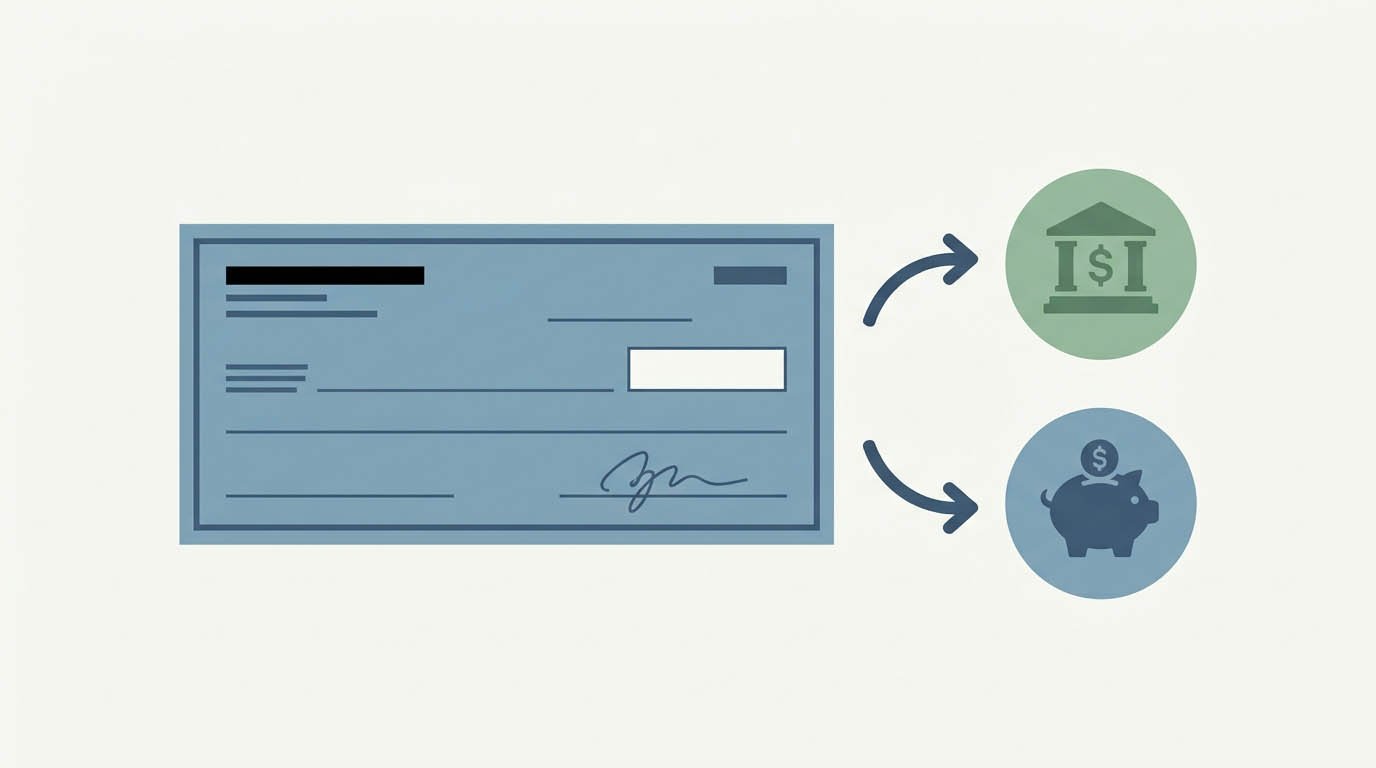
Say you earn $70,000 and your employer matches 50% up to 6% of salary. You can save $500 a month toward retirement. Following the order above, the first $350 a month goes to your 401(k). This captures the full 6% match and the free money that comes with it.
The remaining $150 a month goes into an IRA instead of straight back into the 401(k). You’re likely to find lower fees and a wider fund selection there. Say your circumstances change and you can suddenly save $800 a month instead of $500. The extra $300 flows back into the 401(k) once your IRA contribution room fills up for the year, assuming you haven’t already redirected it toward the IRA limit earlier in the year.
Notice that nothing about this order requires guessing at future tax rates or market returns. It’s a mechanical sequence based on match availability, contribution caps, and fee comparisons, all of which you can check directly rather than predict.
Timing Contributions Across the Year
Some people front-load their 401(k) contributions early in the year to max out sooner, only to discover their employer match stops once their own contributions hit the annual cap for the year, sometimes leaving months of matching contributions on the table. Check whether your plan calculates the match per paycheck or on a true-up basis at year-end before front-loading aggressively.
A per-paycheck match with no true-up rewards spreading contributions evenly across all 12 months, rather than front-loading contributions into the first few months and accidentally forfeiting match dollars later in the year.
Self-Employed Savers Have Different Options Entirely
This whole ordering assumes a traditional employer-employee relationship with access to a workplace 401(k). Self-employed workers and small business owners have separate account types available, like a SEP IRA or a Solo 401(k). These carry their own contribution limits and rules that don’t map directly onto this same order of operations.
If you fall into this category, the same underlying logic still applies in spirit. Capture any available match or equivalent benefit first, then optimize for cost and flexibility. The specific account names and limits involved will differ from the standard employer-401(k)-plus-IRA scenario described above.
Running Your Own 401k vs IRA Numbers
Our article on what is a 401(k) covers the mechanics of employer plans in more depth. Our piece on Roth vs. traditional 401(k) covers the tax-timing decision once you’ve settled on contributing to a workplace plan. If you’re weighing the same Roth versus traditional question for an IRA specifically, our article on Roth vs. traditional IRA covers that closely related decision. To project how any of these contribution levels could grow over time, our Retirement Calculator can run the numbers using your own savings rate and timeline.
Common questions about 401k vs IRA
If there’s no match to capture, an IRA often becomes the more attractive first option anyway, thanks to typically lower fees and wider investment choice, assuming your income doesn’t push you past IRA eligibility limits.
Yes. There’s no rule preventing you from contributing to both in the same year, up to each account’s own limit. Having a 401(k) can, however, affect whether your traditional IRA contribution is tax-deductible, depending on your income.
The Roth versus traditional decision is a separate question from which account type to prioritize funding first. Both decisions matter, but they’re independent of each other and depend on different factors, mainly your expected future tax rate for the Roth versus traditional choice.
A few more things worth knowing
Some employer plans negotiate excellent low-cost fund lineups. If that’s the case for your plan, the fee argument for prioritizing an IRA after the match weakens, and you may reasonably choose to keep contributing to your 401(k) directly.
You can typically roll it over into an IRA or into a new employer’s 401(k) plan, preserving its tax-advantaged status. Leaving it with a former employer’s plan is usually allowed too, depending on the balance and specific plan rules.
This is rare and usually not advisable, since the match represents an immediate, guaranteed return that’s difficult to replace elsewhere. Extreme situations, like urgent high-interest debt or an immediate cash need, are occasionally cited as exceptions, but they deserve individual consideration rather than a blanket rule.