HELOC vs Home Equity Loan: Which Fits Your Goal
A HELOC vs home equity loan decision comes down to one basic question. Do you need a fixed amount of money right now, or ongoing access to funds over time? Both borrow against the same asset. They work in very different ways.

HELOC vs Home Equity Loan: The Basic Structure
A home equity loan gives you a lump sum upfront. It comes at a fixed interest rate, paid back in fixed monthly installments over a set term. It works a lot like a second mortgage. You get the full amount at once, and the payment never changes.
A HELOC, short for home equity line of credit, works more like a credit card. It gives you access to a credit limit, based on your equity. Borrowing against it happens as needed, whenever you want to draw funds. You only pay interest on the amount you actually draw, not the full available limit.
How Much Equity You Actually Need
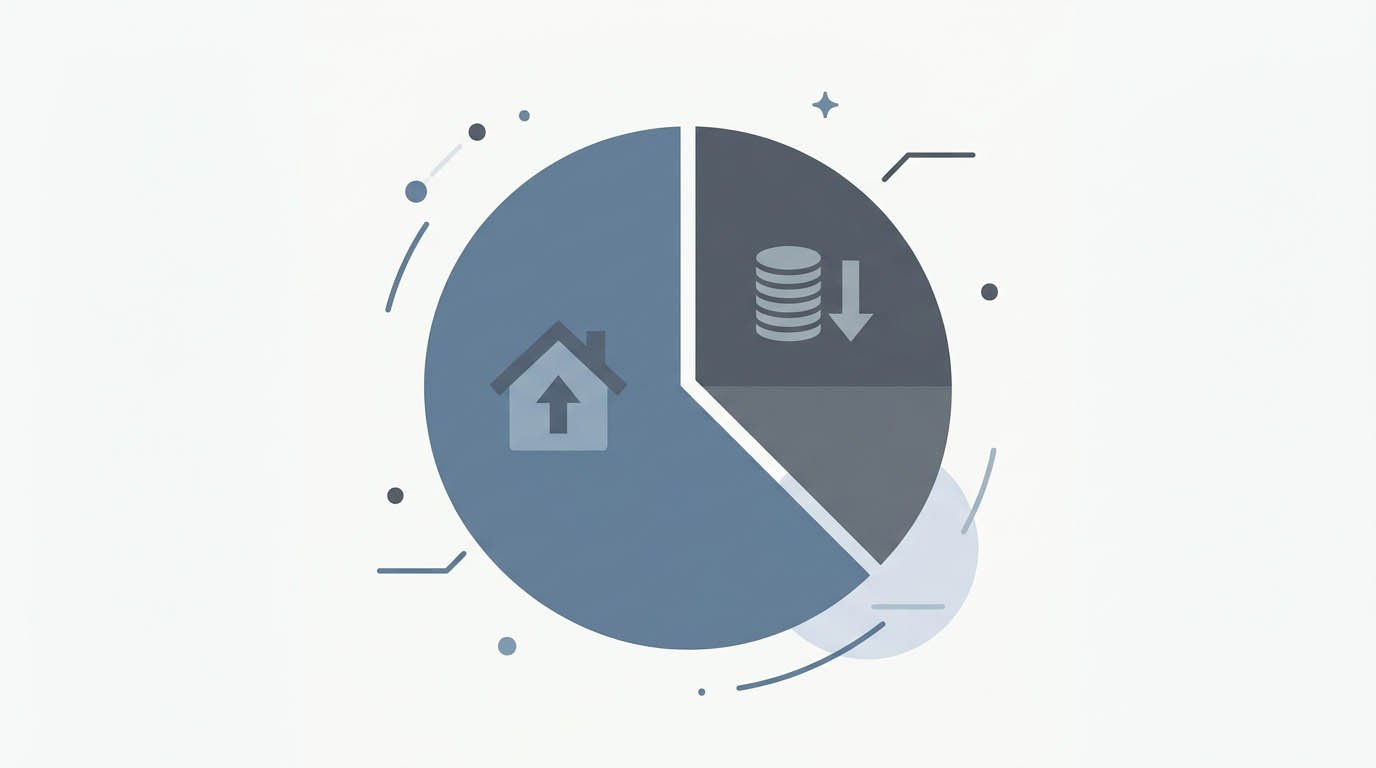
Most lenders require you to keep at least 15% to 20% equity in your home after borrowing. This combines your primary mortgage balance and the new loan. On a $400,000 home with a $250,000 mortgage balance, you have $150,000 in equity. A lender allowing you to borrow up to 85% combined loan-to-value might let you access roughly $90,000 through either option.
This calculation works the same way for both loan types. Both use the same underlying equity as the basis for how much you can borrow.
Fixed Rate vs. Variable Rate
Home equity loans almost always carry a fixed rate. Your payment stays the same for the entire term, often 5 to 20 years. This makes budgeting simple. You know exactly what you owe every month from day one.
HELOCs typically carry a variable rate instead, tied to a market index like the prime rate. Your payment can rise or fall as that index moves. Some lenders now offer a fixed-rate conversion option on a HELOC balance. This lets you lock in a portion of what you’ve drawn, though it varies by lender and isn’t universal.
The Draw Period Is What Makes a HELOC Different
A HELOC splits into two phases. The draw period, typically 5 to 10 years, is when you can borrow against the credit line. This often comes with interest-only payments required during this window. The repayment period comes next, typically 10 to 20 years. You can no longer draw new funds, and you must pay down both principal and interest.
This structure suits ongoing or unpredictable expenses well, like a multi-phase renovation where costs aren’t fully known upfront. A home equity loan doesn’t offer this flexibility. Once you receive the lump sum, that’s the full amount you’re working with.
A Concrete Example

Say you’re renovating a kitchen with a fixed $40,000 contractor bid. A home equity loan fits this well. Borrow the full $40,000 upfront at a fixed rate. Pay it down on a predictable schedule, since you know the total cost in advance.
Now say you’re planning several home projects over the next three years, but you don’t know the exact costs yet. A HELOC fits this better. Draw $15,000 this year for a roof repair. Draw another $10,000 next year for a bathroom update. Leave the rest of the credit line untouched until you need it. You only pay interest on what you’ve actually drawn at any given time.
Closing Costs and Fees Differ Too
Home equity loans typically carry closing costs similar to a regular mortgage, often 2% to 5% of the loan amount. HELOCs sometimes carry lower upfront costs. Some lenders waive closing costs entirely, though they may add an annual maintenance fee or an early closure fee if you pay off the line within the first few years.
These fee structures shift periodically as lenders compete for business. It’s worth comparing actual offers rather than assuming one type is always cheaper across the board.
The Risk Both Options Share
Both a HELOC and a home equity loan use your home as collateral. Fall behind on payments, and the lender can foreclose, the same as with your primary mortgage. This is different from an unsecured personal loan or credit card, where a default doesn’t put your home directly at risk.
Because of this shared risk, both options deserve careful thought before borrowing. This matters especially for discretionary spending rather than home improvements or debt consolidation that might improve your finances longer-term.
How a HELOC vs Home Equity Loan Affects Your Overall Debt Picture
Adding a HELOC or home equity loan increases your monthly debt obligations. This affects your debt-to-income ratio if you apply for other credit later. Our article on debt-to-income ratio explains how lenders weigh this number, and why a new home equity payment could affect your ability to qualify for a car loan or another mortgage down the road.
If you’re deciding between this and your existing mortgage structure, our piece on ARM vs fixed-rate mortgages covers a related rate-type decision. Our Mortgage Calculator can help you estimate payments across different loan scenarios.
Common questions about HELOC vs home equity loan
Technically yes, as long as you have enough equity to support both, though most lenders will factor in your total combined loan-to-value ratio when approving either one. Having both simultaneously is less common than choosing one based on your specific need.
Interest may be deductible if the funds are used to buy, build, or substantially improve the home securing the loan, under current tax law. Rules have changed in recent years, so check current IRS guidance or consult a tax professional for your specific situation.
You enter the repayment period. You can no longer draw new funds, and you must begin paying down both principal and interest on whatever balance you’ve drawn, typically over 10 to 20 years.
A few more things worth knowing
A home equity loan often fits debt consolidation well, since you know the exact amount you’re consolidating upfront and want a fixed payment. A HELOC can work too, but the variable rate adds some payment uncertainty over time.
Yes, under certain conditions, like a significant drop in your home’s value or a change in your financial situation, lenders can reduce or freeze a HELOC’s available credit, even if you haven’t missed a payment.
Both typically require a solid credit score, often in the mid-600s or higher, along with sufficient equity and a reasonable debt-to-income ratio. Requirements vary by lender.