How Amortization Works (Why Early Payments Are Mostly Interest)
How amortization works explains one of the most frustrating parts of owning a mortgage. Pay the same amount every month for years, and it can feel like the balance barely moves. That’s not a mistake. It’s exactly how the math is designed to work.
How Amortization Works, in Plain Terms
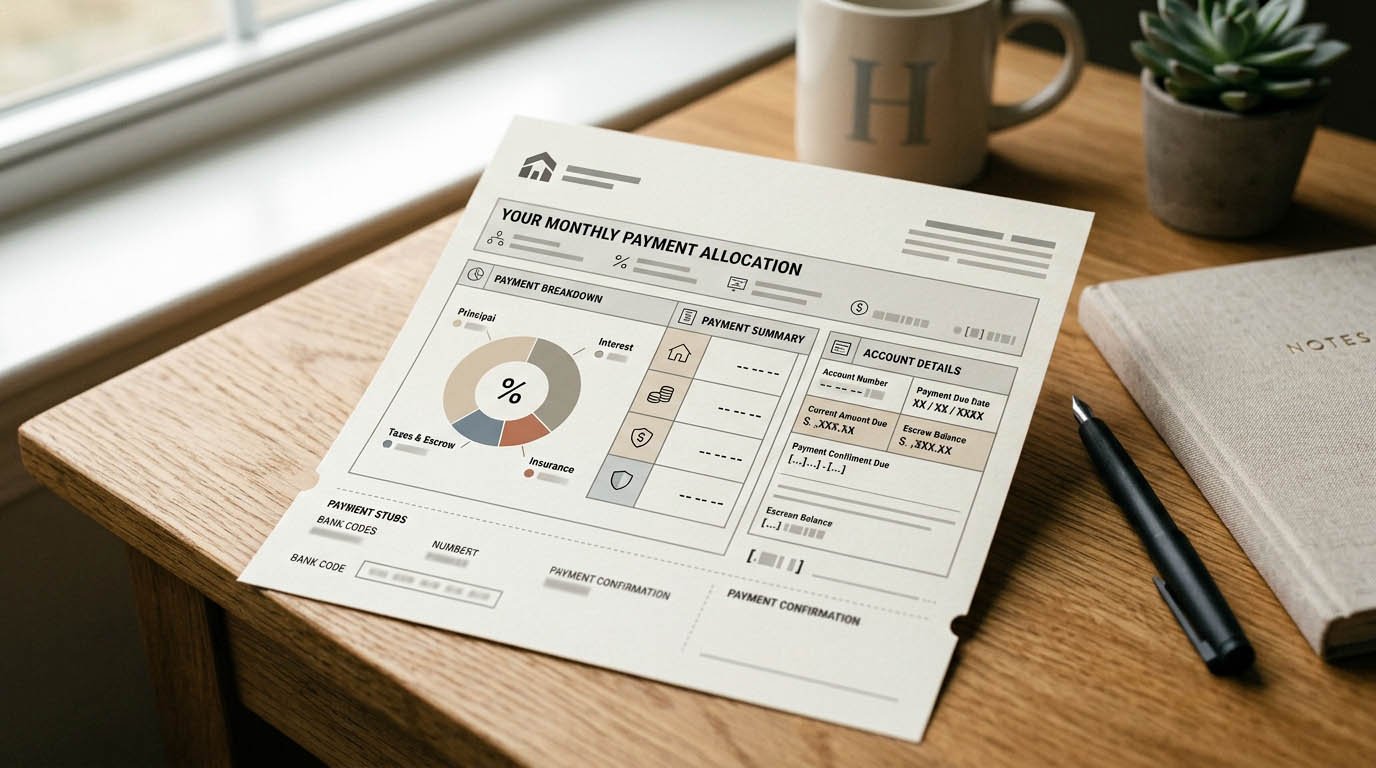
Amortization is the schedule that splits each loan payment between interest and principal. Your total monthly payment stays fixed on a standard mortgage, but the mix inside that payment shifts every single month. Early on, most of it covers interest. Near the end, most of it covers principal.
None of this comes from a hidden fee or a lender trick, it’s just how the underlying math works. Interest gets calculated on your remaining balance each month. Early in the loan, that balance is large, so the interest charge is large too. As the balance shrinks over time, the interest charge shrinks with it. That leaves more of each fixed payment free to chip away at what you actually owe.
A Concrete Example of How Amortization Works
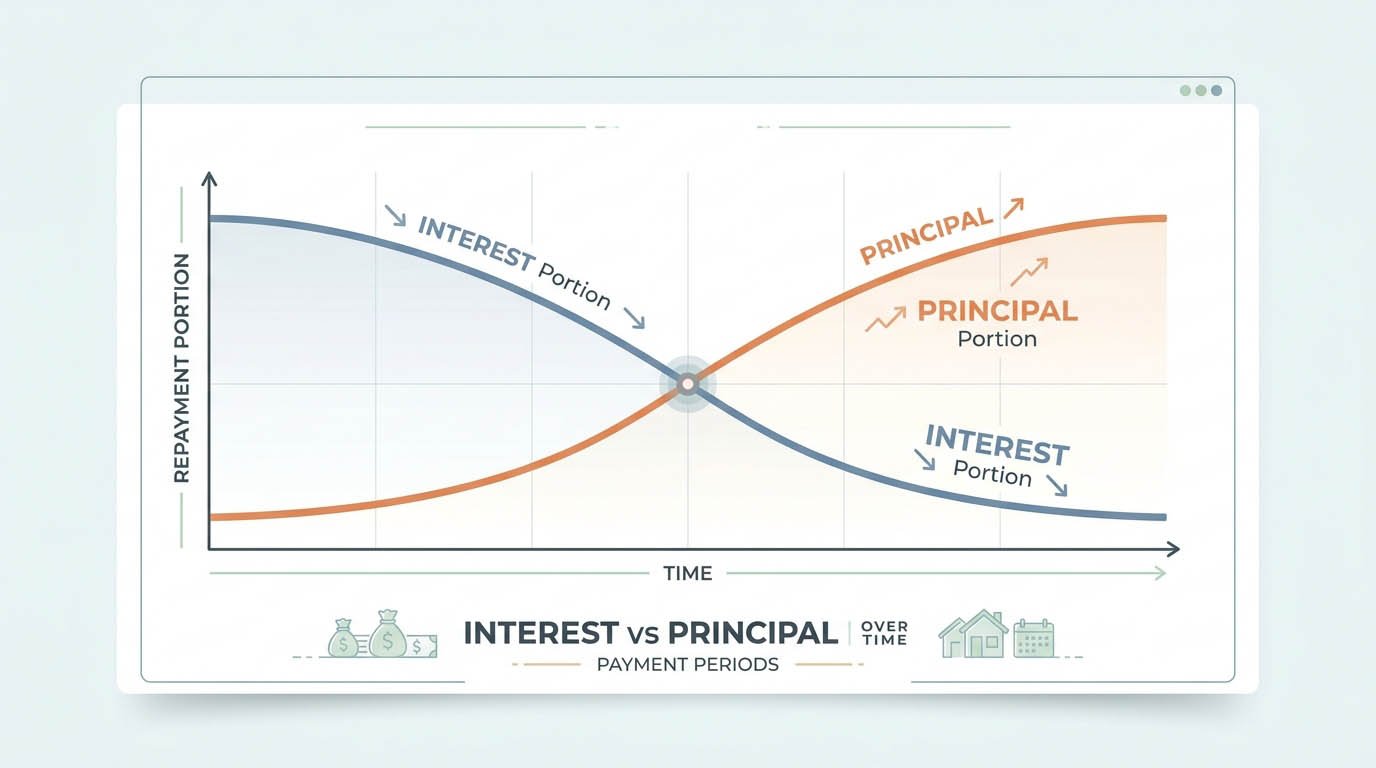
Take a $300,000 mortgage at 6.5% over 30 years. The monthly payment comes out to roughly $1,896. In month one, about $1,625 of that goes to interest. Only about $271 goes toward principal.
Fast forward to year 15. The payment is still $1,896, but the split has shifted meaningfully: roughly $1,000 goes to interest now, and $896 goes to principal. By year 29, the balance has flipped almost entirely. Most of the payment finally attacks principal directly, with only a small sliver going toward interest.
Lay these three snapshots side by side and the pattern becomes obvious. The payment never moves. Everything underneath it does, and that movement follows a curve rather than a straight line.
Why the Split Changes So Slowly at First
The shift from interest-heavy to principal-heavy happens gradually, not evenly. In the first third of a 30-year loan, you build relatively little equity through your payments alone, even though you’ve made a lot of them by that point. This catches many homeowners off guard. They expect their balance to drop in something close to a straight line.
The math behind this is exponential rather than linear. Each month’s interest charge depends entirely on the balance left over from the month before. A large balance generates a large interest charge, which leaves less room in a fixed payment for reducing principal that month. That compounding relationship is exactly what makes the early years of a mortgage feel so slow, no matter how diligently you keep paying.
It also explains something homeowners often notice only after checking a few years’ worth of statements. The balance drops faster and faster as time goes on, even though the payment itself never changes. The curve accelerates on its own once enough principal has been chipped away.
Why Extra Payments Matter So Much Early On

Interest dominates the early payments. Because of that, extra principal payments made early in a loan have an outsized effect on total interest paid over the life of the loan. Pay an extra $200 toward principal in year two, and you avoid paying interest on that $200 for the remaining 28 years of the loan.
Make that same extra $200 payment in year 28 instead, and there are only a couple years of remaining interest left to avoid. The dollar amount going toward principal is identical in both cases. The long-term impact is completely different, purely because of when the extra payment lands on the timeline. This is why financial advice consistently favors paying down principal as early as possible, if you’re going to make extra payments at all.
A modest example makes this concrete. Add just $100 a month in extra principal on that same $300,000 loan, starting in year one, and you can cut several years off the total loan term. The savings in interest over the life of the loan can reach tens of thousands of dollars. Wait until year 20 to start that same $100 habit, though, and the savings shrink dramatically, since so much of the interest cost has already been paid by then.
How a Shorter Loan Term Changes the Whole Schedule
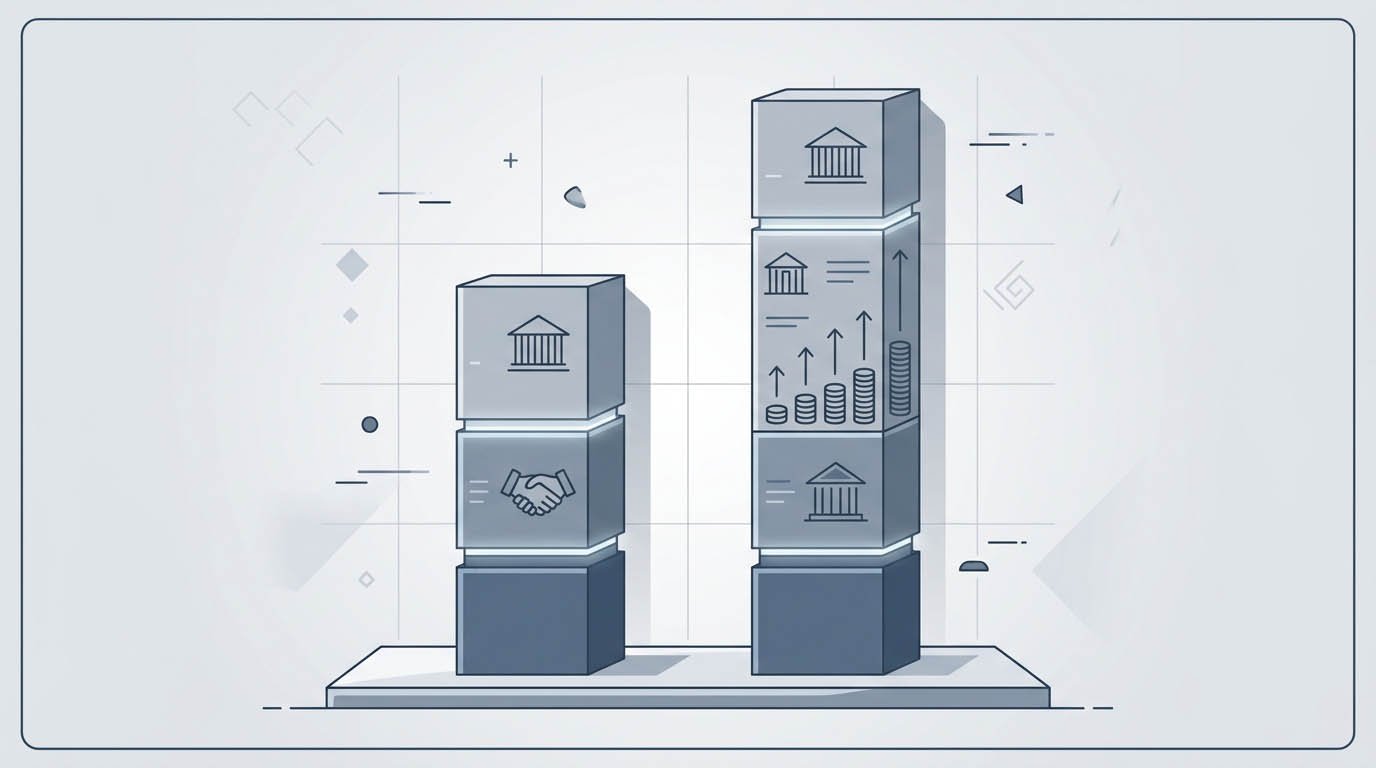
A 15-year mortgage amortizes very differently from a 30-year one, even at the exact same interest rate. The monthly payment runs higher. But a much larger share of each payment goes to principal from the very start, since the loan has far less time to spread out the interest.
On that same $300,000 loan at 6.5%, a 15-year term carries a monthly payment of roughly $2,613, noticeably higher than the 30-year payment. Total interest paid over the life of the loan drops dramatically in exchange, often by well over half. The balance shrinks much faster and generates less interest along the way. Neither term is universally better. A shorter term saves real money but demands a higher payment every month. A longer term keeps monthly cash flow lower at the cost of paying more interest overall.
Amortization Applies Beyond Mortgages Too
The same principle applies to auto loans, personal loans, and any other fixed-payment installment loan. The specific numbers differ, since car loans run much shorter terms and smaller balances. But the underlying mechanic stays identical: early payments skew toward interest, later payments skew toward principal.
If you’re comparing loan terms on a car purchase, our Car Loan Calculator can show you how a shorter versus longer term changes your monthly payment and total interest paid. And if you’re weighing a HELOC or home equity loan against a traditional amortizing mortgage, our article on HELOC vs home equity loan covers how those repayment structures compare.
Why Your Loan Balance Doesn’t Match What You’ve Paid
This is a common source of confusion for homeowners checking their statements. Pay $1,896 a month for five years, and that adds up to over $113,000 paid total. But your loan balance has only dropped by a fraction of that amount, since most of those payments covered interest rather than reducing the principal.
Checking an amortization schedule, which most lenders provide upfront or upon request, shows exactly how this breakdown plays out month by month for your specific loan. It’s worth reviewing this schedule before assuming your equity is building faster than it actually is. That’s especially true if you’re planning to sell or refinance within the first several years and expect a certain amount of built-up equity to show up at closing.
What Refinancing Does to an Existing Amortization Schedule
Refinancing doesn’t continue your existing schedule, it starts a brand new one. A new loan begins its own amortization from scratch. That means the new loan starts interest-heavy again, even if your original loan had already shifted toward mostly principal payments after a decade or more of payments.
This is worth factoring into a refinance decision, not just the new interest rate itself. Refinancing late into an existing loan’s term can sometimes reset the interest-heavy phase in a way that offsets some of the savings from a lower rate. It depends on how far along the original loan was and how the numbers actually compare.
Running Your Own Numbers
Our Mortgage Calculator can generate the monthly payment and show how the interest and principal split shifts over your specific loan term and rate. If you’re deciding between a fixed and adjustable structure entirely, our piece on ARM vs fixed-rate mortgages covers that separate decision in more depth. It also explains how an adjusting rate can reshape the amortization schedule partway through a loan.
Common questions about how amortization works
On a standard fixed-rate loan, no. The total monthly payment stays the same for the entire term. Only the internal split between interest and principal changes month to month.
Not automatically. Some lenders apply extra payments to future interest or fees first unless you specifically request that they go toward principal. Always confirm with your lender how extra payments get applied.
Yes. Lenders are generally required to provide this information as part of your loan disclosures, and most will also provide a full amortization schedule upon request at any point during the loan.
A few more things worth knowing
Yes. A refinance creates a new loan with its own amortization schedule, which typically means the new loan starts interest-heavy again, even if your original loan had shifted toward mostly principal payments.
When an ARM’s rate adjusts, the lender recalculates the remaining amortization schedule based on the new rate and remaining balance, which can shift the interest-to-principal split even without any change in the loan term.
No. During an interest-only period, the entire payment covers interest, and none of it reduces principal. Standard amortization, where principal reduction begins immediately, only starts once that interest-only period ends.