Tax-Deferred vs. Tax-Free: What’s the Difference?
Both phrases show up on nearly every retirement account brochure, and both sound like good news. But tax-deferred vs tax-free describes two genuinely different deals with the IRS. Mixing them up can lead to an unpleasant surprise the day you finally withdraw your money.
The short answer
Tax-deferred means you don’t pay tax now, but you will pay it later. Tax-free means you don’t pay tax now, and you never will, at least on that specific growth. Both delay or eliminate a tax bill, but only one of them makes that bill disappear for good. Knowing which is which before you pick an account matters more than most people realize.
The confusion happens because both types of accounts feel identical in the moment. Money goes in, it grows, and no tax form shows up that year. The real difference between tax-deferred vs tax-free only becomes obvious on the back end. It shows up when you actually take the money out, often decades after the original contribution was made. By then, the choice you made years earlier is already locked in.
Tax-deferred: pay later, on a bigger number
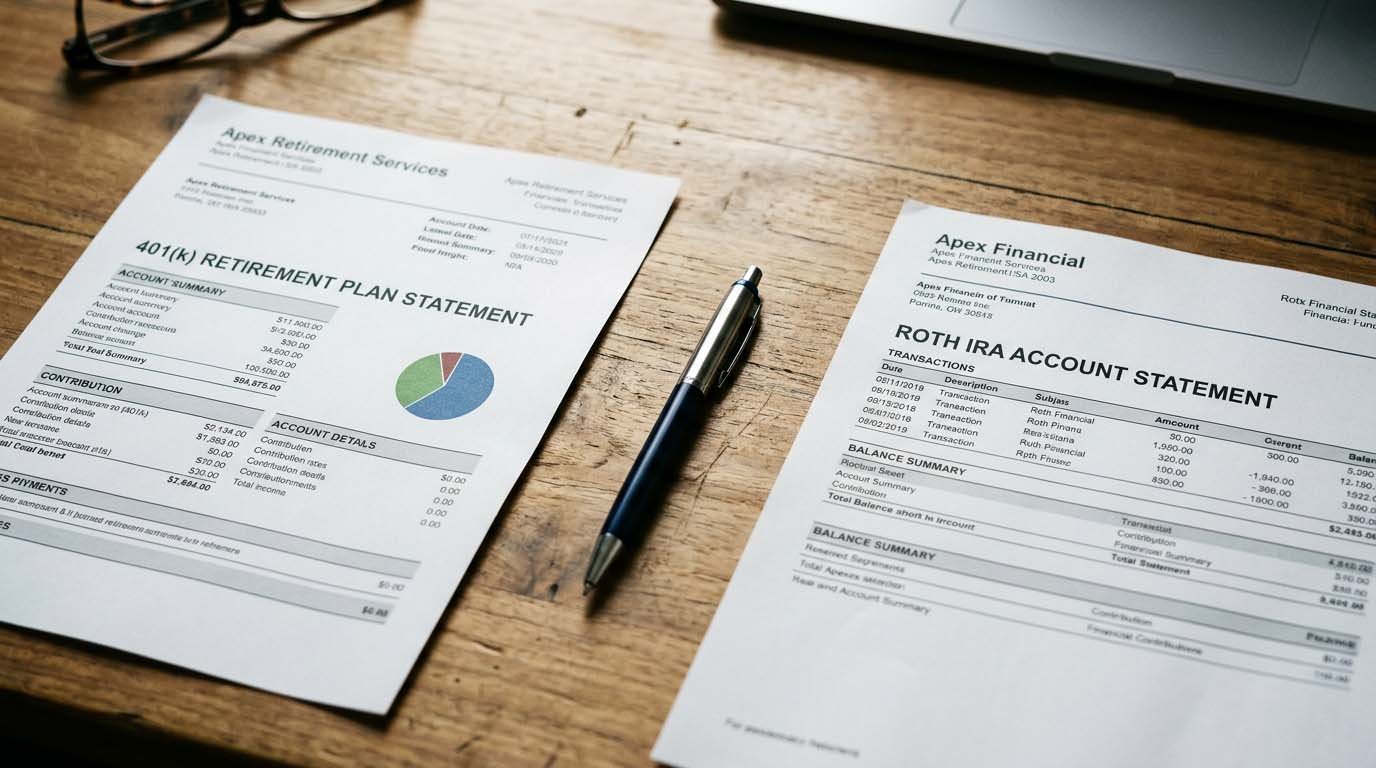
A traditional 401(k) or traditional IRA is the classic tax-deferred account. Contribute money today, and in most cases you get an upfront deduction that lowers your taxable income for the year. The money then grows without being taxed year to year. That’s a real advantage over a regular taxable brokerage account. There, dividends and gains can trigger a tax bill along the way, even if you never touch the account.
The catch arrives at withdrawal. Every dollar you take out in retirement gets taxed as ordinary income at whatever rate applies that year. That includes both your original contributions and all the growth on top. You’re not avoiding tax with a tax-deferred account. You’re postponing it instead, paying it later on a larger balance than you originally put in. That’s because decades of growth get taxed right along with your contributions.
Tax-free: pay now, on a smaller number
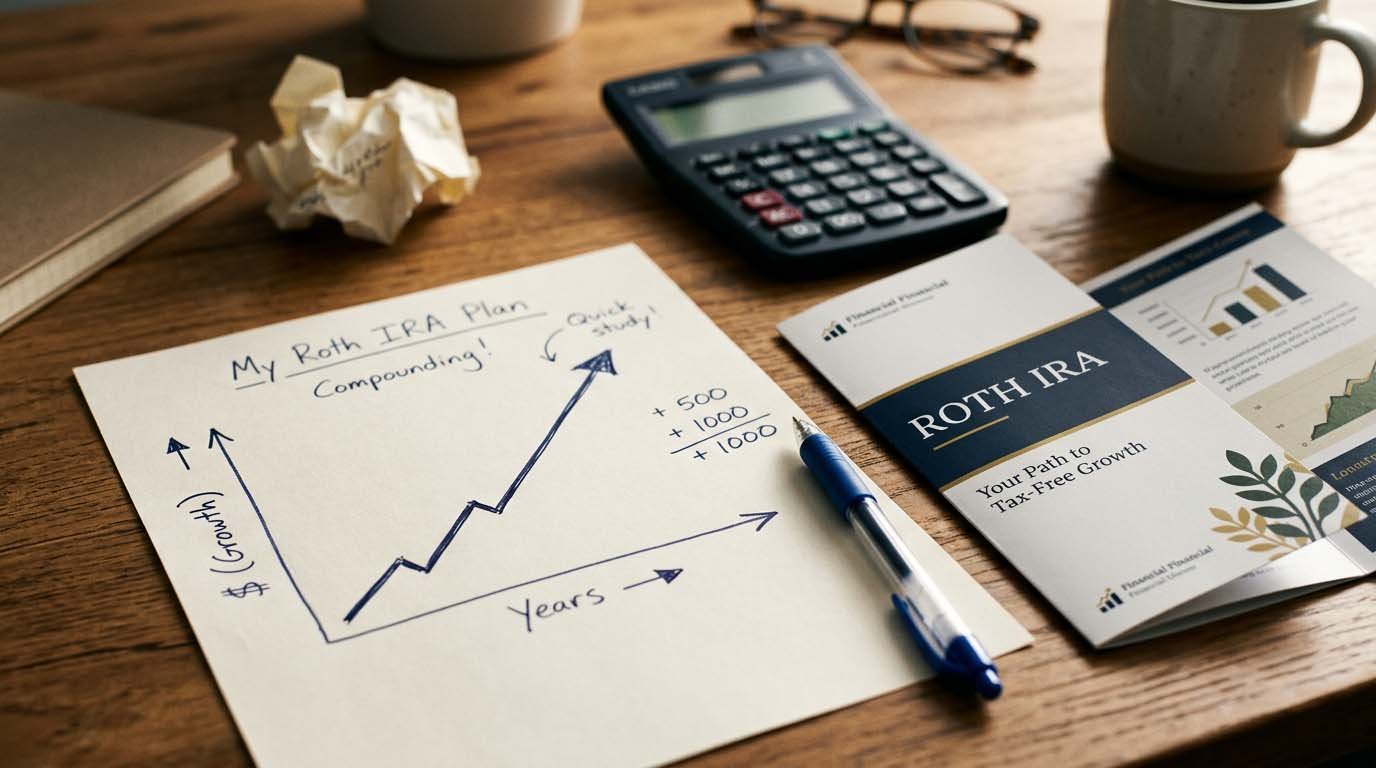
A Roth IRA or Roth 401(k) works the opposite way. You contribute money you’ve already paid tax on, so there’s no upfront deduction. But once the money is in the account, it grows completely untouched by taxes. Qualified withdrawals in retirement, contributions and every dollar of growth included, come out entirely tax-free.
The trade is simple once you see it clearly. This is the core of tax-deferred vs tax-free thinking: with a tax-deferred account, you pay tax later on a bigger number. With a tax-free account, you pay tax now on a smaller number, the original contribution. Everything it grows into afterward escapes taxation permanently. Our Roth vs. Traditional IRA guide walks through this exact trade-off in more depth. It covers how your current versus expected future tax bracket should factor into the decision.
Tax-Deferred vs. Tax-Free Accounts: Where You’ll Run Into This
This isn’t just an IRA concept. It shows up across several account types. Traditional 401(k)s, traditional IRAs, and most pensions are tax-deferred. Roth IRAs and Roth 401(k)s are tax-free on qualified withdrawals. For 2026, the IRA contribution limit is $7,500. Savers 50 and older get an extra $1,100 catch-up. The 401(k) employee contribution limit is $24,500, with an $8,000 catch-up for the same age group. Both limits get adjusted for inflation most years, so it’s worth checking the current figures before planning a large contribution.
Health Savings Accounts push this even further. Contributions are tax-deductible going in, and the balance grows tax-deferred. Withdrawals for qualified medical expenses come out completely tax-free. That’s often called the “triple tax advantage.” It’s a rare case where an account gets treated as tax-deferred and tax-free at the same time. Which treatment applies depends on how the money is used, and unused funds can simply keep growing for future medical costs, including in retirement.
A side-by-side dollar example
Say you contribute $6,000 a year for 30 years, and the investment grows to $600,000 by retirement. In a tax-deferred account, that entire $600,000 gets taxed as ordinary income as you withdraw it. At a 22% effective rate, that’s roughly $132,000 in tax owed over the life of the withdrawals.
In a tax-free Roth account, you paid tax on the contributions upfront. That was likely back when you were earning less and sitting in a lower bracket. Say your combined contributions totaled $180,000 over those 30 years, and you were in a 12% bracket at the time. You’d have paid about $21,600 in tax on the way in. The remaining $420,000 of growth comes out completely untaxed. The math clearly favors the Roth in this scenario. But that’s only because this example assumes a lower tax bracket during the contribution years than during withdrawal. Flip that assumption, and the tax-deferred account can come out ahead instead.
Why the difference matters more later in life

Tax-deferred accounts come with a rule that catches many retirees off guard: Required Minimum Distributions, or RMDs. Starting at age 73 under current law, the IRS forces you to begin withdrawing a minimum amount from traditional retirement accounts each year. This applies whether you need the money or not. Those withdrawals count as taxable income, and skipping one triggers a steep penalty.
Roth IRAs have no RMDs during the original owner’s lifetime. That gives tax-free accounts an extra layer of flexibility. You can leave the money growing untouched for as long as you want. You can also pass it to heirs, without the IRS forcing a withdrawal schedule on you. This single difference is a major reason some retirees convert part of a traditional balance into a Roth account before RMDs kick in.
A tax-free option outside retirement accounts
Retirement accounts aren’t the only place this distinction shows up. Municipal bonds, issued by state and local governments, pay interest that’s generally exempt from federal income tax. Sometimes that interest is exempt from state tax too, if you live in the issuing state. That interest is tax-free in a real sense. This holds true even though the bond itself sits in a regular taxable brokerage account rather than a retirement account.
This is worth knowing if you’re comparing investment income across account types. A municipal bond paying 3.5% tax-free can sometimes beat a taxable bond paying a higher headline rate. It depends on what a high earner would actually keep after tax on the taxable alternative. Our What Is a Tax Bracket? guide can help you estimate your own marginal rate for that comparison.
Which one should you actually choose?
There’s no universal right answer to the tax-deferred vs tax-free question. Most financial advisors suggest holding a mix of both types over a career. Here’s the general rule of thumb. If you expect to be in a lower tax bracket in retirement than you are now, tax-deferred accounts tend to save you more. You get the deduction while your rate is high, and pay tax later at a lower rate.
If you expect to be in the same or a higher bracket later, tax-free accounts tend to win. You lock in today’s rate on a smaller number, and let the growth escape tax entirely. Early-career workers, who typically earn less now than they will later, are often steered toward Roth accounts for exactly this reason. If you’re also carrying losses that could offset other taxable income, it’s worth reading our What Is Tax-Loss Harvesting? guide. That strategy applies only to taxable accounts, and it works differently than the tax-deferred or tax-free treatment described here.
Don’t let employer matching get lost in the decision
One detail can override the entire tax-deferred vs tax-free comparison, at least for the first portion of your savings. If your employer offers a 401(k) match, that match is essentially free money, and it’s almost always worth capturing in full before optimizing anything else.
Most employer matches go into the traditional side of the plan, even if your own contributions go into a Roth 401(k) option. That means many workers end up with a blend of both account types automatically, regardless of which one they personally chose. It’s worth checking your plan’s specific rules. Some newer plans now allow the match itself to be designated as Roth, which changes how that portion gets taxed later.
Run your own numbers

Deciding between tax-deferred vs tax-free contributions is easier once you see actual numbers rather than general rules of thumb. Our Retirement Calculator can help you project how a given contribution grows over time under either approach. If you’re comparing the long-term outcome of investing the same dollar amount in a taxable account instead, our Investment Calculator can help. It lets you see how that path compares side by side.
This article is educational, not personalized tax advice. Your own bracket, timeline, and goals matter more than any general rule. But understanding the mechanics behind both terms is the first step toward making a contribution choice you won’t second-guess decades from now.
Common questions about tax-deferred vs. tax-free accounts
Tax-deferred means you pay tax later, when you withdraw the money, typically at your ordinary income rate. Tax-free means you pay tax now on your contribution, and qualified withdrawals, including all the growth, are never taxed again.
Tax-free. You contribute after-tax dollars, and qualified withdrawals in retirement, both your original contributions and the growth, come out without owing any additional federal tax.
No, not during the original owner’s lifetime. Traditional retirement accounts require withdrawals starting at age 73 under current law, but Roth IRAs are exempt from that rule while the original account holder is alive.
A few more things worth knowing
Both, depending on how the money is used. Contributions are deductible and growth is tax-deferred, but withdrawals for qualified medical expenses are tax-free, which is why HSAs are often described as having a triple tax advantage.
Tax-free. The interest they pay is generally exempt from federal income tax, and sometimes from state tax as well, unlike the deferred treatment you get in a traditional retirement account.
Yes. Many people contribute to a traditional 401(k) through work while also funding a Roth IRA on the side, splitting their future tax exposure between the two approaches rather than betting everything on one outcome.