How to Compare Two Loans
Two loan offers land side by side. The lower monthly payment looks like the obvious winner. It often isn’t. Term length, fees, and how the rate gets calculated can all hide a more expensive loan behind a smaller number. Here’s how to actually compare two loans, rather than just glancing at the payment.
Why comparing interest rates alone is a mistake
Two loans can list the exact same interest rate. They can still cost you noticeably different amounts. The interest rate only tells part of the story. Fees, term length, and how those fees get spread across the loan all shape the real cost. None of that shows up if you only look at the headline rate printed at the top of an offer, which is exactly why so many borrowers get surprised later.
This is the single most common mistake when comparing loans. It means treating the interest rate as if it were the full price tag. It’s closer to a starting point. The five factors below give a far more accurate picture. Together they show what each offer will actually cost you by the time it’s paid off.
APR is the number that actually levels the field
APR, or annual percentage rate, folds the loan’s fees into the rate itself. It spreads them across the loan’s term. The result is a single number that reflects the loan’s true annual cost. Two loans with identical 7% interest rates can carry different APRs. One might charge a $500 origination fee while the other charges none. Our APR vs Interest Rate article covers this distinction in more depth. The short version for comparison purposes is simple: always compare APR to APR, never interest rate to interest rate. This one habit alone prevents most of the costly mistakes people make when shopping for a loan.
Federal law requires lenders to disclose APR clearly, specifically so borrowers can compare loans on equal footing. Our APR Calculator can help you calculate the effective APR. Use it on any loan offer that only lists a rate and fee separately.
Compare the total cost, not just the monthly payment
A lower monthly payment feels like the better deal. Often it’s just a longer term in disguise. Stretching a loan out reduces the monthly payment. It also increases the total interest paid over the life of the loan. Two loans with the same amount and the same APR can produce wildly different total costs. One might run for three years, the other for six.
When comparing offers, look at three numbers together: the monthly payment, the loan term, and the total amount you’ll repay by the end. The monthly payment alone can make an expensive loan look cheap. The total cost figure is what corrects that illusion. Most lenders are required to disclose this total repayment figure somewhere in the loan documents. It’s not always the number they lead with in their marketing materials, so it’s worth actively looking for it.
Loan term changes both numbers
A longer term lowers your monthly payment. That can make a loan easier to fit into a tight budget. But every extra year the balance sits outstanding is another year of interest accruing on whatever principal remains. Our How Amortization Works article explains why this effect compounds. Amortized loans front-load interest. A longer term extends the exact period when your payments do the least to reduce principal.
There’s no universally right term. A shorter term costs less overall but demands a higher monthly payment. A longer term costs more overall but eases monthly cash flow. The right choice depends on what your budget can realistically handle. It’s not just which total cost number looks smaller on paper.
Fixed vs variable rates
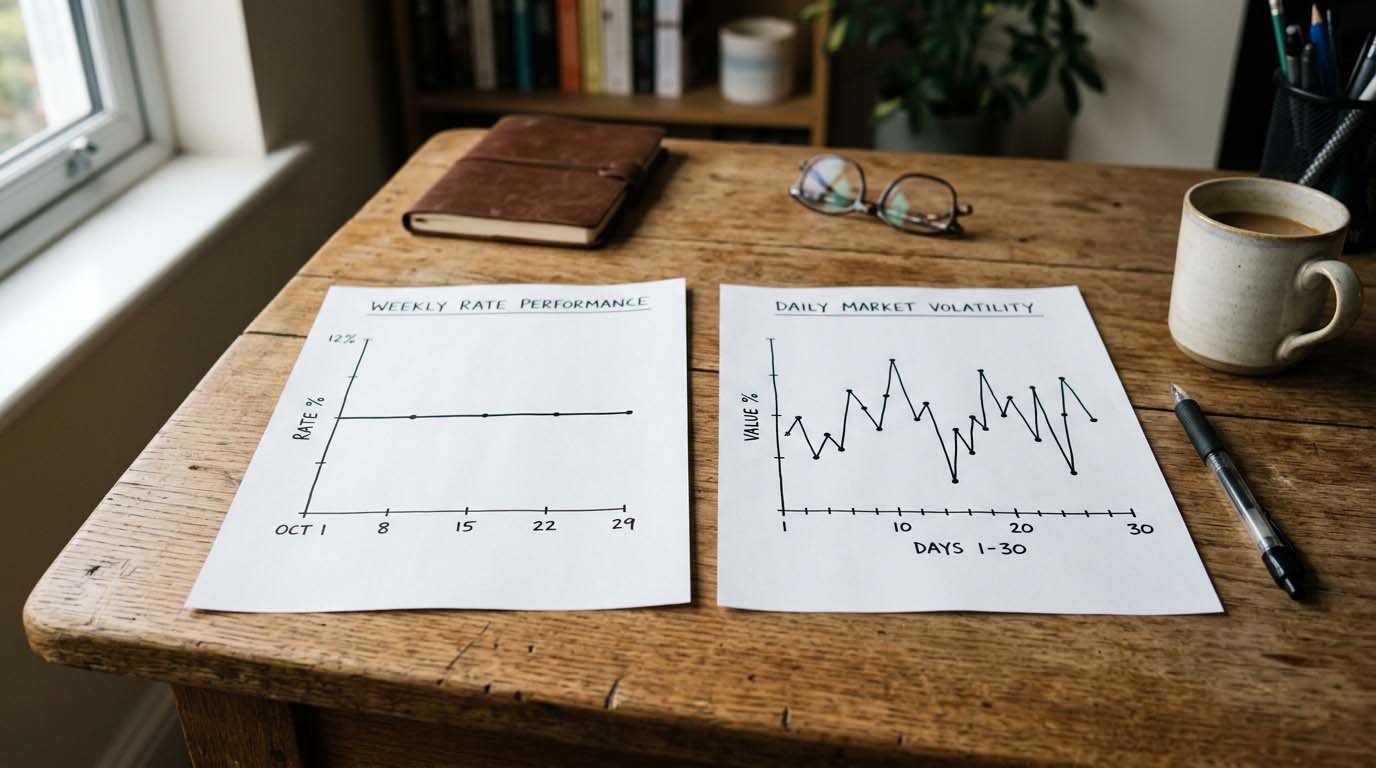
Some loans carry a fixed rate that never changes for the life of the loan. Others carry a variable rate tied to a benchmark index. That means your rate and payment can rise or fall over time. Variable rates often start lower than fixed rates. But they carry the risk of increasing, which makes long-term budgeting harder to predict. When comparing two loans, don’t compare a low variable rate against a fixed rate without accounting for that added risk. A cheaper rate today isn’t necessarily a cheaper loan if it can climb significantly before you’ve paid it off.
If you’re weighing a variable-rate offer, ask the lender for the rate cap. That’s the maximum the rate can reach over the life of the loan. Run your monthly payment at that worst-case number, as well as the starting rate. That gives you a realistic sense of what you’re actually agreeing to.
Origination fees and what they do to your comparison
Many loans charge an origination fee, commonly a percentage of the loan amount. This gets deducted before funds reach you. A $10,000 loan with a 5% origination fee actually delivers $9,500 to your account. You still owe interest on the full $10,000. Compare two loans by their stated interest rate without accounting for fees like this, and you can easily pick the more expensive option by mistake. This is exactly the kind of hidden cost that APR is designed to capture. That’s why APR, not the interest rate, should be your primary comparison tool.
Secured vs unsecured loans carry different trade-offs
Make sure you’re comparing loans of the same type. A secured loan gets backed by collateral, like a car or a savings account. It typically carries a lower rate than an unsecured loan. This is because the lender has an asset to claim if you stop paying. An unsecured loan carries no such collateral. That usually means a higher rate to offset the added risk to the lender. Our Secured vs Unsecured Debt article covers this trade-off in detail, including what’s actually at risk with each type if you default. Comparing a secured loan’s rate directly against an unsecured loan’s rate misses half the picture if you don’t account for what you’re putting up as collateral.
This distinction matters most when the rate gap looks tempting. A secured loan offering a rate two or three points lower than an unsecured alternative might be worth it for some borrowers. For others, it isn’t worth the added risk. It depends on how essential the collateral asset is, and how confident you are in your ability to keep up with payments.
A side-by-side example
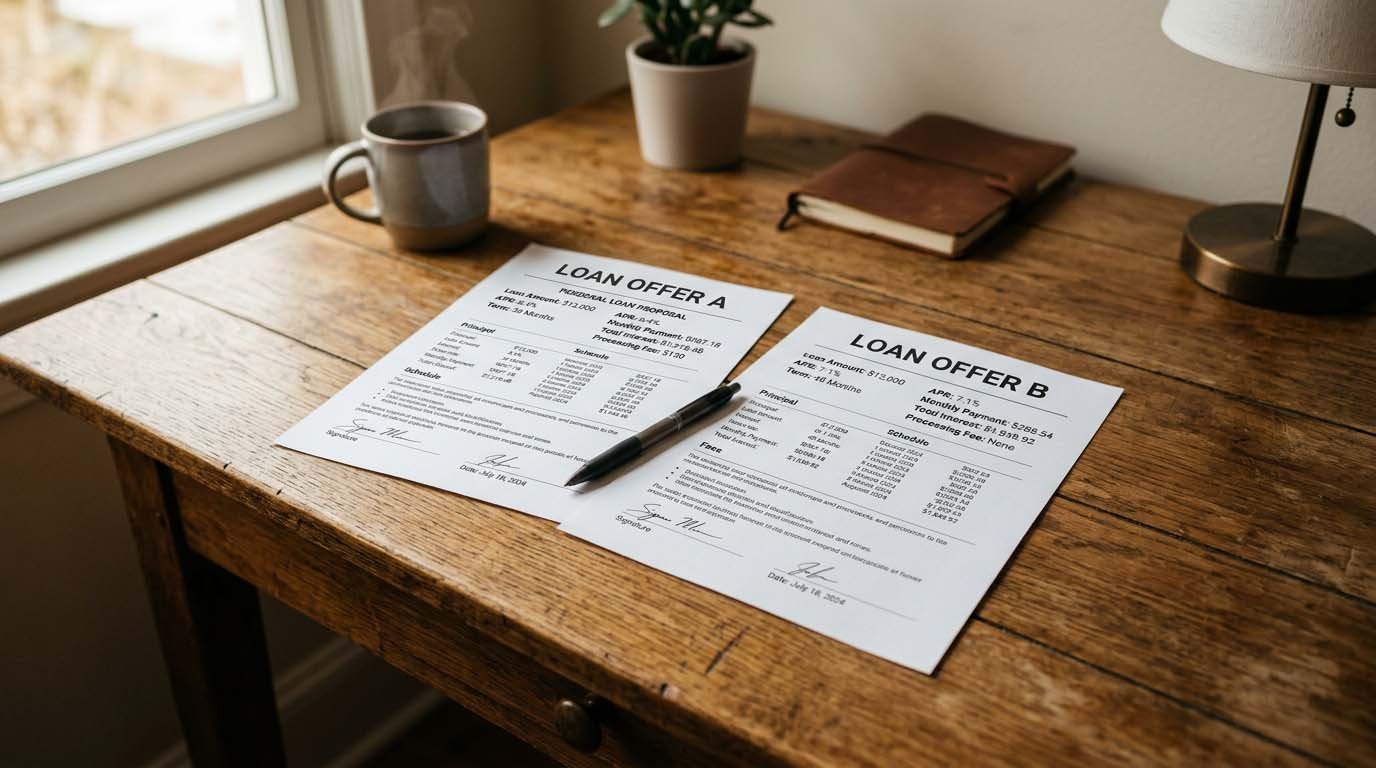
Say you’re borrowing $15,000 and comparing two offers. The first option carries an 8% interest rate, no origination fee, and a five-year term. The second option carries a 7.5% interest rate, a 4% origination fee, and the same five-year term. Monthly payments on the first loan land around $304. Total interest runs roughly $3,240 over five years. The second loan’s origination fee costs $600 upfront. Even with the lower stated rate, its effective APR lands close to 9.3% once that fee is factored in, higher than the first loan’s straightforward 8%.
On paper, the second offer’s lower interest rate looks better. Once the fee gets folded in, the first offer actually costs less. This is precisely the trap APR exists to catch. It’s why comparing two loans by interest rate alone can lead you to the wrong choice. Our Loan Calculator and Personal Loan Calculator let you run this same comparison using your actual offers rather than a generic example.
What to check beyond the numbers
Beyond the rate, fees, and term, check for a prepayment penalty. This can affect your decision if you plan to pay off the loan faster than scheduled. Our Should You Pay Off a Loan Early? article covers how that penalty factors into the bigger prepayment decision. Also check how quickly funds get disbursed, since some lenders take days longer than others. Finally, read any reviews or complaint records for the lender itself. A slightly lower rate isn’t worth much if the servicing experience turns out to be difficult. A lender that’s slow to respond, or hard to reach when something goes wrong, can cost you time and frustration that no rate comparison captures.
Run your own comparison
The best way to compare two real loan offers is to plug both into the same calculator, using their actual terms. Don’t just eyeball the numbers side by side. Our Loan Calculator, Personal Loan Calculator, and APR Calculator all let you input a rate, fee, and term. That gives you the true monthly payment and total cost. Running both offers through the same tool removes the guesswork. It shows you exactly which one actually costs less.
A few minutes with a calculator will tell you more than any amount of reading the fine print in isolation. Compare the same set of numbers across both offers. The lender that wins on the lowest advertised rate doesn’t always win once every fee and term detail gets accounted for. The only way to know for certain is to run the actual math yourself.
Common questions about comparing loans
Yes. APR folds in fees like origination charges, giving a more complete picture of the loan’s true annual cost. Comparing two loans by interest rate alone can hide a more expensive loan behind a lower headline number.
It can be, if a lower monthly payment is necessary to fit your budget comfortably, or if you plan to pay extra toward the principal later. A longer term does increase total interest paid, but that trade-off is sometimes worth the added monthly breathing room.
Fees are the usual culprit. A loan with a lower stated rate but a larger origination fee can carry a higher effective APR than a loan with a slightly higher rate and no fee. The stated rate alone doesn’t capture that difference.
A few more things worth knowing
Most lenders let you check your rate through a soft credit check first, which doesn’t affect your score. Many credit scoring models also treat multiple hard inquiries for the same loan type within a short window, typically 14 to 45 days, as a single inquiry, specifically to encourage rate shopping.
Neither matters in isolation. The interest rate and the term together determine both your monthly payment and your total cost, so comparing loans requires looking at all three numbers as a set, not any single figure on its own.
Only if you’re comfortable with what you’re putting up as collateral. A lower rate on a secured loan comes with the risk of losing that asset if you default, a risk an unsecured loan’s slightly higher rate doesn’t carry.