What Is a Bond and How Does It Work?
A bond is one of the oldest financial instruments still in everyday use. Governments and companies borrow money from investors. They promise to pay interest along the way, and return the principal on a set date. Simple in concept. The details around price, yield, and risk are where most people get lost. Here’s how the pieces actually fit together.
An IOU with a schedule attached
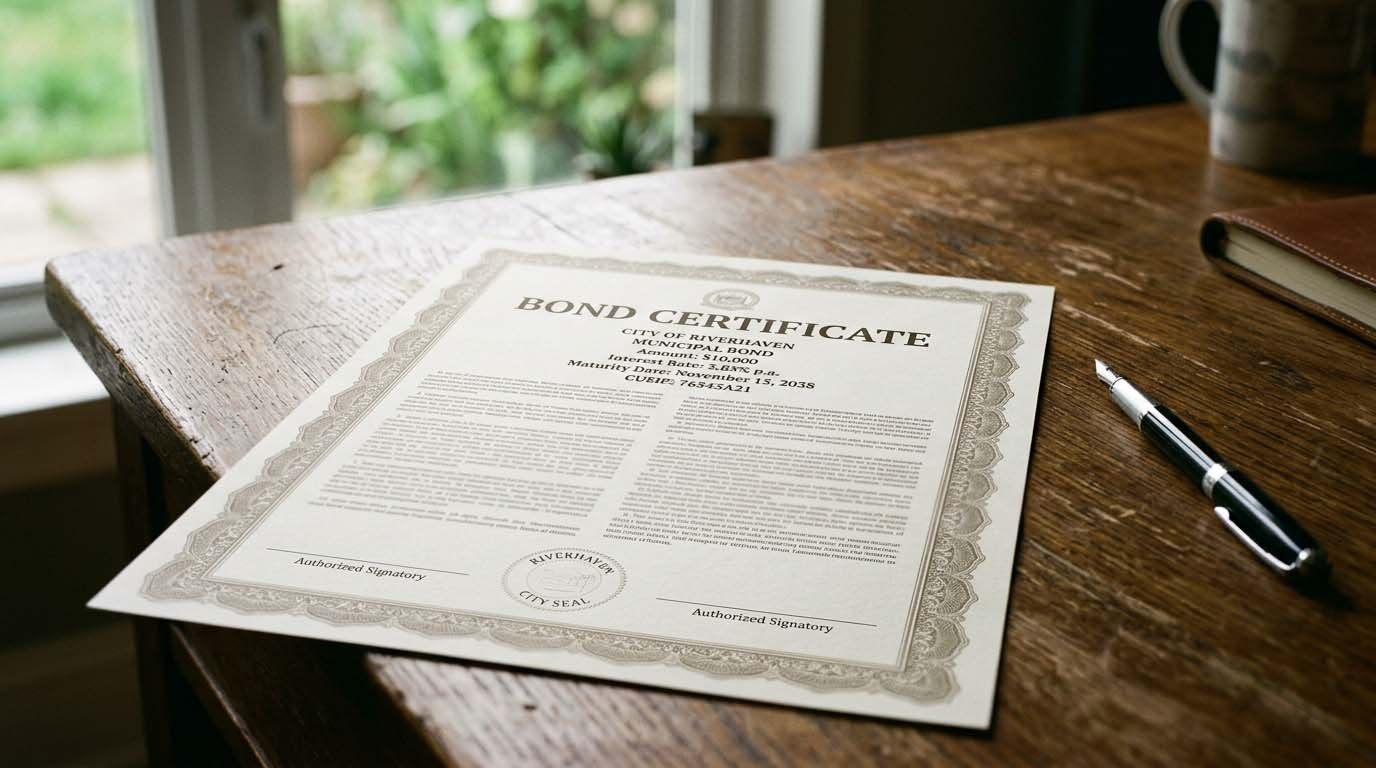
A bond is a loan. When you buy a bond, you’re lending money to whoever issued it, whether that’s a government or a corporation. In exchange, the issuer promises to pay you interest at set intervals. It also agrees to return your original investment, called the principal, on a specific future date. Our Stocks vs Bonds article covers how this lending relationship differs fundamentally from owning stock in a company.
This structure makes bonds far more predictable than stocks in most cases. Barring a default, you know upfront exactly what you’ll earn and exactly when you’ll get your principal back. That predictability is the whole appeal for many investors. This is especially true for those who need steady income or who are approaching a point where they’ll need the money.
The core parts of every bond
Every bond has a few standard components. Face value, also called par value, is the amount the issuer agrees to repay at maturity, commonly $1,000 for many bonds. Coupon rate is the stated interest rate the bond pays, expressed as a percentage of face value. Maturity date is when the issuer repays the principal in full. Yield is the actual return an investor earns. That can differ from the coupon rate depending on what price you paid for the bond.
These pieces work together to determine what a bond is actually worth to you. A $1,000 face value bond with a 5% coupon rate pays $50 a year in interest, regardless of what you paid for the bond. But your actual yield depends on your purchase price. That’s where things get more interesting.
How you actually make money from a bond
There are two ways to earn a return on a bond. The first is the interest payments themselves, called coupon payments. These get paid on a fixed schedule, typically semi-annually. The second is any difference between what you paid for the bond and what you eventually receive, either at maturity or if you sell the bond before then.
Buy a bond below its face value, and you can earn extra return beyond the coupon payments when it matures at full face value. Buy above face value, and that gap works against you instead. Our Bond Price vs Yield article explains this relationship in more depth. It covers why bond prices and yields move in opposite directions.
Who issues bonds and why
Governments issue bonds to fund public spending, from infrastructure projects to general budget needs. In the U.S., Treasury bonds are backed by the federal government. They’re generally considered among the safest investments available, since default is extremely rare. Our Treasury Bills vs Notes vs Bonds article covers the different types of government debt and how they differ by maturity length.
Corporations issue bonds too, often as a cheaper alternative to bank loans. It also lets them raise capital without giving up ownership stakes the way issuing stock would. Corporate bonds generally carry more risk than government bonds. Their yields reflect that added risk, typically running higher to compensate investors.
Credit ratings tell you the risk
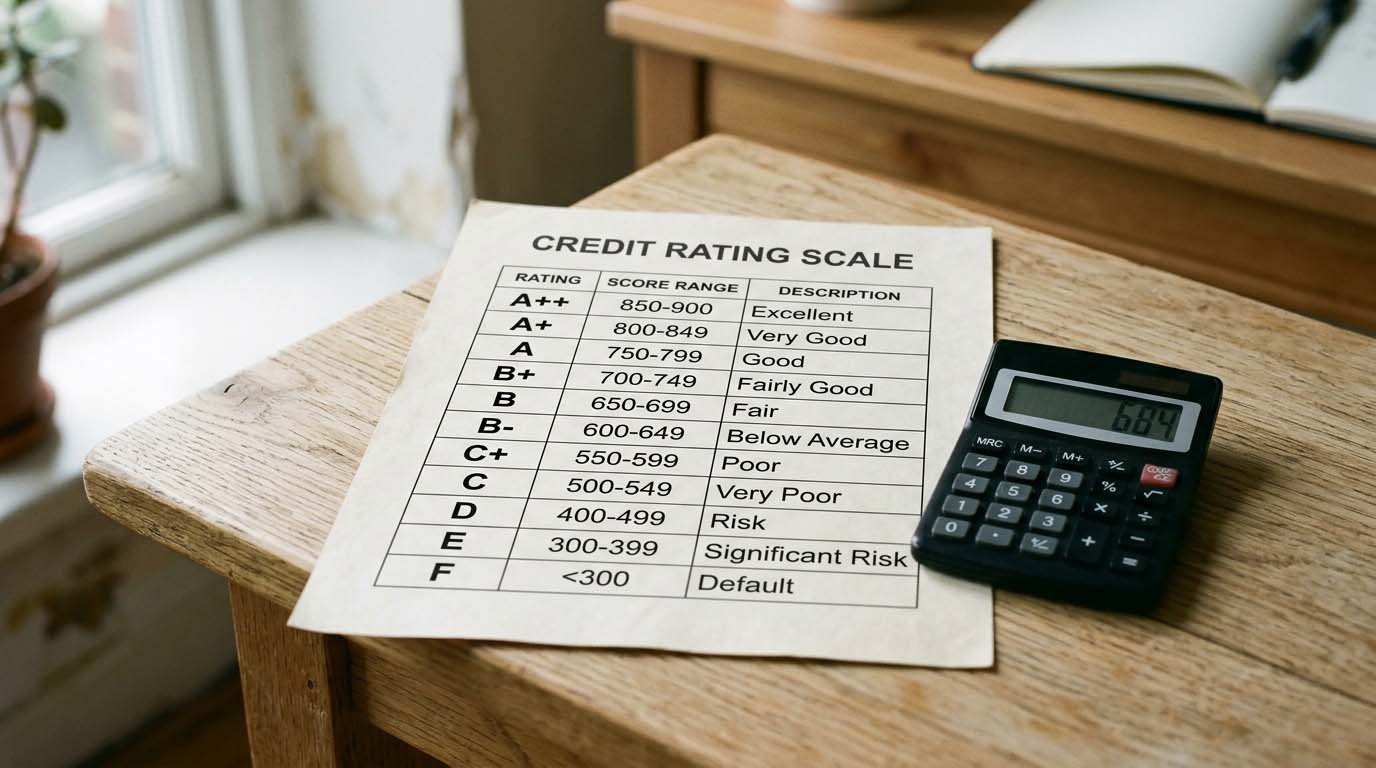
Independent rating agencies assess how likely a bond issuer is to make its payments on time. They assign letter grades that range roughly from AAA, the highest quality, down through various tiers to below investment grade, sometimes called “junk” bonds. Higher-rated bonds carry lower risk and typically lower yields. Lower-rated bonds carry more risk of default. In exchange, they compensate investors with higher yields.
This rating system gives investors a quick reference point without requiring them to analyze an issuer’s finances from scratch. It’s not a perfect predictor. Ratings can change over time as an issuer’s financial situation shifts. Still, it remains one of the most widely used tools for gauging bond risk at a glance.
Bonds trade on a secondary market too
You don’t have to hold a bond until maturity. Bonds trade on a secondary market, where investors buy and sell existing bonds before their maturity date. A bond’s price on this market fluctuates based on several factors, most notably changes in prevailing interest rates. When rates rise, existing bonds with lower fixed rates become less attractive. That pushes their market price down. When rates fall, the opposite happens.
This price movement doesn’t affect you if you hold a bond to maturity and simply collect your interest payments and principal as scheduled. It only matters if you sell before maturity. In that case, you might receive more or less than what you originally paid, depending on where interest rates have moved.
What happens if the issuer defaults
Default means the issuer fails to make a scheduled interest payment or fails to repay the principal at maturity. Government bonds from stable, developed countries rarely default. That’s why they’re considered among the safest bond investments. Corporate bonds carry more default risk, particularly lower-rated ones. A default can mean investors recover only a portion of what they’re owed, or in severe cases, very little at all.
This is exactly why credit ratings and diversification matter so much for bond investors. Spreading bond holdings across many issuers, rather than concentrating in a single company’s debt, reduces the impact any single default would have on your overall portfolio.
A worked example
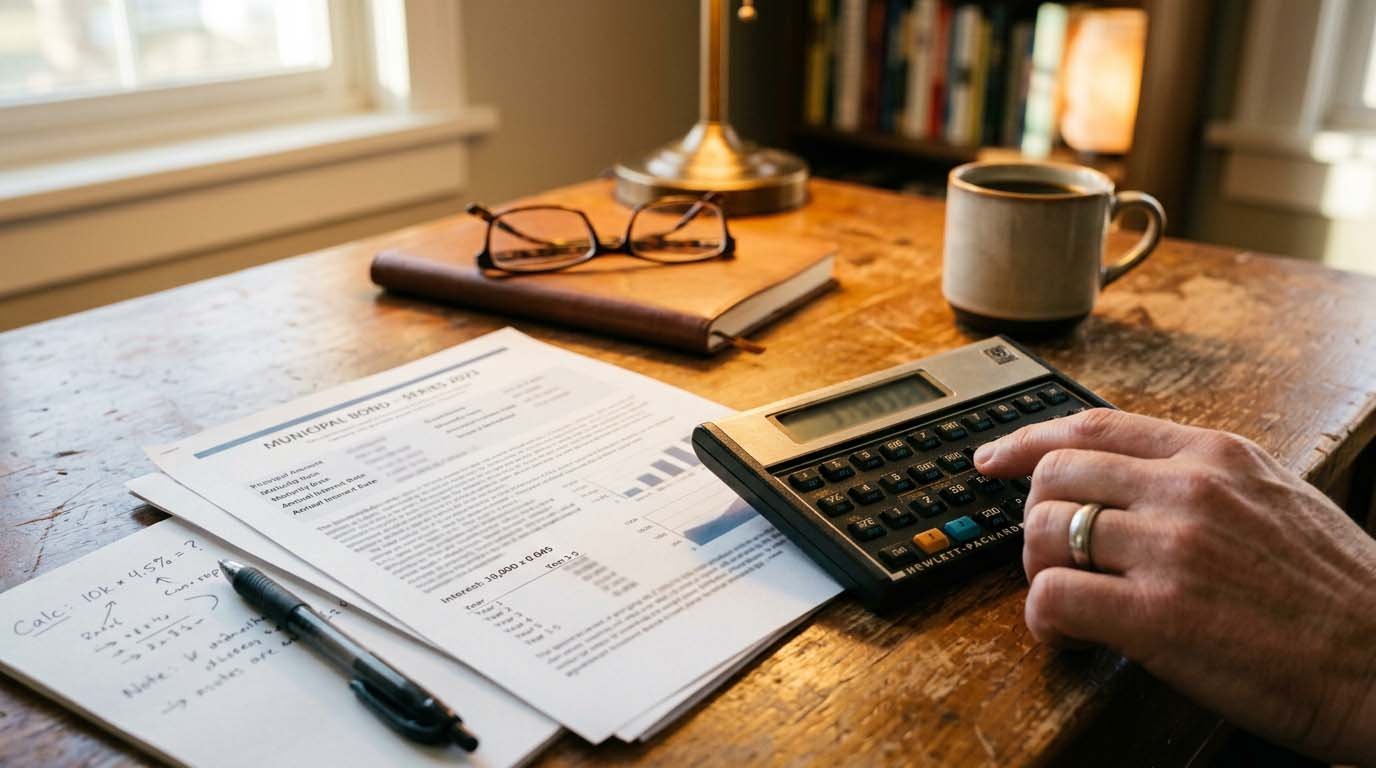
Say you buy a 10-year corporate bond with a $1,000 face value and a 4% coupon rate, purchased at face value. You’d receive $40 a year in interest, typically split into two $20 payments, for 10 years. At the end of that decade, assuming no default, you’d receive your original $1,000 back. Total interest collected over the life of the bond: $400, plus your original principal returned in full.
Now say interest rates rise significantly after you buy the bond, and newly issued similar bonds offer a 6% coupon instead. Your 4% bond becomes less attractive to other buyers, since new bonds offer a better rate. If you tried to sell your bond before maturity, you’d likely need to accept a lower price than you paid. Buyers can get a better return elsewhere. Hold to maturity instead, and none of this matters. You still collect your $40 a year and get your full $1,000 back.
Individual bonds vs bond funds
Buying an individual bond means holding a single issuer’s debt, with a known maturity date and known coupon payments, assuming no default. This can be useful if you’re trying to match a bond’s maturity to a specific future need, like a known expense a few years out. The downside is concentration risk. If that single issuer defaults, you feel the full impact.
A bond fund pools money from many investors to buy a wide basket of bonds. It spreads risk across dozens or hundreds of issuers, maturities, and credit qualities in a single purchase. This diversification comes with a trade-off. A bond fund doesn’t have a fixed maturity date the way an individual bond does. Its price fluctuates continuously with the broader bond market, rather than simply paying out a known amount on a known date.
How inflation affects your real return
A bond’s stated yield is its nominal return, before accounting for inflation. If inflation runs higher than a bond’s yield, the purchasing power of your interest payments and eventual principal actually shrinks over time. This happens even though the dollar amount you receive matches exactly what was promised. This is a particular concern for long-term bonds, since inflation has more years to erode value before the bond matures.
Some governments issue inflation-protected bonds specifically to address this risk. These bonds adjust the principal value based on inflation measures over the life of the bond. Specialized bonds like these trade off some yield in exchange for that inflation protection. This can make sense for investors specifically concerned about inflation eroding their long-term purchasing power.
How bonds fit into a portfolio
Bonds typically serve as the stability anchor in a diversified portfolio, offsetting some of the volatility that comes with stock holdings. Our What Is Asset Allocation? article covers how to think about the right stock-bond split for your own timeline and goals. Most individual investors access bonds through bond funds rather than buying individual bonds directly, since funds offer instant diversification across many issuers and maturities in a single purchase.
Check the numbers before you buy
Before buying any individual bond, check its credit rating, its yield relative to comparable bonds, and its maturity date relative to your own timeline. Our Investment Calculator can help you model how bond income and reinvested interest might grow over your specific investment horizon, giving you real numbers to work from rather than guessing at the outcome.
Common questions about bonds
Not entirely, though they’re generally more predictable than stocks. If you hold a bond to maturity and the issuer doesn’t default, you’ll receive the stated interest and your principal back. Default risk and, if you sell early, price fluctuations both introduce real uncertainty.
If you hold the bond to maturity, rising rates don’t change what you’re owed. If you try to sell before maturity, rising rates typically push the bond’s market price down, since new bonds offer more attractive rates to buyers.
Generally, yes, particularly bonds from stable, developed governments, since default is rare. Corporate bonds carry more default risk, which varies significantly depending on the specific company’s financial health and credit rating.
A few more things worth knowing
The coupon rate is the fixed interest rate stated on the bond, based on its face value. Yield reflects your actual return based on what you paid for the bond, which can be higher or lower than the coupon rate depending on the purchase price.
Yes, in a few ways. Selling before maturity when prices have fallen, holding a bond that defaults, or holding a bond whose yield doesn’t keep pace with inflation can all result in a real or effective loss.
For most individual investors, a bond fund offers easier diversification across many issuers and maturities than buying individual bonds one at a time. Individual bonds can make sense for investors with a specific need, like matching a bond’s maturity to a known future expense.