Treasury Bills vs Notes vs Bonds
All three come from the same source: the U.S. federal government. All three are considered extremely low-risk. The difference between them comes down to one thing: how long you’re willing to lend your money. Here’s how bills, notes, and bonds actually differ, and how to pick the right one for your timeline. Understanding this distinction also helps make sense of financial news. Headlines about “Treasury yields” almost always refer to one specific maturity, not the whole family of securities at once.
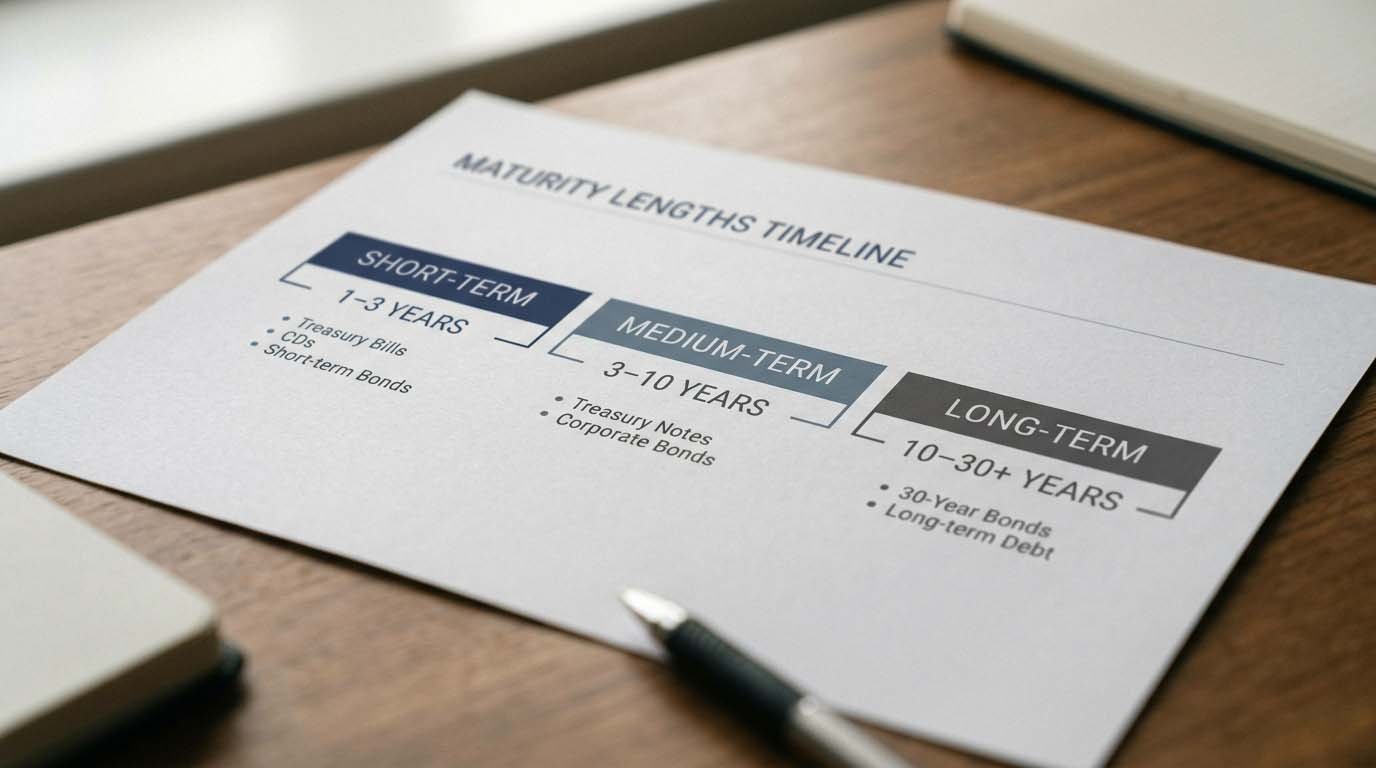
Same government, three different maturities
Treasury bills, notes, and bonds are all debt issued by the U.S. federal government to fund its spending. Our What Is a Bond and How Does It Work? article covers the basic mechanics that apply to all government and corporate debt. What separates these three Treasury types is simply how long you’re lending your money before you get it back.
Bills cover the shortest terms. Notes cover the middle range. Bonds cover the longest stretches. All three share the same backing: the full faith and credit of the U.S. government. That’s why they’re all considered among the safest investments available.
Treasury bills: the shortest end
Treasury bills, often called T-bills, mature in one year or less. Common terms run four, eight, thirteen, twenty-six, and fifty-two weeks. Unlike notes and bonds, T-bills don’t pay periodic interest. Instead, they’re sold at a discount to their face value. You receive the full face value at maturity. The difference between what you paid and what you receive is your return.
This structure makes T-bills simple to understand. Buy one for $980, receive $1,000 at maturity, and your $20 gain is your entire return over that short period. T-bills work well for money you’ll need relatively soon, since the short maturity limits your exposure to interest rate swings. They’re often used as a parking spot for cash earmarked for a near-term goal, like a home down payment or a tax bill due later in the year.
Treasury notes: the middle ground

Treasury notes mature in two, three, five, seven, or ten years. Unlike T-bills, notes pay a fixed coupon rate every six months until maturity. At that point, you also receive your principal back. This makes notes function more like the typical bond structure most investors picture when they hear the word “bond.”
The 10-year Treasury note in particular gets referenced constantly in financial news. Its yield serves as a benchmark for many other interest rates throughout the economy, including mortgage rates. When you hear about “the 10-year yield” moving, this is the security being discussed. Movements in this single yield ripple out into countless everyday borrowing costs, well beyond the Treasury market itself.
Treasury bonds: the longest commitment
Treasury bonds, sometimes just called “long bonds,” mature in 20 or 30 years. That makes them the longest-term security the Treasury issues. Like notes, they pay a fixed coupon every six months. The tradeoff for locking your money up this long is typically a higher yield than shorter Treasury securities offer, compensating you for that extended commitment.
This longer maturity also means Treasury bonds carry more interest rate risk than bills or notes. Our Bond Price vs Yield article explains why longer-maturity bonds swing more in price when rates change. This effect is especially pronounced with 30-year Treasury bonds, since a rate move has 30 years’ worth of future payments to reprice against.
How they’re priced and sold
The Treasury sells all three types through regular auctions. Individual investors can buy directly through TreasuryDirect, the government’s own platform. Buying through most brokerage accounts is also an option. Prices at auction depend on demand. That demand in turn reflects prevailing interest rate expectations and investor appetite for safety at that moment.
Once issued, all three trade on the secondary market before maturity, just like corporate bonds. Their prices move up and down with changing interest rates, following the same inverse price-yield relationship that applies to any fixed-rate bond. An investor who buys at auction and holds to maturity never has to think about these price swings at all, since the face value gets repaid regardless of what happened to the market price in between.
TIPS: an inflation-protected variant
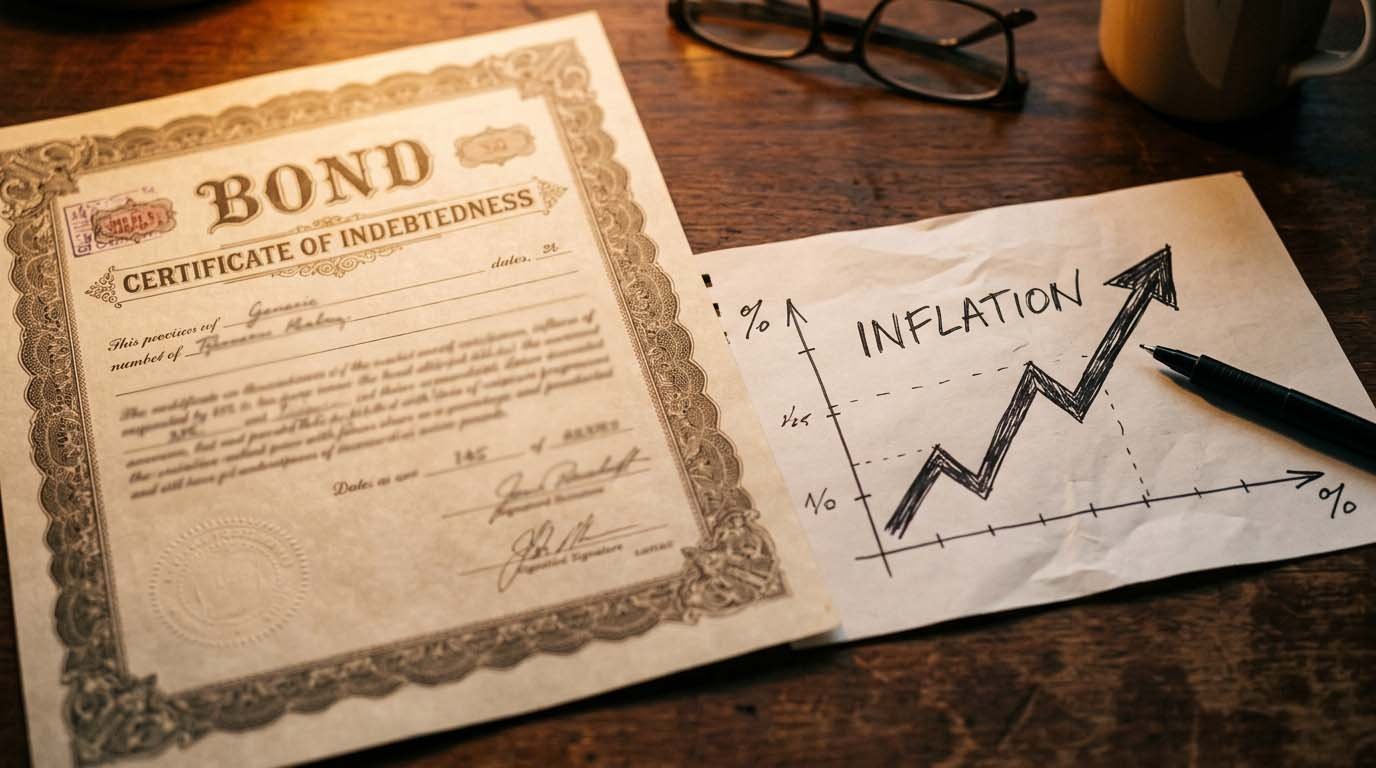
The Treasury also issues Treasury Inflation-Protected Securities, known as TIPS, which come in note and bond maturities. Unlike standard Treasuries, a TIPS security’s principal adjusts based on changes in the Consumer Price Index. Your investment’s value grows along with inflation. Interest payments are calculated on that adjusted principal, meaning your income rises with inflation too.
TIPS typically offer a lower base yield than standard Treasuries of the same maturity. The inflation adjustment itself provides part of your return. They’re worth considering for investors specifically concerned about inflation eroding the purchasing power of a fixed-rate bond over a long holding period. This trade-off makes TIPS a useful complement to standard Treasuries, rather than a straightforward replacement for them.
Why yields differ across the three
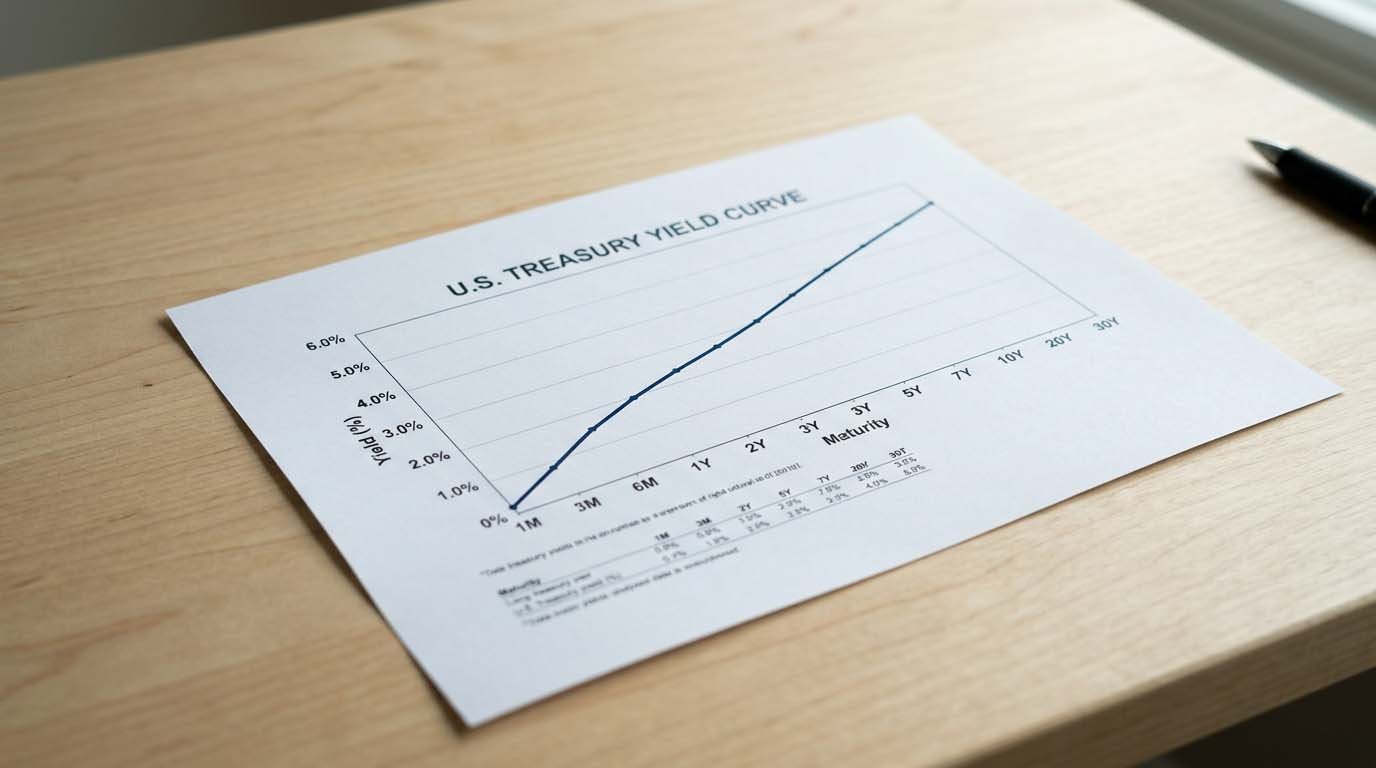
Generally, longer maturities carry higher yields than shorter ones, a pattern called a normal yield curve. This compensates investors for the added interest rate risk and the opportunity cost of tying up money for a longer period. A 30-year Treasury bond typically yields more than a 2-year Treasury note. That note in turn typically yields more than a 4-week T-bill.
This relationship doesn’t always hold, though. Sometimes short-term yields exceed long-term yields, a pattern called an inverted yield curve. Our Yield Curve Inversion article covers why this unusual pattern shows up and what it has historically signaled about the broader economy. An inverted curve doesn’t change what any single Treasury pays you if you hold it to maturity, but it can shift which maturity offers the better deal for investors shopping across the full range at that particular moment.
Taxes: the one thing all three share
Interest from Treasury bills, notes, and bonds is subject to federal income tax. It’s exempt from state and local income taxes, though. This state tax exemption can make Treasuries more attractive than otherwise comparable corporate bonds for investors in high-tax states, even if the stated yield looks slightly lower on paper. For someone in a high state tax bracket, a Treasury’s after-tax return can end up beating a corporate bond with a nominally higher yield, once the state tax savings are factored in.
Building a ladder across maturities
Rather than choosing just one Treasury type, some investors build what’s called a bond ladder. This means buying securities with staggered maturity dates, so a portion of the portfolio matures at regular intervals. This provides periodic access to cash without having to sell anything early. It still captures some of the higher yields available on longer maturities for the portion held longest.
A simple ladder might combine a mix of T-bills, notes, and bonds with maturities spread across the next several years. As each rung matures, the investor can either spend the proceeds or reinvest them into a new long-dated security, keeping the ladder going. This approach smooths out the impact of interest rate changes over time. You’re never forced to reinvest all your money at a single rate.
Reinvestment and auto-rollover options
TreasuryDirect and many brokerages offer an auto-rollover feature for T-bills. It automatically reinvests the proceeds into a new bill of the same term when one matures. This can simplify managing short-term Treasury holdings. It’s still worth periodically checking that the rates on offer still make sense for your goals, rather than letting the rollover run indefinitely on autopilot.
Notes and bonds don’t roll over automatically in the same way. Their longer terms mean investors typically make a more deliberate decision about what to do with the proceeds once a note or bond matures. That could mean reinvesting in a new Treasury security, moving to a different asset class, or simply spending the money for its intended purpose.
Which one fits your goal
T-bills suit money you’ll need within the next year, like an emergency fund supplement or short-term savings goal. Their short maturity limits exposure to rate swings. Notes suit medium-term goals, several years out, offering a balance between yield and rate sensitivity. Bonds suit long-term goals or investors specifically seeking the highest yield available from government debt, accepting more price volatility along the way. Our Investment Calculator can help you model how different Treasury maturities and yields might fit into your broader financial plan.
None of these three is objectively better than the others. Each one is simply a different tool matched to a different timeline. Picking the right one comes down to matching the maturity to when you’ll actually need the money, rather than chasing whichever one happens to carry the highest headline yield at the moment. A high yield on a 30-year bond does you no good if you actually need the cash back in two years, since selling early exposes you to whatever the market price happens to be at that time.
Common questions about Treasury bills, notes, and bonds
Maturity length. Bills mature in a year or less, notes mature in two to ten years, and bonds mature in 20 or 30 years. Bills also work differently, sold at a discount rather than paying periodic interest like notes and bonds do.
They carry essentially no default risk, since they’re backed by the U.S. government. They still carry interest rate risk if sold before maturity, and inflation risk, since a fixed-rate Treasury’s real return can shrink if inflation runs high.
No. Interest from Treasury bills, notes, and bonds is exempt from state and local income taxes, though it is still subject to federal income tax. This can make Treasuries especially attractive for residents of high-tax states.
A few more things worth knowing
TIPS are Treasury Inflation-Protected Securities. Their principal adjusts based on inflation measures, so both the investment’s value and its interest payments rise along with inflation, unlike a standard Treasury’s fixed payments.
The 10-year Treasury note’s yield serves as a benchmark for many other interest rates throughout the economy, including mortgage rates, which is why it gets referenced so frequently in financial news and analysis.
Yes. TreasuryDirect, the U.S. government’s own platform, lets individual investors buy bills, notes, bonds, and TIPS directly at auction, without needing a brokerage account or paying a commission.