How the Federal Reserve Controls Interest Rates
The Federal Reserve doesn’t call your bank and tell it what to charge on a mortgage. It doesn’t set your credit card’s APR or your savings account’s yield either. Understanding how the Federal Reserve controls interest rates starts with one narrow, technical rate that banks charge each other overnight, a single number that ends up moving almost every interest rate in the country.
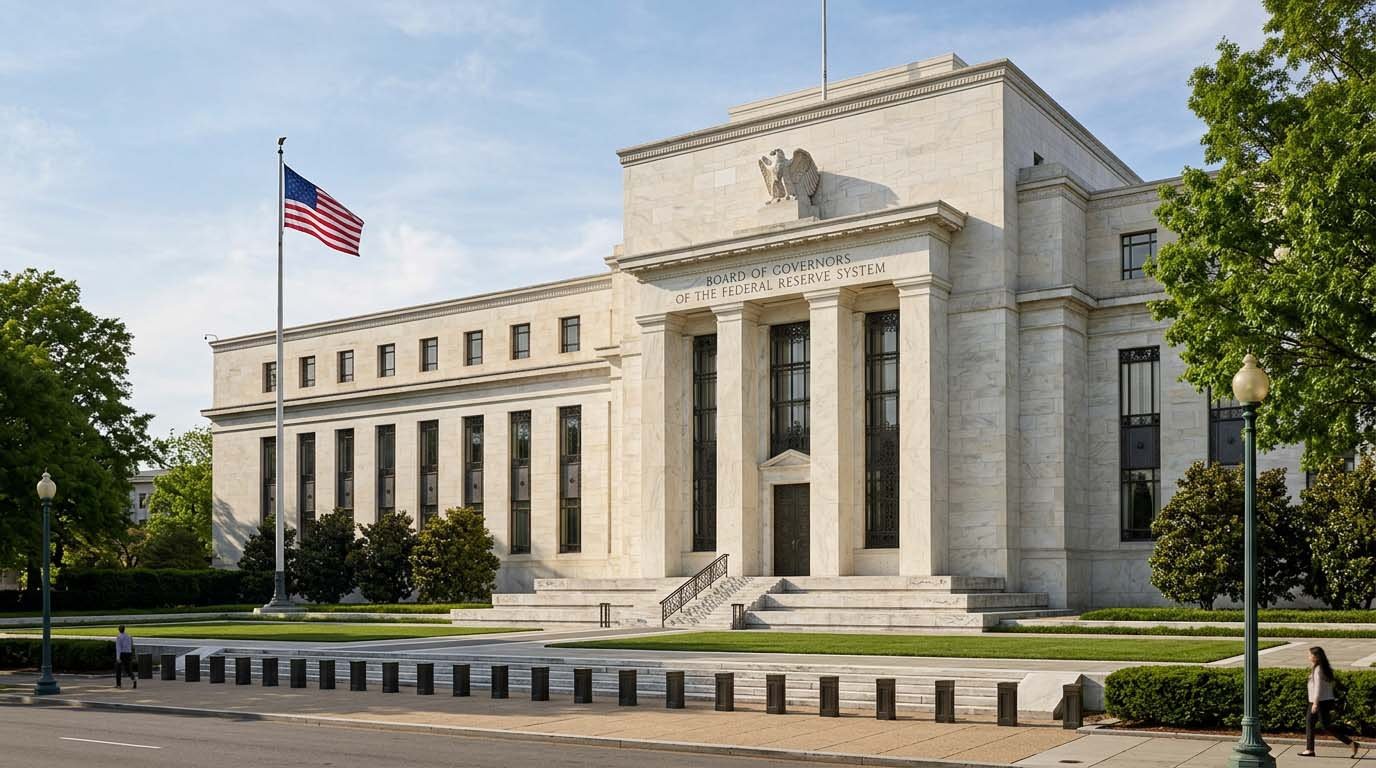
The one rate the Fed actually sets
Everything here starts with one number: the federal funds rate. It’s the rate banks charge each other for overnight loans. Banks use these loans to cover short-term gaps in their reserves. Almost no ordinary person ever takes out a loan like that. On its face, it seems like an odd thing to build an entire economy’s borrowing costs around.
But banks need those overnight loans constantly. The cost of getting one sets a floor under everything else a bank does. Say a bank can borrow overnight money at 3.6%. It won’t turn around and lend you money for less than that. Every other rate a bank offers builds on top of that floor: car loans, credit cards, even the rate it pays you on a savings account.
The Federal Open Market Committee sets this rate. It’s a group of twelve people inside the Fed that meets eight times a year to set a target range, not a single fixed number. As of the most recent meeting, that target range sits at 3.50% to 3.75%. The actual overnight rate usually lands close to the middle of it. The next scheduled decision comes on September 16, 2026. Markets watch these dates closely, because even a quarter-point move ripples out to millions of loans and accounts within days. This is the starting point for how the Federal Reserve controls interest rates for the rest of the country.
How the Federal Reserve Controls Interest Rates Across the Financial System
The federal funds rate doesn’t touch your wallet directly. What it does is set the floor for the prime rate, the rate banks charge their most creditworthy customers. Most consumer lending in the U.S. gets priced off the prime rate, not the federal funds rate itself. Lenders usually quote it as “prime plus” some number of percentage points. When the fed funds rate sits at 3.50% to 3.75%, the prime rate typically lands about three points higher. Right now, that puts it around 6.75%.
From there, the chain runs outward. Credit card APRs are usually prime plus a spread that depends on your creditworthiness. A Fed move shows up on your statement within one or two billing cycles. Home equity lines of credit work the same way. Adjustable-rate mortgages reset off short-term benchmarks that track the fed funds rate closely, though the loan’s terms usually build in a delay. If you’re weighing a fixed loan against something that resets with the Fed, our Fixed vs. Variable Rates guide can help. It walks through how that trade-off actually plays out over time.
Fixed-rate mortgages are a partial exception. They don’t move in lockstep with the federal funds rate. Instead, they track the 10-year Treasury yield. That yield reflects investors’ expectations about where rates and inflation are heading over the next decade, not just where they sit today. That’s why mortgage rates sometimes move before a Fed decision even happens. Occasionally, they move in the opposite direction of what the Fed just did.
The tools behind the headline number

Setting a target range is one thing. Actually getting the real-world rate to land inside that range takes mechanical work behind the scenes, and the Fed leans on a few specific tools to do it. This is the mechanical side of how the Federal Reserve controls interest rates, the part that never makes headlines but keeps the target range meaningful.
The main one today is interest on reserve balances, sometimes shortened to IORB. Banks keep reserve accounts at the Fed, and the Fed pays interest on those balances. No bank will lend money overnight for less than it could earn just sitting in its own reserve account. So this rate acts like a magnet, pulling the real overnight rate toward the Fed’s target. The Fed also runs open market operations. It buys and sells Treasury securities to add or drain cash from the banking system. It also maintains a discount rate for banks that need to borrow directly from the Fed as a backstop.
These tools sit alongside the Fed’s balance sheet. That balance sheet grew enormously after 2008, and again in 2020, through a policy called quantitative easing. The Fed bought long-term bonds to push down longer-term rates when the short-term rate alone wasn’t doing enough. The reverse process, quantitative tightening, lets that balance sheet shrink again. It’s a slower, quieter lever than a rate decision. But it shapes longer-term borrowing costs, including mortgages, in its own right.
Why your credit card reacts overnight and your savings account lags
One thing that frustrates people the most: rates don’t move symmetrically. When the Fed raises rates, credit card APRs tend to climb almost immediately. Card issuers have every incentive to pass higher costs on to you fast. Savings account yields, on the other hand, often creep up slowly. Sometimes they don’t move at all, particularly at large traditional banks that don’t need your deposits urgently.
The reverse happens on the way down too, just as unevenly. Loan rates often stay stubbornly high for a while after a rate cut. Savings yields, meanwhile, can drop within days once banks decide they no longer need to compete as hard for deposits. Online banks and high-yield savings accounts tend to move faster in both directions since they compete more directly on rate. If your account hasn’t budged in months despite headline news about a Fed move, our APY Calculator can help. It shows exactly what your current rate is earning you, compounding included, and whether it’s still worth keeping your money there.
Raising rates to cool inflation, cutting them to protect jobs
The Fed doesn’t move rates on a whim. It operates under what economists call a dual mandate: keep prices stable, generally defined as around 2% annual inflation, and support maximum employment. Those two goals occasionally pull in opposite directions, which is exactly why FOMC meetings get so much attention.
When inflation runs hot, raising rates is the standard response. Higher borrowing costs discourage spending and investment, which cools demand and, in theory, slows price growth. That’s the logic behind the aggressive hiking cycle of 2022 and 2023. The Fed raised rates by 525 basis points in about sixteen months, fighting the sharpest inflation spike in four decades. If you want the deeper story of how that inflation built up in the first place, our What Is Inflation? guide has you covered. It walks through the mechanics from the ground up.
When the economy weakens or unemployment climbs, the Fed generally leans the other way. It cuts rates to make borrowing cheaper, encouraging businesses to invest and hire again. This is monetary policy, and it operates independently from the fiscal policy tools Congress controls, like taxes and government spending. The two often work toward similar goals, but through completely separate levers. Our Fiscal vs. Monetary Policy article breaks down how those two systems actually differ.
The lag nobody likes to talk about
Here’s the part that trips up even people who follow financial news closely. A rate change doesn’t hit the economy all at once. Economists describe monetary policy as working with “long and variable lags.” They typically put that lag at somewhere between twelve and eighteen months before the full effect on inflation and employment shows up in the data.
That lag is part of why the Fed sometimes appears to be reacting to old news. It’s also why it’s genuinely difficult to know, in real time, whether rates are right. Cut too early and inflation can reignite. Hold too long and you risk tipping a slowing economy into a downturn. One warning sign economists watch closely is the yield curve, the relationship between short-term and long-term Treasury rates. When it inverts, it’s historically been one of the more reliable recession signals. Our Yield Curve Inversion article explains what that actually looks like and why it matters. If a downturn does arrive, our Recession vs. Depression guide covers how economists actually draw that line.
What this means for the numbers in your own accounts
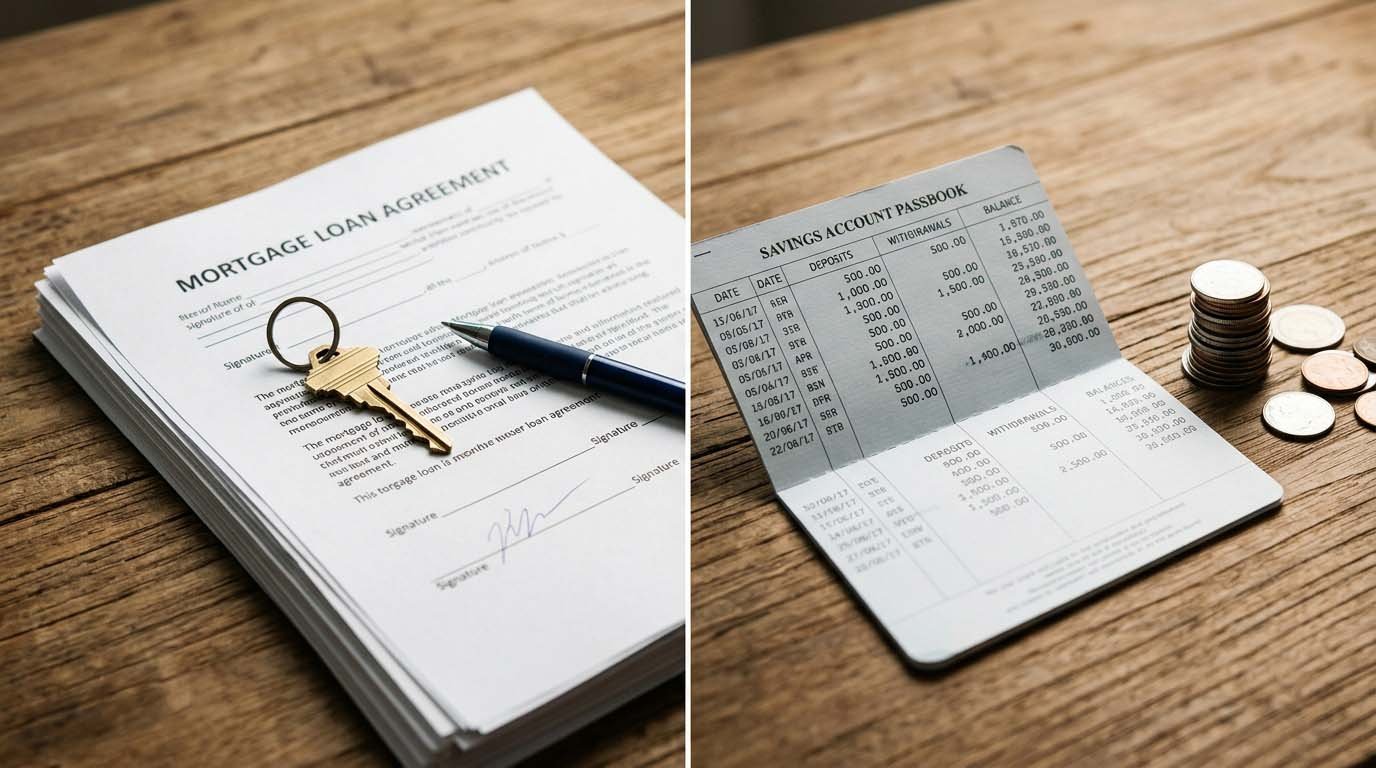
All of this can feel abstract until you run your own numbers against it. Once you understand how the Federal Reserve controls interest rates, the rest is really just arithmetic you can run for your own accounts. If you’re shopping for a mortgage, or wondering how a future rate move might change your monthly payment, our Mortgage Calculator can help. It lets you test different rate scenarios directly. If you’re carrying a credit card balance and rates have been climbing, our Credit Card Payoff Calculator can show you the real cost. It shows how much a higher APR adds to your payoff timeline, and how much faster extra payments can undo that damage.
On the saving side, our Savings Calculator can show what a given rate actually turns into over time, once you factor in compounding. That’s useful context the next time a headline announces a Fed decision, and you’re wondering whether it’s worth moving your money somewhere else.
None of these tools will tell you where rates are headed next. Nobody can promise that, not even the people voting on the decision. But they can tell you exactly what today’s numbers mean for your own mortgage, card, or savings account. That’s usually the more useful question anyway.
Common questions about the Fed and interest rates
The Federal Reserve controls interest rates by setting a target range for the federal funds rate, the rate banks charge each other for overnight loans. It uses tools like interest on reserve balances and open market operations to keep the real rate inside that range. From there, the prime rate, mortgage rates, credit card APRs, and savings yields all adjust in response.
No. Fixed mortgage rates track the 10-year Treasury yield. That yield reflects investor expectations about inflation and growth over the coming decade, not the Fed’s short-term rate. Adjustable-rate mortgages and home equity lines of credit track the Fed’s moves much more closely, though the loan terms usually build in a short delay.
The Federal Open Market Committee meets eight times a year. It reviews economic conditions and decides whether to change its target range. It doesn’t change rates at every meeting. Many meetings end with rates unchanged, especially when the committee wants more data before acting.
Card issuers pass along higher borrowing costs quickly because it’s in their financial interest to do so. Banks aren’t under the same pressure to raise what they pay depositors, especially large traditional banks that don’t need extra deposits urgently. So savings yields tend to climb more slowly and unevenly.
A few more things worth knowing
The federal funds rate is what banks charge each other for overnight loans. The prime rate is what banks charge their most creditworthy customers. It typically sits about three percentage points above the federal funds rate. Most consumer loan rates get priced off the prime rate, not the federal funds rate itself.
Economists refer to this as “long and variable lags.” Businesses and households take time to adjust spending and borrowing decisions after a rate change. The full effect on inflation and employment typically takes somewhere between twelve and eighteen months to show up in the data.
The Fed is an independent agency within the federal government. The President appoints its Board of Governors, and the Senate confirms them. But Congress and the White House don’t approve its day-to-day interest rate decisions — a structure meant to keep monetary policy insulated from short-term political pressure.