Balance Transfer vs Personal Loan: Which Is Better?
High-interest credit card debt has two common exits: move it to a new card with a lower rate, or pay it off with a personal loan instead. Both can save you real money. Neither works the same way, and picking the wrong one for your situation can leave you paying more, not less. Here’s how the two actually compare.
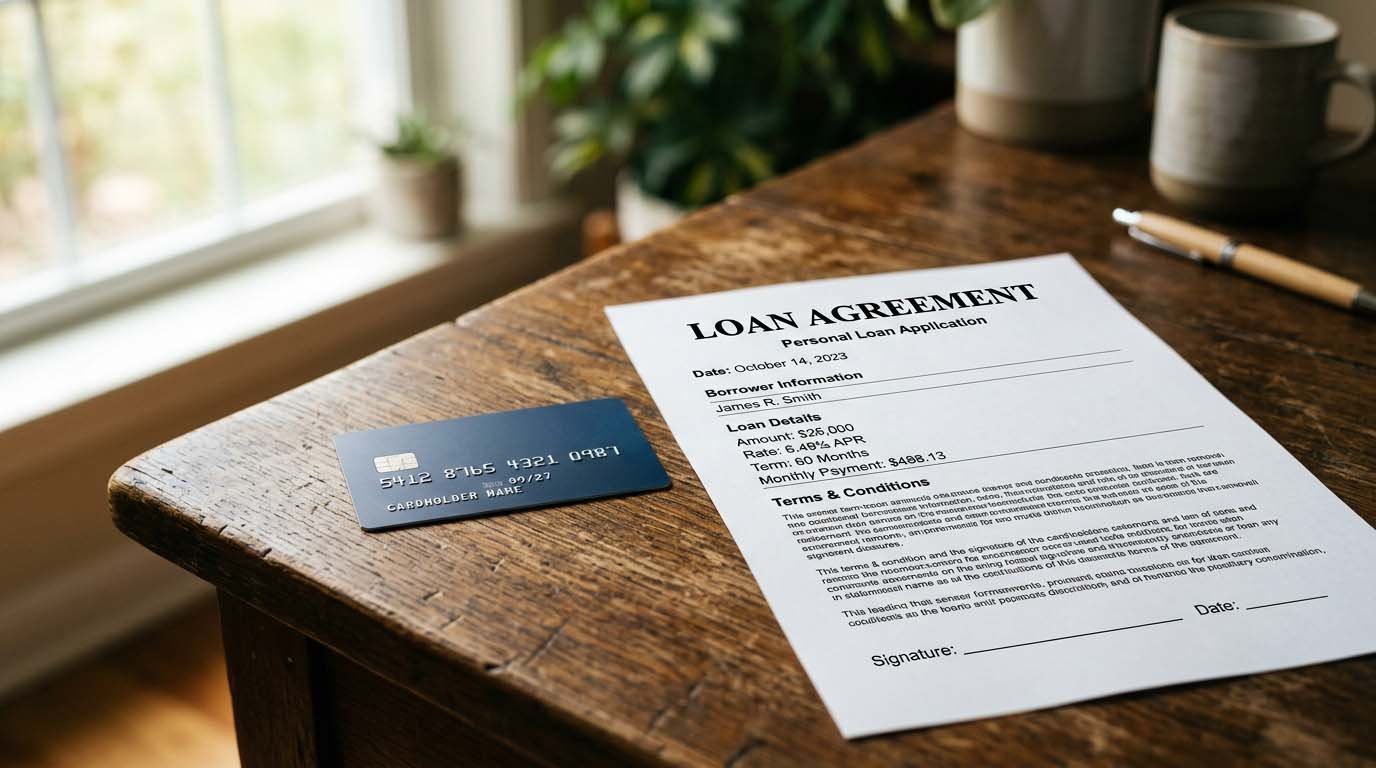
Two ways to escape high-interest debt
Both a balance transfer and a personal loan solve the same underlying problem. You owe money at a high APR, and you want to pay it off at a lower one. Beyond that shared goal, they work in fairly different ways. A balance transfer moves your existing debt onto a new credit card, usually one offering a 0% introductory rate for a limited time. A personal loan pays off your card balance entirely, replacing revolving credit card debt with a fixed installment loan instead.
Choosing between them isn’t just a matter of comparing two interest rates on paper. The structures behave differently over time, they carry different fee patterns, and they affect your credit profile in different ways. Getting the choice right can save hundreds of dollars. Getting it wrong, or picking the option that doesn’t fit your actual spending habits, can quietly cost you more than doing nothing at all.
Our How Do Credit Cards Work? guide covers the basics of revolving credit if you need a refresher before comparing it against a loan.
How a balance transfer actually works
You apply for a new credit card, usually one specifically marketed for balance transfers. If approved, the new issuer pays off your old card directly, and your debt now sits on the new card instead. Most transfer cards offer a promotional 0% APR period, often lasting 12 to 21 months, during which your balance accrues no interest at all as long as you keep up with payments.
The catch is the transfer fee. Most cards charge 3% to 5% of the amount transferred, added to your new balance right away. A $5,000 transfer at 3% adds $150 to what you owe on day one. That fee is the price of admission for the 0% window, and whether it’s worth paying depends on how much interest you’d save during that promotional period. Our Balance Transfer Cards guide walks through that math with worked examples.
How a personal loan actually works

A personal loan works nothing like a credit card. You borrow a fixed amount, use it to pay off your card balance, and then repay the loan in equal monthly installments over a set term, typically two to seven years. The interest rate is fixed for the life of the loan in most cases, so your payment doesn’t change based on a promotional period ending.
Personal loan APRs for borrowers with good credit often land well below typical credit card APRs, even without any 0% promotion involved. There’s no revolving temptation either, since the loan doesn’t give you a fresh credit line to spend against once it’s funded. Every payment goes toward a balance that only moves in one direction: down.
The fee structures compared
Balance transfer cards charge an upfront transfer fee, typically 3% to 5%, and then nothing else as long as you pay off the balance before the promotional period ends and avoid new purchases that could complicate the payoff math. Miss that window, and the remaining balance reverts to the card’s standard APR, which can run just as high as the card you started with.
Personal loans sometimes charge an origination fee, commonly 1% to 8% of the loan amount, deducted from the funds before they reach you. Some lenders charge no origination fee at all, particularly for borrowers with strong credit. Beyond that, the interest rate is fixed and known upfront, so there’s no cliff to fall off the way there is with an expiring 0% promotion.
This difference in structure creates two very different kinds of risk. With a balance transfer, the risk sits at the end of the promotional period. Life gets in the way, an emergency expense shows up, and the balance that seemed manageable when you started still has a few thousand dollars left when the 0% window closes. With a personal loan, that specific risk doesn’t exist, since the rate never changes regardless of how the payoff goes. The trade-off is that a personal loan’s rate, while fixed, is rarely as low as 0%, so you’re accepting a known, steady cost instead of a potential $0 cost with a deadline attached.
A side-by-side example

Say you’re carrying $6,000 at 24% APR on a credit card. Option one: a balance transfer card with a 3% fee and an 18-month 0% promotional period. The fee costs $180 upfront. Pay $333 a month for 18 months, and you clear the balance with $0 in interest, for a total cost of $180.
Option two: a personal loan at 11% APR over three years, with a 2% origination fee. The fee costs $120 upfront. Monthly payments run around $196, and total interest over the three years lands near $1,062, for a total cost of roughly $1,182.
In this example, the balance transfer wins by a wide margin, but only because the full balance gets paid off inside the promotional window. Stretch the payoff past 18 months on the transfer card, and any remaining balance reverts to a much higher standard APR, which can flip the math in the loan’s favor fast. Our Credit Card Payoff Calculator and Personal Loan Calculator let you plug in your own balance and terms rather than relying on this example alone.
When a balance transfer makes more sense
A balance transfer tends to win when you can realistically pay off the full balance before the promotional rate ends. It also helps if your existing balance is moderate enough that the monthly payment required to clear it in time fits comfortably in your budget. Good credit typically matters here too, since the best 0% offers with the longest promotional windows go to applicants with strong credit scores.
If your balance is large relative to your income, or if past experience suggests a fixed timeline pressures you in ways that hurt more than help, a balance transfer’s ticking clock can work against you instead of for you.
When a personal loan makes more sense
A personal loan tends to win for larger balances that would take longer than any promotional period to pay off. The fixed rate and fixed term also remove the risk of a rate spike if you can’t clear the balance on a strict timeline. Since a personal loan is an installment loan rather than revolving credit, it also closes off the option of running the balance back up on the same card, which can be a meaningful advantage for anyone who’s struggled with that pattern before. Our Secured vs Unsecured Debt article covers how personal loans and credit cards both fall into the unsecured category, and what that means for the rate you’re likely to be offered.
What happens to your credit score either way
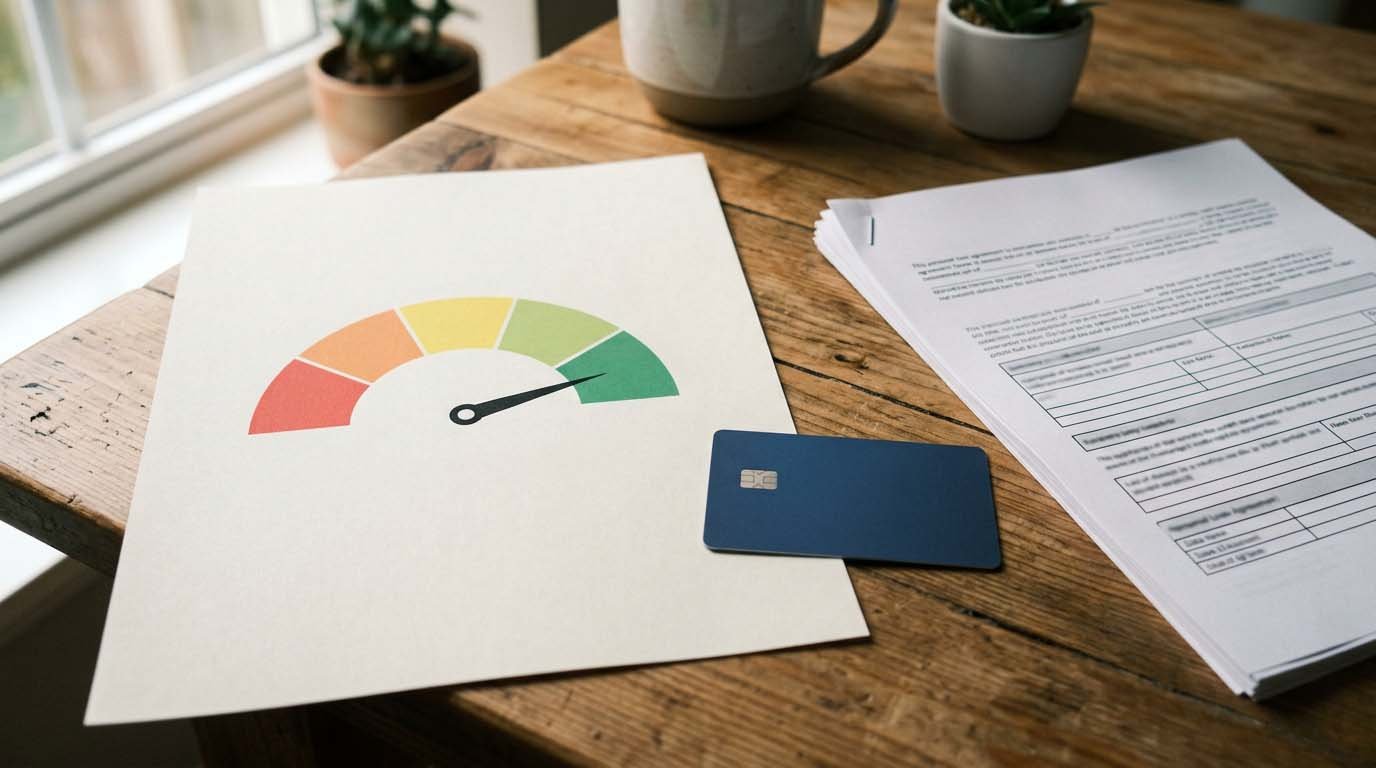
Both options involve a hard credit inquiry when you apply, which causes a small, temporary dip in your score. Beyond that initial dip, the two options affect your score somewhat differently. A balance transfer keeps your debt as revolving credit, so your credit utilization, how much of your available credit you’re using, still factors into your score the same way it did before. A personal loan removes that balance from your revolving utilization entirely, since installment debt gets scored differently. This means a personal loan can sometimes give your score a modest boost purely by shifting debt out of the utilization calculation. Our Credit Utilization Explained article covers why that distinction matters more than people expect.
Opening a new balance transfer card also adds a new account to your credit file, which can temporarily lower your average account age. A personal loan does the same, though the effect tends to be smaller for most credit scoring models.
Check the real numbers for your situation
Neither option is automatically better. The right choice depends on your balance size, your credit score, how disciplined you are about a fixed payoff timeline, and what rates you actually qualify for. Run your numbers through our APR Calculator to compare offers on equal footing, use the Personal Loan Calculator to see exact monthly payments and total interest on a loan, and use our Debt Payoff Calculator if you’re juggling more than one balance at once.
Whichever path you choose, moving debt from a 24% APR card to something meaningfully lower is almost always worth doing, as long as the fees involved don’t cancel out the savings. Our How Is Credit Card Interest Calculated? and Minimum Payment vs Full Payment articles are worth reading alongside this one if you’re still deciding whether to tackle the balance at all before choosing how.
Common questions about balance transfers and personal loans
Not always. A balance transfer saves the most when you can pay off the entire balance before the 0% promotional period ends. If the balance is too large to clear in time, the remaining amount reverts to a standard APR that can end up costing more than a personal loan would have.
Generally, yes, though the bar varies. The best balance transfer offers, with the longest 0% periods and lowest fees, typically go to applicants with good to excellent credit. Personal loan rates also improve significantly with a stronger credit score, though approval is often available across a wider credit range.
Yes, though it’s usually not necessary unless you’re splitting a very large balance across strategies. Applying for multiple types of credit close together can cause several hard inquiries in a short window, which may cause a slightly larger temporary dip in your score than applying for just one.
A few more things worth knowing
Any remaining balance starts accruing interest at the card’s standard APR once the promotional period ends. That standard rate is often similar to, or even higher than, the rate on the card you originally transferred the debt from.
It can, mainly by reducing your total available credit and raising your utilization on remaining cards. Keeping the old card open with a zero balance, rather than closing it, often protects your score better, as long as you’re not tempted to run up a new balance on it.
The loan itself isn’t risky if the new rate is meaningfully lower and the payment fits your budget. The real risk is running the credit card balance back up after paying it off with the loan, since that leaves you carrying both the loan payment and a new card balance at the same time.