How Interest Rates Affect Bond Prices
A single Federal Reserve announcement can move bond prices within minutes. This isn’t a coincidence. Interest rates and bond prices are directly connected. Understanding that connection explains a lot of what shows up in financial news. Here’s the mechanism, from the Fed’s decision all the way down to your bond fund’s daily price and the number you see on your monthly statement.
The short version: rates up, prices down
When interest rates rise, existing bond prices fall. When interest rates fall, existing bond prices rise. Our Bond Price vs Yield article covers the mechanics of why price and yield move in opposite directions. This article focuses specifically on what actually drives rates to move in the first place. It also covers how that ripples through the bond market, all the way down to the fund statement you might check once a month.
This relationship holds for almost every type of bond, from Treasuries to corporate bonds to municipal bonds. The magnitude of the price move differs by bond. The direction stays consistent across the board.
Why new bonds change the value of old ones
A bond’s coupon rate is fixed the day it’s issued. It never changes. But new bonds keep coming to market, and their rates reflect current conditions. When rates rise, newly issued bonds offer higher coupons than older ones. That makes the older, lower-coupon bonds less attractive by comparison. Their price falls until their yield catches up to what new bonds offer.
When rates fall instead, the opposite happens. Newly issued bonds carry lower coupons than older bonds already in circulation. This makes those older bonds, with their relatively generous coupons, more attractive. Their price rises to reflect that added appeal.
The Federal Reserve’s role in this

The Federal Reserve doesn’t directly set every interest rate in the economy, but its decisions ripple outward through the whole system. When the Fed raises its target rate, borrowing costs across the economy tend to rise alongside it, including the rates offered on newly issued bonds. When the Fed cuts rates, the opposite tends to happen.
Our How the Federal Reserve Controls Interest Rates article covers the specific tools the Fed uses to influence rates. Our What Is the Federal Funds Rate? article explains the specific rate the Fed targets directly. Bond markets often move before an official Fed announcement even happens. Investors anticipate likely decisions based on economic data and Fed communication well ahead of the actual meeting date.
Short-term vs long-term bonds react differently
Not every bond feels a rate change the same way. Longer-maturity bonds generally see bigger price swings than shorter-maturity ones, for the same rate change. Our What Is Bond Duration? article covers exactly why this happens. It also explains how to measure a specific bond’s sensitivity rather than relying on maturity alone as a rough guide.
A 30-year Treasury bond typically swings far more in price than a 3-month T-bill for the same 1 percentage point rate move. Our Treasury Bills vs Notes vs Bonds article covers how these different maturities behave. It also covers which ones fit different investor timelines.
Credit-sensitive bonds add another layer
Corporate bonds react to interest rate changes the same way government bonds do, but they carry an additional factor: credit risk. During periods of economic uncertainty, rates and credit spreads can move in ways that partially offset or amplify each other. A corporate bond’s price might fall due to rising rates, then fall further if investors also grow worried about that specific company’s ability to repay its debt. In severe cases, credit concerns can dominate the price entirely, overwhelming whatever direction interest rates alone would suggest.
This is why corporate bond prices don’t always move in perfect lockstep with government bond prices. Both respond to the same underlying interest rate environment. The added credit dimension means corporate bonds can sometimes decouple from pure rate-driven price movements, particularly during periods of financial stress when credit concerns take center stage.
What this looks like during a rate hiking cycle
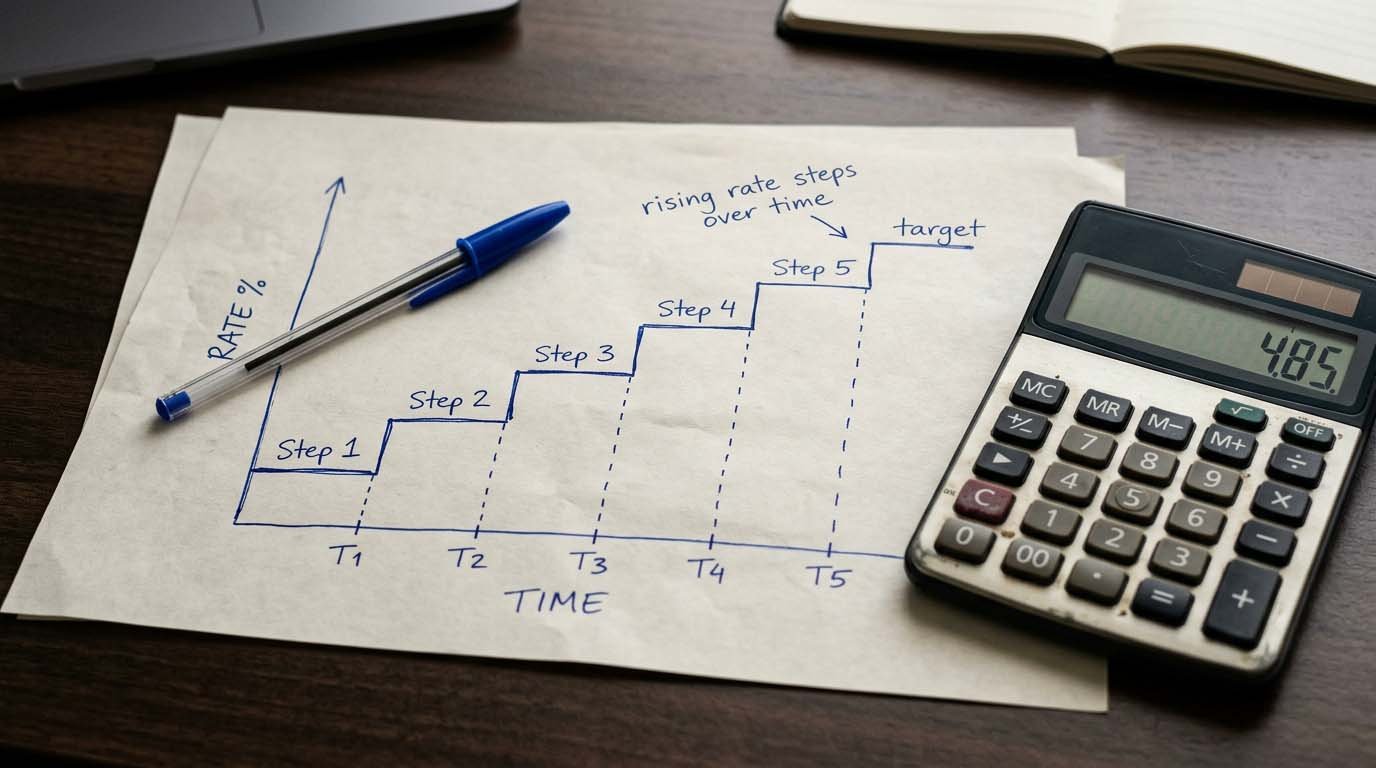
When a central bank raises rates repeatedly over a sustained period, often called a hiking cycle, existing bonds issued before or during the early part of that cycle can see their prices decline substantially by the time the cycle ends. Investors who bought long-duration bonds right before a hiking cycle began, and who needed to sell during it, have historically experienced real losses in these situations. The longer and steeper the cycle, the larger these paper losses tend to look along the way.
Investors who hold those same bonds to maturity don’t experience this loss in the same way. They still receive their full coupon payments and principal as originally promised. The price decline only matters to those buying and selling on the secondary market during the cycle.
What this looks like during a rate cutting cycle
The reverse plays out during a cutting cycle. Bonds issued with higher coupons before rates started falling become relatively more valuable as new bonds come to market with lower coupons. Bondholders who bought before the cutting cycle began can see meaningful price gains if they choose to sell during this period. Their existing bonds now look more attractive than newly issued alternatives. This is one reason bond funds sometimes post strong returns when the broader economy is slowing. Rate cuts often accompany that kind of environment.
How this shows up in your bond fund
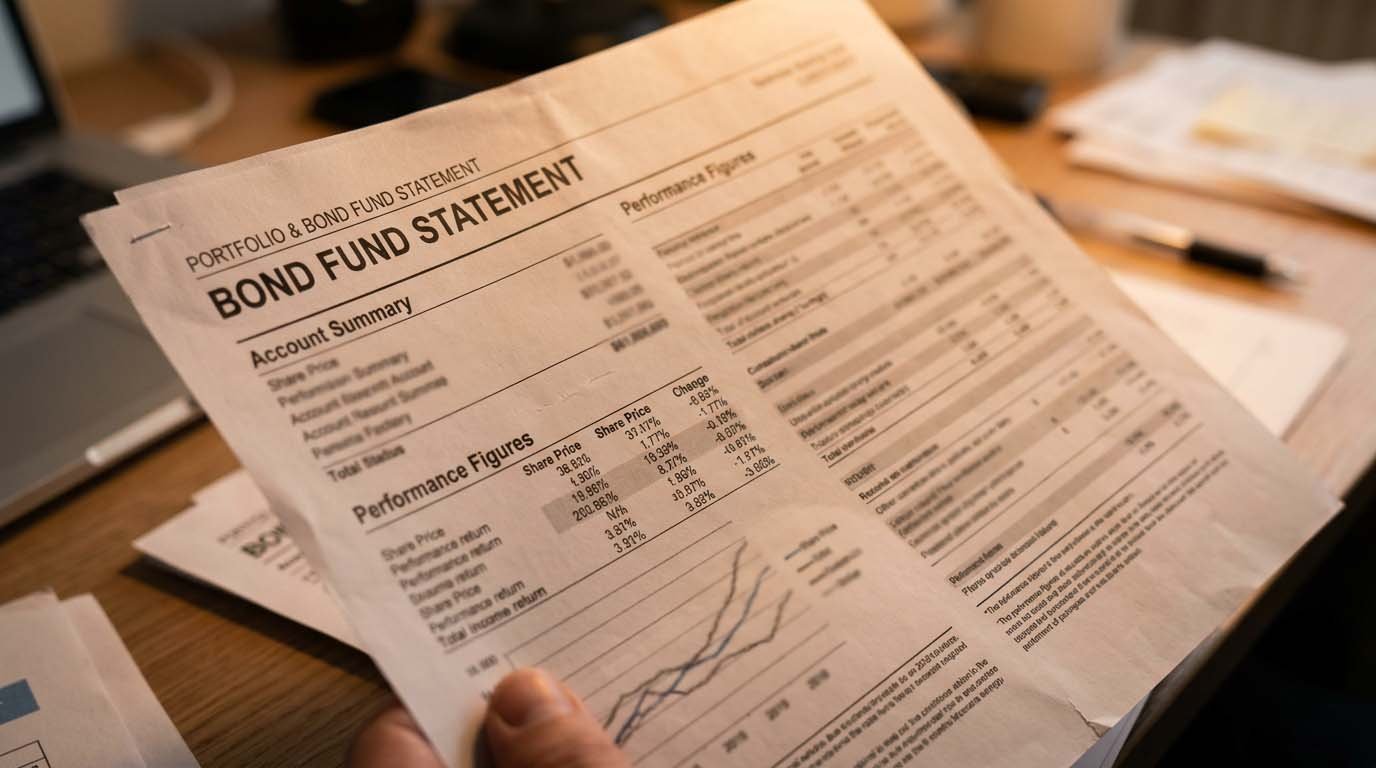
Most individual investors experience this dynamic through bond funds rather than individual bonds. A bond fund’s share price reflects the combined market value of everything it holds. Rate changes flow directly into the fund’s daily price. This is why a bond fund can post a negative return over a stretch when rates rise sharply. Every bond inside the fund can still be paying its coupon on schedule the entire time.
This surprises investors who assumed “bonds” automatically meant “safe” in every sense. Bonds are generally safer than stocks in terms of default risk. But they aren’t immune to price swings driven by interest rate changes, particularly for funds holding longer-duration bonds.
What you can actually do about it
If you’re worried about rate-driven price swings, shortening the average duration of your bond holdings reduces that sensitivity. This comes at the cost of typically lower yields. Holding individual bonds to maturity, rather than selling on the secondary market, sidesteps the price issue entirely. You’ll receive the originally promised payments regardless of interim price swings. Building a bond ladder, spreading maturities across several years, is another common approach. It manages this uncertainty without betting heavily on any single rate outcome.
Why expectations move markets before decisions do
Bond prices often react more to what investors expect the Fed to do than to what the Fed actually announces. If a rate hike is widely anticipated ahead of time, much of the price adjustment happens gradually in the days and weeks before the announcement. By the time the official decision arrives, the real “surprise” that moves prices is the gap between what was expected and what actually happened. It’s rarely the decision itself.
This is why bond traders pay close attention to economic data releases, like inflation reports and employment figures, well before any scheduled Fed meeting. Strong inflation data can push bond prices down in anticipation of a rate hike, even weeks before the Fed formally announces anything. Weak economic data can do the opposite. It pushes prices up in anticipation of a cut or a pause.
Inflation expectations play a role too
Interest rates and inflation expectations are closely linked. If investors expect inflation to rise, they generally demand higher yields to compensate for the reduced purchasing power of future coupon payments and principal repayment. This pushes existing bond prices down. It happens independent of anything the Fed has actually decided, since the market is pricing in expected future conditions rather than reacting only to current policy.
Conversely, if inflation expectations fall, investors may accept lower yields, since the real purchasing power of a bond’s payments looks more secure. This dynamic explains why bond prices can move meaningfully on inflation data releases alone. It can happen even on days with no Fed announcement scheduled at all.
A quick reference for what to expect
Rising rates: existing bond prices fall, new bonds offer higher yields, longer-duration bonds fall more than shorter ones. Falling rates: existing bond prices rise, new bonds offer lower yields, longer-duration bonds rise more than shorter ones. Holding to maturity: none of this price movement affects what you actually receive, assuming no default. Our Investment Calculator can help you model different rate scenarios against your own bond holdings and timeline.
Keeping these two directions straight, and remembering that price and yield always move opposite each other, covers most of what shows up in everyday financial news about the bond market. The underlying mechanism is consistent, even when the headlines make it sound more complicated than it actually is.
Common questions about interest rates and bond prices
Existing bonds carry a fixed coupon set at issuance. When the Fed’s actions push new bond yields higher, older bonds with lower fixed coupons become less attractive by comparison, so their price falls until their yield matches what’s newly available.
No. Longer-maturity bonds generally see bigger price swings than shorter-maturity ones for the same rate change. Corporate bonds also carry an additional credit risk factor that government bonds don’t, which can affect prices independently of interest rates.
Not if you hold it to maturity and the issuer doesn’t default. You’ll still receive your scheduled coupon payments and full principal back. Price declines only matter if you sell the bond before maturity during the period when rates have risen.
A few more things worth knowing
A bond fund’s share price reflects the current market value of its holdings, which moves with interest rates. Even high-quality, low-default-risk bonds can see their market price fall when rates rise, which shows up as a lower fund value.
Roughly, yes, using the bond’s duration. A bond’s price is expected to move approximately its duration percentage for each 1 percentage point rate change, in the opposite direction, though this is an approximation rather than an exact figure.
Stocks can react to rate changes too, though the mechanism is less direct and less predictable than with bonds. Higher rates can make borrowing more expensive for companies and can make bonds more competitive with stocks for investor money, both of which can pressure stock prices.