What Is Bond Duration?
Two bonds can share the same maturity date and still react very differently when interest rates move. Duration is the number that explains why. It measures how sensitive a bond’s price is to rate changes. It’s far more useful than maturity alone for comparing bonds. Here’s what it actually tells you.
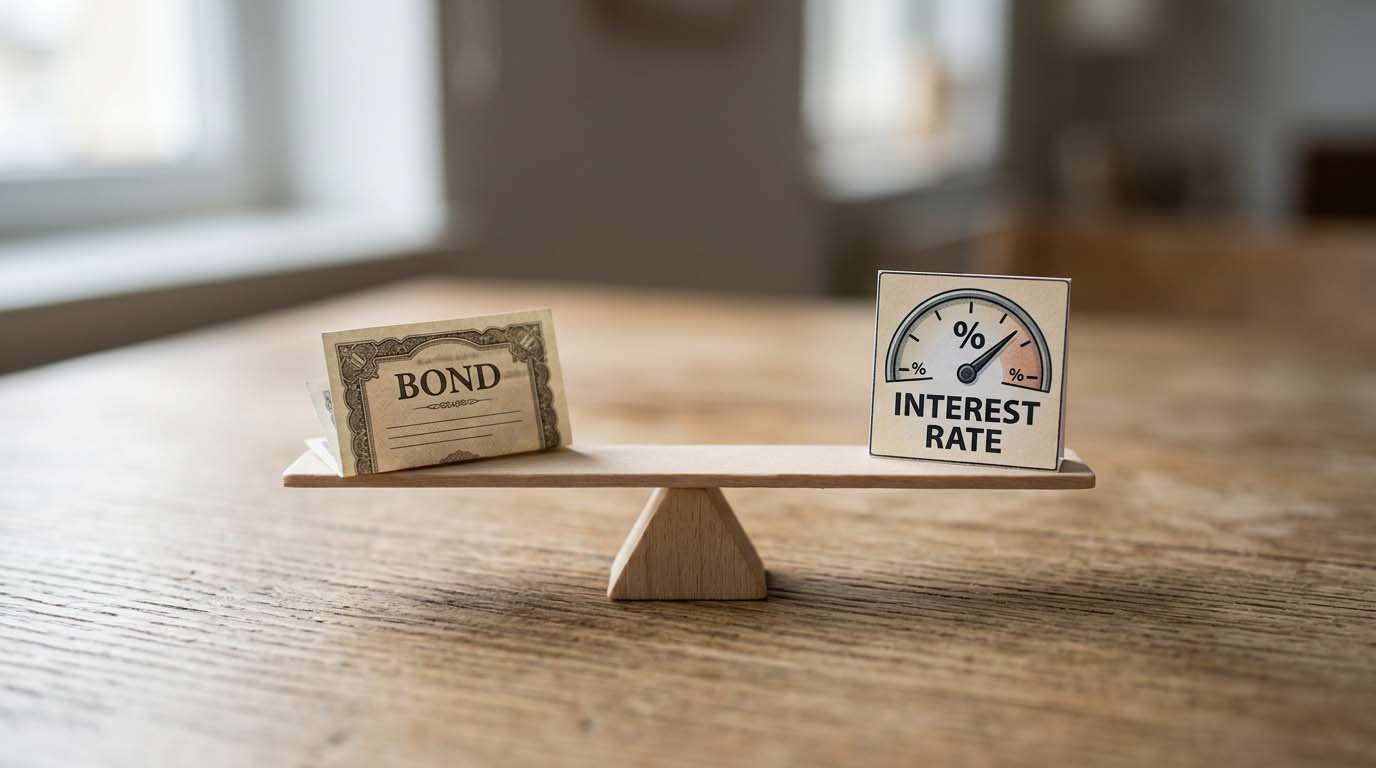
A number that measures rate sensitivity
Duration measures how much a bond’s price is expected to move for a given change in interest rates. It’s expressed in years, which confuses people at first, since it looks like a maturity measurement. It’s actually a sensitivity measurement, not a timeline. A bond with a duration of 5 will see its price move roughly 5% for every 1 percentage point change in interest rates. That move happens in the opposite direction of the rate change.
Our Bond Price vs Yield article covers the basic inverse relationship between bond prices and interest rates. Duration puts a specific number on how strong that relationship is for any given bond. It tells you more than just the direction the price moves.
Duration isn’t the same as maturity
Maturity tells you when a bond repays its principal. Duration tells you how sensitive the bond’s price is to rate changes between now and then. These two numbers correlate, since longer-maturity bonds generally have higher duration. But they aren’t identical. Duration accounts for the coupon payments you receive along the way, not just the final principal repayment, which is why a bond’s duration is almost always shorter than its maturity.
Take a 10-year bond that pays no coupon at all, called a zero-coupon bond. Its duration equals its full 10-year maturity, since the only cash flow is the final payment. Now take a 10-year bond paying a generous coupon every six months. It carries a shorter duration than 10 years, since a meaningful portion of your return arrives well before maturity.
What moves duration up or down
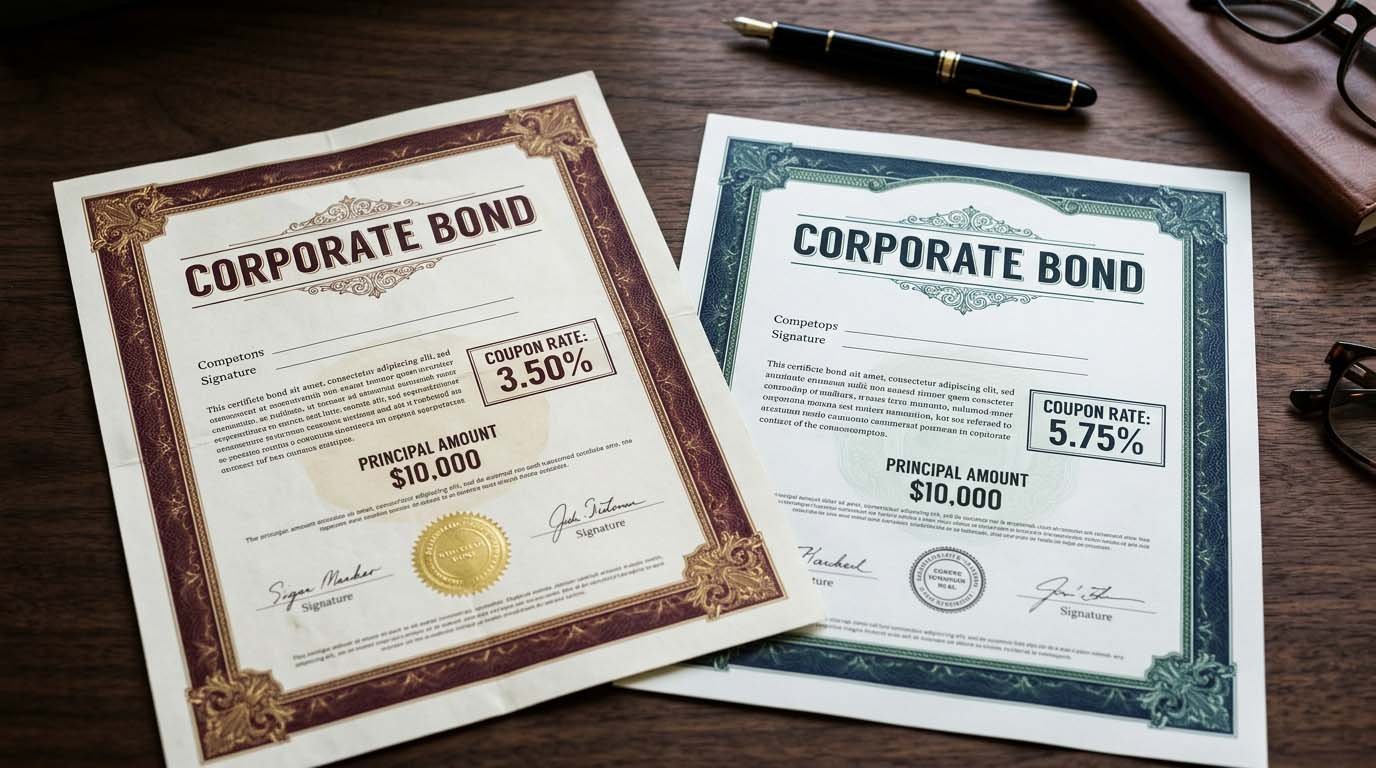
Longer maturity generally means higher duration. More of the bond’s cash flow arrives further in the future, where rate changes have more time to matter. Lower coupon rates also mean higher duration. A smaller portion of your total return arrives via coupon payments along the way, and more of it depends on that distant final principal repayment.
Higher coupon rates reduce duration instead. More of your return arrives sooner, less sensitive to what happens to rates in the distant future. This is why two bonds with identical maturity dates but different coupon rates can carry meaningfully different durations. They react differently to the same rate change.
The rule of thumb: duration times rate change
A simple approximation: a bond’s price change roughly equals its duration multiplied by the change in interest rates, with the sign flipped. A bond with a duration of 7, facing a 1 percentage point rate increase, would be expected to lose roughly 7% of its price. That same bond facing a 1 percentage point rate decrease would be expected to gain roughly 7% instead.
This is an approximation, not an exact calculation. It works best for small rate changes. For larger rate moves, the actual price change deviates somewhat from this simple estimate, due to a more advanced concept called convexity. Still, this rule of thumb gives a useful, quick sense of a bond’s rate sensitivity without requiring complex math.
A worked example

Say you’re comparing two bonds. Bond A has a duration of 3. Bond B has a duration of 12. Interest rates rise by 1 percentage point across the board. Bond A’s price falls by roughly 3%. Bond B’s price falls by roughly 12%, four times as much, purely due to the duration difference.
This same math applies in reverse if rates fall instead. Bond B would gain roughly 12% versus Bond A’s roughly 3% gain. Higher duration means more upside when rates fall, but also more downside when rates rise. Duration is a two-way sensitivity measure, not a one-directional risk.
Why coupon rate affects duration too
It’s tempting to think duration is purely about maturity length, but coupon rate plays a real role too. Compare two 10-year bonds: one with a 2% coupon, one with an 8% coupon. The 2% bond has a higher duration, since more of its total return depends on that distant principal repayment. The 8% bond has a lower duration instead, since a much larger share of return arrives via coupon payments well before maturity.
This means a high-yield bond with a generous coupon can actually carry less interest rate risk than a lower-yielding bond with the same maturity date. The difference comes purely from this coupon effect on duration.
Duration for bond funds
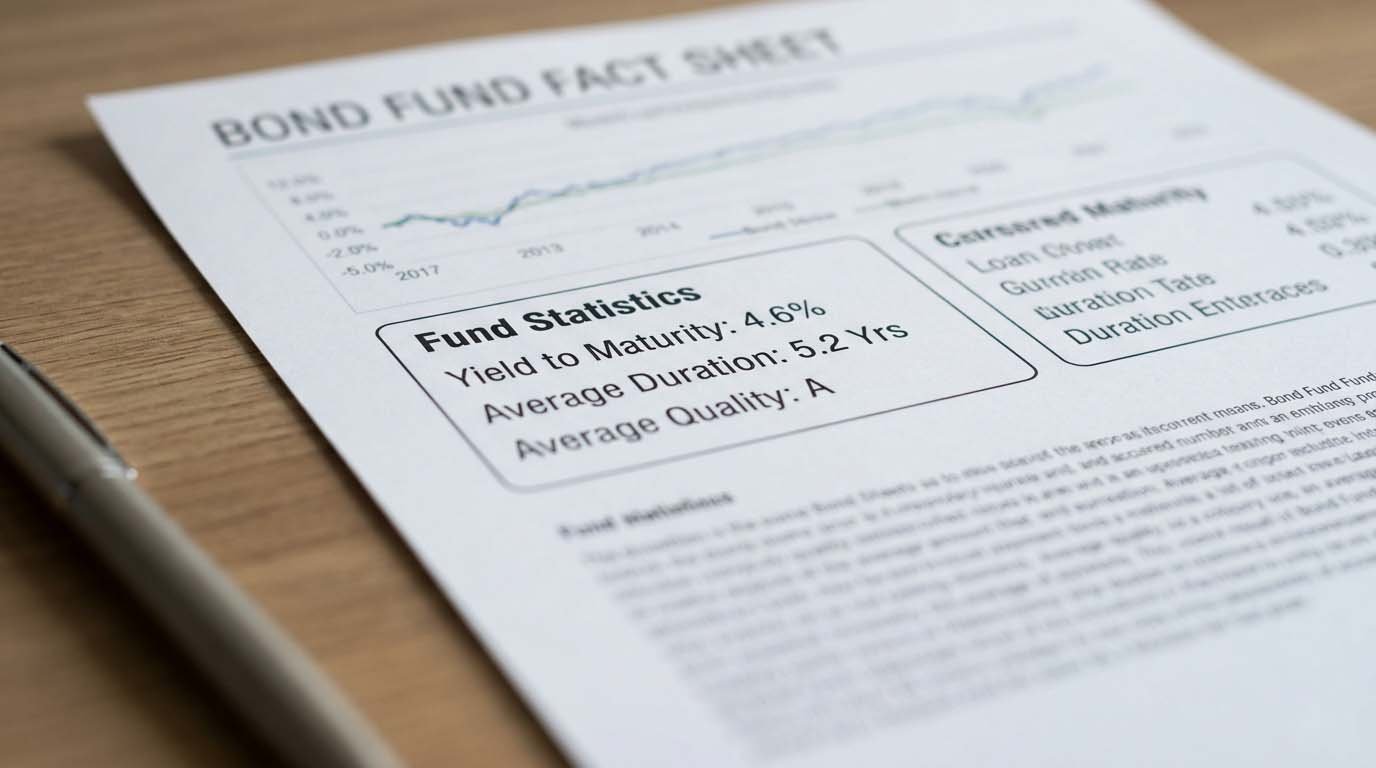
Bond funds report a duration figure too, calculated as a weighted average of the durations of all the bonds the fund holds. This single number gives investors a quick way to gauge a fund’s overall rate sensitivity without examining every individual holding. A fund labeled “short-term” typically carries a duration of a few years or less. A fund labeled “long-term” can carry a duration well above 10.
Checking a bond fund’s duration before investing tells you roughly how much its share price might swing if rates move. That’s often more useful, practical information than the fund’s stated average maturity alone.
Matching duration to your timeline
Investors with a specific future need, like a known expense a few years out, sometimes match a bond or bond fund’s duration to that timeline deliberately. This strategy, called immunization, reduces the risk that a rate move right before you need the money forces you to sell at an unfavorable price. If your duration roughly matches your time horizon, the price and reinvestment effects of a rate change tend to offset each other.
Investors without a specific near-term need can generally afford higher-duration bonds. They accept more short-term price volatility in exchange for the typically higher yields that longer-duration bonds offer. Our Treasury Bills vs Notes vs Bonds article covers how different Treasury maturities, and their corresponding durations, fit different investor timelines.
Why duration matters beyond a single bond
Duration becomes especially useful when comparing an entire bond portfolio’s rate sensitivity, not just a single security. Two portfolios with the same average yield can behave very differently if one holds mostly short-duration bonds and the other holds mostly long-duration ones. The long-duration portfolio will show larger price swings, both up and down, as rates fluctuate. This happens even if its average yield looks identical on paper.
This is part of why professional bond managers pay close attention to a portfolio’s overall duration. They often adjust it deliberately based on their outlook for interest rates. Shortening duration when rates are expected to rise can help limit downside price risk. Lengthening duration when rates are expected to fall can help capture more of the resulting price gain. Individual investors rarely need to make these tactical bets. Understanding the concept still helps explain why bond fund managers sometimes shift a fund’s duration over time.
A quick mental shortcut for everyday use
You don’t need to calculate duration yourself to use the concept practically. Most bond and bond fund listings publish a duration figure directly, right alongside yield and credit rating. The mental shortcut worth remembering: shorter duration means less price movement when rates change, in either direction. Longer duration means more movement, in either direction. Neither is inherently good or bad. Which one fits depends entirely on your own timeline and how much price movement you’re comfortable seeing along the way.
A simple gut check before buying any bond or bond fund: look up its duration, then ask yourself whether you’d be comfortable seeing its price move by roughly that percentage if rates moved by one point in either direction. If the answer is no, a shorter-duration option is probably a better fit for your situation.
Modified duration vs Macaulay duration
You’ll sometimes see two versions of duration referenced: Macaulay duration and modified duration. Macaulay duration measures the weighted average time until a bond’s cash flows are received, expressed in years. Modified duration adjusts that figure slightly to directly estimate the percentage price change for a given change in yield. This is the version most commonly used for the practical “duration times rate change” approximation described earlier in this article.
For most everyday investing purposes, modified duration is the more directly useful number to know off-hand, since it plugs straight into the rule of thumb for estimating price sensitivity.
Check a bond’s duration before you buy
Before buying an individual bond or bond fund, check its duration alongside its yield and credit quality. A high yield paired with a very high duration means real price volatility if rates move against you. Our How Interest Rates Affect Bond Prices article and our Investment Calculator can help you think through how different rate scenarios might play out for your specific holdings, before you commit real money to a particular duration profile.
Common questions about bond duration
No. Maturity is when a bond repays its principal. Duration measures how sensitive the bond’s price is to interest rate changes, and it’s almost always shorter than maturity, since it accounts for coupon payments received along the way.
It means the bond’s price is expected to move roughly 5% for every 1 percentage point change in interest rates, in the opposite direction of the rate move. This is an approximation, most accurate for smaller rate changes.
Generally, yes. A higher coupon means more of your total return arrives sooner through interest payments, reducing reliance on the distant final principal repayment and lowering the bond’s overall duration.
A few more things worth knowing
Yes. A bond fund’s duration is calculated as a weighted average of the durations of all its individual bond holdings, giving investors a quick way to gauge the fund’s overall interest rate sensitivity.
Macaulay duration measures the weighted average time until a bond’s cash flows arrive. Modified duration adjusts that figure to directly estimate price sensitivity to yield changes, making it the more commonly used figure for practical purposes.
Not necessarily. High duration means more price volatility if rates move, but it also typically comes with higher yields and bigger gains if rates fall. Whether it fits your portfolio depends on your timeline and tolerance for that volatility.